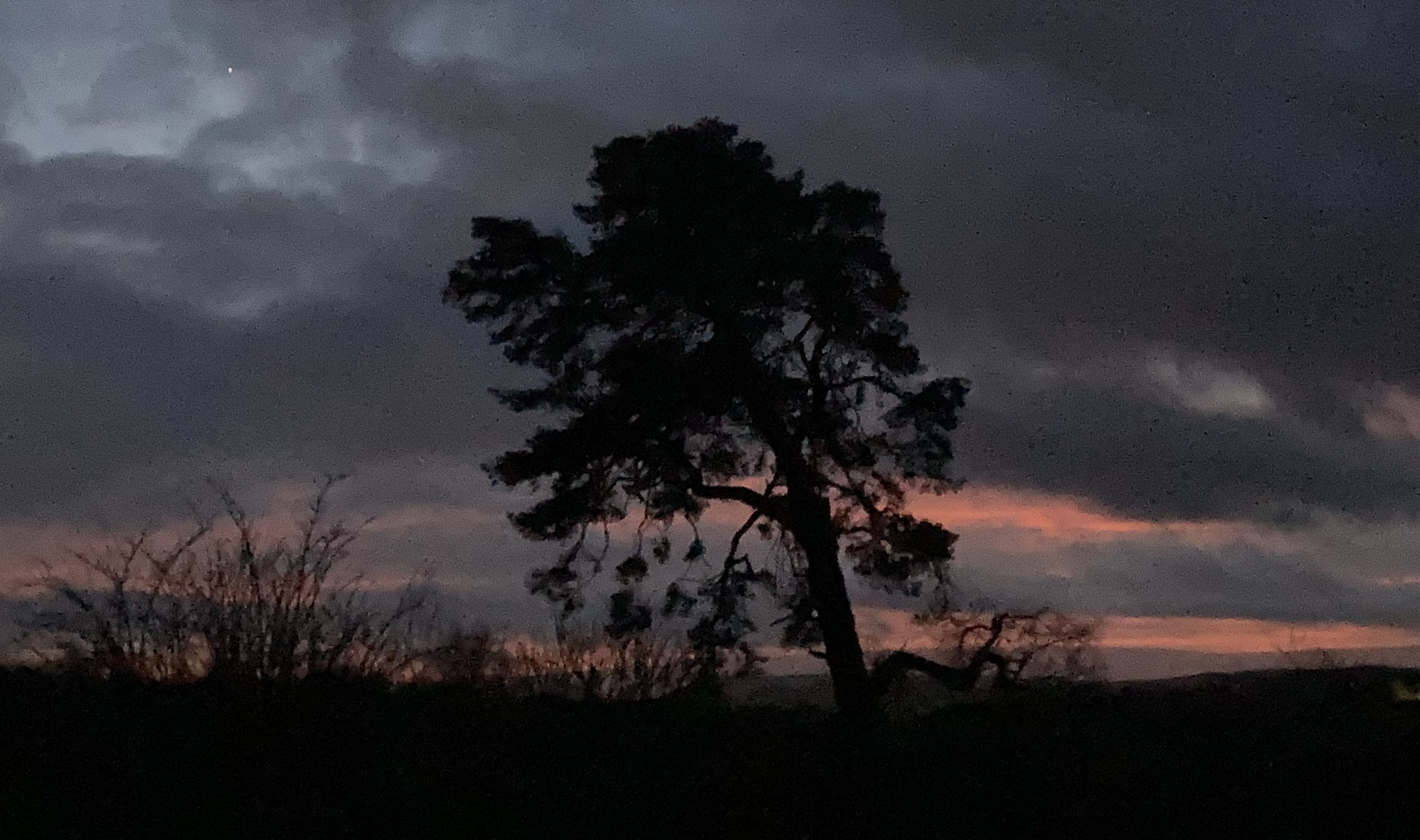
The planets have arranged themselves in a sweeping curl like a string of lights at a festival. I can see them all above the fat black shape of the scots pine tree which hangs beyond the yard, and it’s been my pleasure to watch them roll through gaps in the cold and heavy cloud.
Standing open-mouthed as often as I do in the darkness, it’s been obvious that birds are on the move again. Oystercatchers are back on their roundabout places, and when the wind drives down from the east, there’s an unmistakable whoop of lapwings on soppy ground which was overturned by cattle at Christmas. But there are curlews in this night sky too, flying high and fast inland from the sea. Their calls descend from the stars and each one is interspersed by a silence of several seconds. It’s then a matter of guesswork for the next call as the invisible birds rush overhead and northwards out of earshot. For an hour between three o’clock and four this morning, I heard as many as twelve or fifteen curlews through the space in my bedroom’s window – and each one stabbed at the well of old losses.
Because none of these birds are mine. None will descend to the fields of home, and I hear them only in passing these days. It’s hard to tell these curlews apart from the big gangs of slabbish, winter birds which rise from the roar of the train as it rushes back and forth through open fields towards Annan and Carlisle. These aren’t my birds either – they’re only gangs of anonymous strangers which will soon be sliding overhead in the darkness, heading north and far across the sea to Finland and Russia.
It’s profoundly disturbing to have lost my own curlews, and a weak consolation to hear others which pass in the night on their way to somewhere else. So many people have lost their birds over the last twenty years, and it’s silly of me to say that I miss my own because the parlous state of curlews in Britain has pushed us to a point at which many more will be lost before the ship can be turned around. It’s no longer about the grief of my own loss or the despair you’ll feel when yours give up as well. The contest now is only whether any curlews at all can survive for the future – and if I whine about the dimness of cold comfort, the hard alternative is having not even that.
I wish these night-flying birds nothing but the best. I cheer for them on their homeward journey, but I’m left with grubby, selfish regrets for myself – and the hope that wherever these curlews are going, they’ll be cherished when they get there.


Leave a Reply