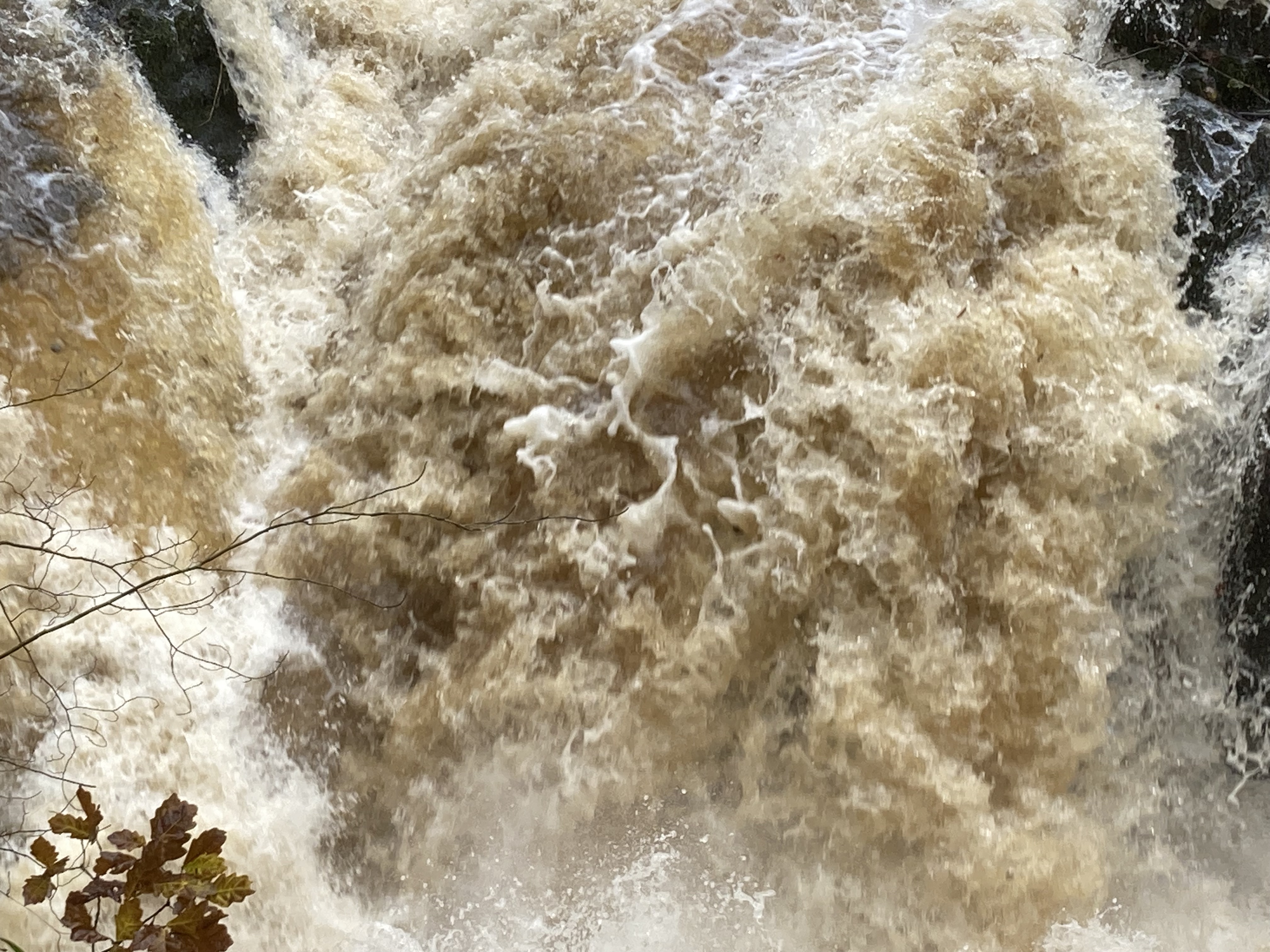
The river fell in steps towards the brig and the boneyard walls at Irongray, and each fall was longer and louder than the one which came before it. On its final plunge to the pools below, the amber sheets were heavy and bright as theatre curtains, and fish waited in the stalls at the footlights’ edge. We saw them rest and turn in the fizzy broth; we watched them drop back in order, then move in queues to the front. But we couldn’t see inside the pool which lay beneath the highest fall. That was like a washing machine, foaming over with fallen leaves and shreds of gutty bark.
Salmon jumped at random from this pool in every mistaken angle, dashing themselves on the rocks or the black chimneys of alder boughs which had drifted down and wedged themselves like a cage around the torrent. It was painful to see them try; many of the fish which had been kept in this bottleneck for hours or days at a time were scarred and blunted by the endless crashing failure. Old campaigners were falling to pieces – stale green fish with red flanks and heavy-heads were broken apart by the effort. The water was loud and we were wet in the spray which held us together on the rocks like frogs on a rainforest leaf, pinned between the black persistence of fish and the drillbit whine of a dipper’s song.
I saw one cock salmon with a hole where his eye should’ve been, and his kype was shattered by the rocks. Even fresh and silver grilse were bumped and scattered by the jumping, particularly those which leaped highest and came so close to success. An inch to the left or right would have seen them home, but there was no refinement possible in the churn and bellow of the falls. A near miss would be followed by several jumps which never stood a chance, and there was nothing of strategy or guile in the business of leaping; just a relentless, unreasonable need for the up.
A decade later, I went back to look again, alone. I waited for an hour and was soaked by the cold, familiar mist – but there are no fish in the river now. You’d hardly believe it could happen, but I can and I’m glad you never lived to see the day. Because the stocks have dwindled fit to starve the herons and bore the watchers home; there’s no sign of life, and no death to explain it either. I looked for the broken remains of salmon in the verges – of scales in the seabound flow. But everything has gone, and I could understand this loss as part of a wider resumption of normality in the world. Just as when black grouse vanished from the moor, it was easy to imagine they were simply too special to last; the lapwing’s turn beneath the moon so extraordinary that ordinary had to come sometime.
And now it’s only water falling at the Routin Brig; physics has outlasted biology, and there’s no fight left in the pools these days. The river is more imaginable without those fish, and when rain gathers news from the hills and pulls it down to the Firth, of course there’s no reply.


 Bog Myrtle & Peat
Leave a reply to michellewerrettruralwriting Cancel reply