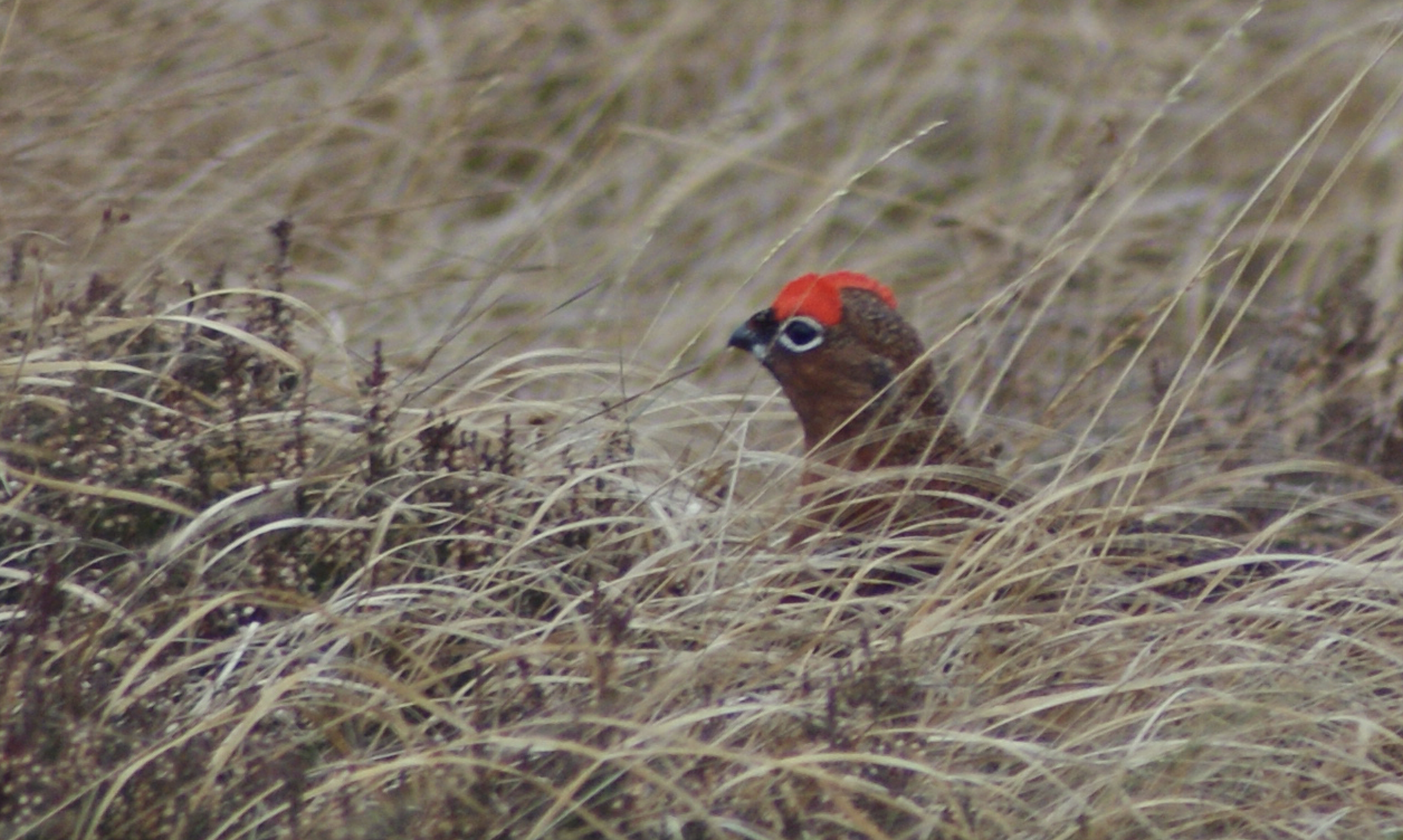
Once the various demonstration projects had ground to a halt, Langholm moor was offered for sale. Acting on behalf of the local community, an action group offered to buy part of the hill, and the proposal came at a timely moment for the Southern Uplands. Successive waves of government policy have driven far-reaching change across this place, and for those of us who love these largely unloved hills, there was a chance to imagine a new way forward for balanced, sustainable uplands landscapes based around wildlife, agriculture and local people.
Langholm Moor was owned by the Duke of Buccleuch, one of the UK’s largest landowners. That’s always a point of contention for some, but as the action group attempted to rally support for a new status quo, it had to balance positive hopes for the future against a wider animus concerning private landownership. And given that Langholm had become the most famous and contentious grouse moor in the UK, the merest mention of its name was enough to provoke a wealth of antagonism around perceptions of moorland management.
As part of the purchase, the action group was required to raise six million pounds. Donations were sought from the general public to buy the land, and if the fundraisers promoted their cause with a degree of balance, they certainly operated within wider narratives about “bad landowners”, “evil gamekeepers” and “bloodthirsty toffs”. Langholm has been a controversial place for many years, but enmity was stoked by the publicity which surrounded the fundraising process. Money poured in, and all kinds of associated groups promoted the cause, from birders and rewilders to influentual multi-millionaires. The target was reached, but the nature of that fundraising had shifted the story from “local people buy land” to a situation in which lots of different stakeholders had come together from across the UK, partly from a desire to do a general (but unspecified) kind of good, but also to score points against an “evil” establishment. Even before the title deeds had changed hands, the narrative smacked of righteous vengeance.
This was the backdrop to the Heather Trust’s Discussion meeting, which was held in Langholm on 24thOctober and hosted by the Tarras Valley Nature Reserve, the new name for part of the old Langholm Moor. After introductions, presentations and a visit to the moor, a panel discussion was opened to explore some of the issues arising from the project. It’s fair to say that the Heather Trust takes a pretty traditional approach to moorland management, and many attendees wore the scars of previous controversies about Langholm. Credit is certainly due to the team at Tarras Valley for hosting such an event, because tensions were always going to be smouldering beneath the surface.
Moorland wildlife has generally declined since the gamekeepers were withdrawn when the project ended in 2017. Hen harriers are still present, but they’re at nothing like the numbers seen at their peak in 2014 and 2015. Black grouse and waders have also declined dramatically, and in some places, the hill is on its way to becoming a tangle of self-sown sitka spruce trees which have blown in from neighbouring forestry blocks. It’s easy to see why some Heather Trust guests felt aggrieved by the situation. From their perspective, the moorland at Tarras Valley is starting to look like a mess. And if comments directed towards the hosts sometimes felt accusatory or hostile, it reflected a sense that the new project has sometimes offered itself (and been offered by others) as a vision of how to do things properly. But despite positive visions for the future of community engagement, the actual situation on the moor looks oddly undecided. Publicity and press materials circulated by the project emphasises that Tarras Valley Nature Reserve represents “a story of hope, community and a powerful symbol of what can be achieved when we come together” – but that hope can only refer to a successful fundraising campaign, because nothing else has actually happened. It certainly was a major achievement to buy the place, but that’s where the achievements seem to have stalled.
It would be unfair to criticise the Tarras Valley project because it doesn’t look like a grouse moor anymore. It’s not trying to be one, but perhaps the bigger issue is that while the new management represents a break in continuity, it’s still not very clear what’s coming next. Beneath bigger, over-arching ideologies about land use, the day-to-day management of the place is extremely unclear. Plus, there’s no real sign of that changing, even after three years of ownership. Important strategies are still undecided, and only the first steps have been taken towards delivering action on the ground. Even those steps have been patchy and tentative, depending heavily upon government support and subsidy.
The project seems uncertain of itself, and that uncertainty has created a vacuum that is now being filled by a range of different interest groups, many of which contributed money or support to the buy-out. Having paid for the purchase, they feel entitled to weigh in and hold the project accountable for what they thought they were buying. But many of them simply bought “not grouse shooting”, and that’s hardly a management strategy. So rewilding enthusiasts are calling it rewilding – even though it’s not. Community land ownership activists offer the moor as an example of what’s possible for local people – but they do not offer a clear plan for financial sustainability. If Heather Trust delegates complained that the hill is not being managed in accordance with their understanding of “good”, the project has also come under fire from some rewilders who are frustrated that the new strategy is insufficiently radical or revisionist. The land is now pushed and pulled by a patchwork of interests which overlap in places but are stressed by conflict and confusion in others. Tellingly, there are still no clear goals or markers of success for the management at Tarras Valley – and without these, it’s impossible to say for sure what the project is, let alone assess whether or not it’s working.
On other areas of moorland, it would be interesting to observe how a completely hands-off approach would work. But Tarras Valley’s journey is determined by a range of official designations for moorland habitats and open-ground species like hen harriers. These create a legally-binding framework of what the hill should do and provide, so it’s no use attempting to conceive a new vision for upland landscapes here. Like it or not, the law requires Tarras Valley moorlands to remain in favourable condition, reflecting points of interest identified by the original designation – even if “favourable” comes dangerously close to a subjective historical straitjacket. It would be tempting to let the hill go wild in a range of scrubby woodlands, but that would surely see off the important hen harrier population. And we can’t forget that photographs of hen harriers and black grouse were both featured heavily on campaign literature to support the fundraising drive to buy Tarras Valley in the first place. The very existence of these birds was underpinned by traditional moorland management, but it’s interesting to wonder if the new project is doubly challenged by a desire to keep all the good stuff while completely reinventing the means of achieving it.
I came away from Langholm feeling pretty downcast – not because the past has gone, along with many of the birds and people I used to love – but because it would be fantastically valuable to have a blueprint for community-based sustainable moorland management in the Southern Uplands. However, there is no obvious way forward at Langholm, and the spectre of old controversies about driven grouse moor management endure above the Meikle Toun. Langholm’s most famous son was the writer Hugh MacDiarmid, who laid down a poetic manifesto to occupy the space “whaur extremes meet”. That creative flux powered his chequered, confusing literary output, but it’s also a reasonable way to understand Langholm’s current complexity as an ideological battleground. Everybody wants the best for Langholm, but unless the project can articulate what it wants to do on the moor and how it’s going to deliver the work, there’s a risk that it will sag into deeper swathes of confusion and conflict.


 Bog Myrtle & Peat
Leave a reply to Mary Colwell-Hector Cancel reply