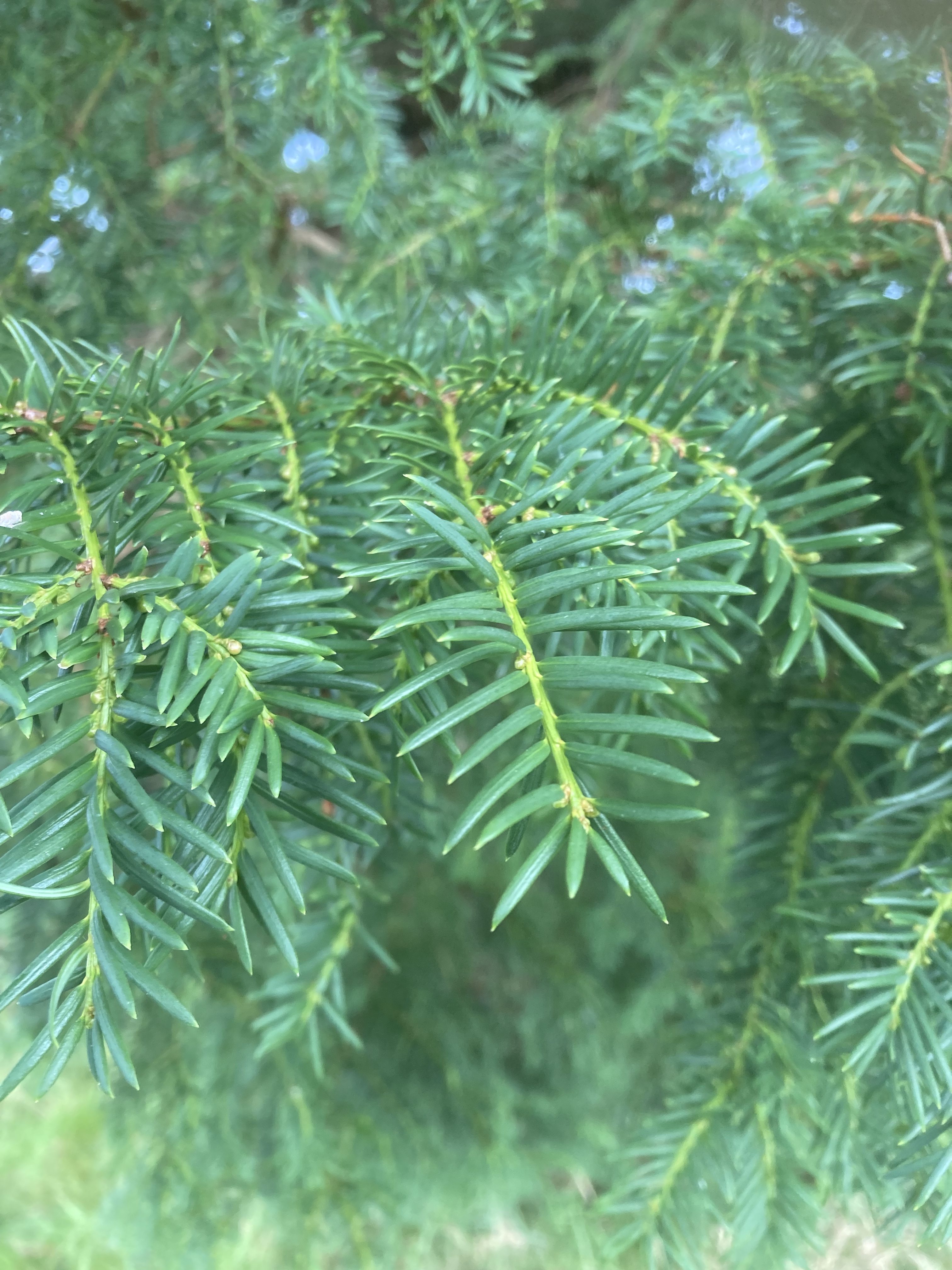
They say the yew tree at Discoed is five thousand years old. It long predates St Michael’s church and the round remains of an ancient cemetery where it stands. In fact, it predates almost everything in the valley of the river Lugg as it rolls towards Presteigne, and it’s impossible to imagine the world in which that tiny seed was germinated. Fixed in place, the world has rolled around the yew as successive waves of growth and introspection have finally left it hollow and ragged as a scarecrow’s cuff. Rich with stories, its wisdom is confined to a single line of sight. Having never moved, that yew has no idea what lies beyond even the nearest horizon – it’s unable to see itself within the tiny context of a parish. Maybe scents of gradual change have blown past on the breeze; perhaps it once smelled something of the industrial revolution, and the stain of coal and heavy metals blown up from the Valleys. But when you’re geared to understand the pattern of life in a circle, a new intrusion is only part of something that you haven’t lived long enough to see twice.
Beyond the yew, I walked alone to Offa’s Dyke. It was raining, and the oak trees clattered with falling water. The Dyke is patchily preserved, and several stretches have vanished altogether over the centuries – but it’s clear for all to see in this part of Radnorshire. There’s a ramp and a trench that is overgrown with haws and rose hips, and it can be hard to see which way this defensive line once faced. It’s similarly awkward from both angles, and as good at containing yourself as repelling a foe. I tried to take my bearings as a stoat dashed across an open gateway, then I sat for an hour until soaked, staring down into valleys of hedges, trees and limewashed farms. I bet those buildings are white in brilliant sun, but if you had to paint them on canvas in the squalling smirr of late September, you’d reach for a stain of phthalo blue. There’s something of the Wales I want here in the cold, resilient silence, but I’m only passing through, and it’s not always helpful to focus on what I want. Like going to church, travel is an exercise in working with what you get.
Beyond the Dyke, a maze of paths led down into a valley bottom. The rain deepened, and I picked the darkest and most overgrown option in the fork of an already well-forked route. Soon I was in something like a holloway, walking down a slot between two fields. Steep banks rose above me, and hazelnuts plopped at my feet in place of rain. Of course I filled my pockets with these, recovering them to be planted at home for a hedge that only I will know is Welsh. They smelled sweet, and the sound they made in my pocket was beautiful. There were crab apples too, and a rush of grey squirrels barking from the last of the leaves. I don’t mind grey squirrels so much as I used to. I know that if you were to kill them out, reds could return to many of their old haunts. But this far south, the horse has surely bolted and the work of keeping red squirrels would never end. Besides, these American invaders strike me as strange, and everything seems strange when you’ve travelled so far from home. I know they’re not supposed to be here, but it’s unfair to complain about intruders when you are one yourself.
The wet trunks of sycamore trees crowded around the track, and I began to feel overhung by the glow of sodden bark. I could hear a raven in the distance, but the day had resolved to a point of twilight in the gloom. It was easy to imagine the heavy bird was already reaching for his roost, and then with a run of water and pigeons scared from the pattering weeds, the path opened out through an alder wood. I could make my peace with that. Alders are my favourite trees by a country mile or more, and it felt fine to have them gathered around me in every stage of black and boled contortion. The summer’s leaves had already turned dry as fallen bracken in the shortening days, and the heavy greens all rimmed with chocolate brown.


 Bog Myrtle & Peat
Leave a reply to Mary Colwell-Hector Cancel reply