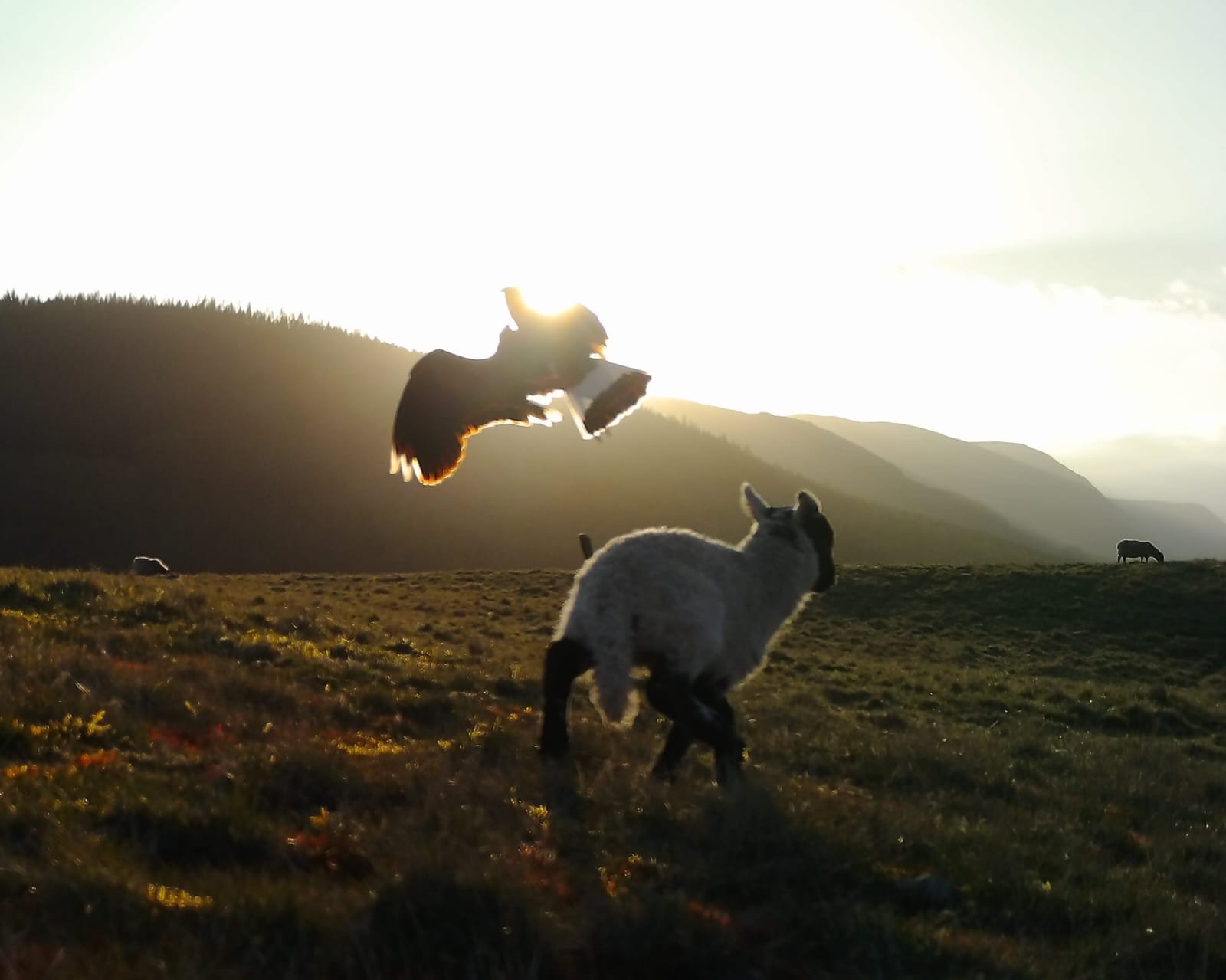
I’ve been working on a national project to set cameras at the nests of wading birds. I did the same last year, but 2022 has seen a significant uptick in participation and scale across Scotland. There have been times during the last few weeks when almost ninety cameras have been running from Galloway to Aberdeenshire, and that’s generated a huge amount of admin and support to keep the show on the road. I’ve been responsible for most of this, and while it’s still too soon to make much of this year’s data, some of the findings have been startling.
Off the top of my head, badgers have been the most commonly recorded predators at wader nests, followed at a distance by foxes and pine martens. Carrion crows, ravens and jackdaws have all been caught on camera, but the most common cause of wader nest destruction for the project this year is sheep – and this by a country mile.
The project has captured all kinds of sheep damage. Some sheep deliberately eat eggs out of nests, while others trample or headbutt sitting birds until the yolks are scattered into the grass. One sheep picked up a lapwing’s egg in its mouth and deliberately “popped” it for no good reason whatsoever. This kind of behaviour is hard to fathom, and while it’s fun to speculate why it’s happening, it puts the camera project in an odd position.
Ever since the project started, all participants have made a deliberate attempt to keep our minds open and accept whatever we find. That’s fair enough from where I’m standing, but I must admit I hoped that we’d gather some good information on badger predation along the way. I think badgers are a leading cause of wader declines where I am in Galloway, and I’ve often been frustrated when badger enthusiasts tell me there’s no evidence for this. By gathering the evidence, I hoped we’d establish a foothold for the start of a better discussion. Perhaps I was being biased in this, but I reckoned that my input was diluted by working in a group which naturally pulls in a variety of other directions. And I’d also say again that this project has no specific remit to look at badgers anyway. My own interest is secondary to the far more open-minded fact that we’re chiefly out to gather information on wader nesting attempts in the broadest sense. It might sound easy to distribute nest cameras to a number of volunteers across the country, but it’s actually really hard – trust me – I’ve done the legwork here. That’s essentially what we’re trying to do; to flesh out the realities of engaging people and gathering data.
We actually have gathered some good evidence of badgers predating wader nests along the way, but I’ve quickly learned that you need to be careful with this kind of stuff. It can be explosive; people who love badgers can be very touchy. Treat badgers with anything less than open arms and you’re soon considered to be an enemy. This means that if you’re trying to build evidence and develop a consensus, you need to tread an extremely fine line – there’s an enthusiastic group of people out there who are happy to smear badgers with any accusation you can dream of. A video clip of a badger eating a curlew’s eggs can quickly become a battlefield, but we have to remember that it’s just a single example which hardly proves a thing. We mustn’t overlook the fact that we don’t have much data from this project; even one hundred cameras is too few to draw meaningful conclusions and the number of variables between sites is so crazy that it’s almost impossible to see what’s happening from a handful of images and videos. I think badgers are an issue, but we’re not establishing national truths here. The reality is that a tiny amount of evidence has no effective rigour and there will be a vast range of complexity lying beneath the surface. A video or a photograph proves nothing on its own, but in the wrong hands it can be toxic.
So we have to apply all of this caution to the case of livestock. We’ve got clear evidence that sheep are interfering with wader nests, but we can’t tell how serious the problem is at a national level. Just as we can’t infer much from a few clips of badger predation, it’s hard to extrapolate the idea that sheep are driving wader declines from a single year’s tiny study. But that’s what some people are already doing, particularly those from rewilding groups or organisations that have a vested interest against hill farming and livestock.
Off the back of this year’s project, some people have started leading conversations which seem to infer that sheep are the enemy, and that’s frustrating because it risks alienating key farming stakeholders. On a personal note, it’s also frustrating because these people are making the mistake I’ve been trying to avoid when it comes to badgers. To add another layer of explosive controversy, some farmers have responded to the idea that livestock are damaging nests with angry claims that it’s all a red herring – a conspiracy theory put about by badger enthusiasts to redirect the blame away from badgers. You might think it would be easy to rally support for wader conservation, but sometimes the whole discussion is just a series of controversies nested one inside the other.
I love this kind of work for all sorts of reasons, not least because wading birds often become a cypher for human beings. So much of conservation is about human relationships and emotional drivers, but in the very unscientific way we think about science, it’s a bottomless pit of intrigue.


Leave a Reply