We’re now into the curlew’s failure phase. The day before I went away, two pairs were displaying towards the village. Better still, I saw them both mating and one pair actively shaping a nest in the rushes. It seemed like the arrival of eggs was imminent, but a week later these pairs have gone. Nesting curlews can be hard to find, but I’ve spent hours watching for them and it’s clear those nesting attempts have been abandoned. So much of what I see is based on inference, but from all the evidence it seems likely that they laid and lost their eggs at some stage over the last ten days. I can’t help feeling guilty for having gone away – in practical terms, I could have done more to help these birds, and as always I blame myself for leaving work undone.
Discussing this disappointment with a group set up by Working for Waders, it was interesting to learn again that wader nests can be strangely ephemeral things in the modern countryside. As part of a nest recording scheme, participants are encouraged to record some simple data about nests whenever they’re found; the number of eggs or the date of discovery. But after chewing this over, it seemed there’s a fair argument to include “time of discovery” too; a sad reaction to the fact that many nesting attempts last only a matter of hours.
From what I’ve seen in the past, these immediate or very speedy losses are down to corvid theft. By the time that curlews lay their eggs, crows are raising chicks of their own. There have been studies to show that territorial breeding crows are far more aggressive and front footed than juveniles or non-territorial birds, and they seem to steal the eggs of other birds with astonishing efficiency. Not only will they take these eggs to eat, but I believe there’s a degree of malice in there too; they simply don’t want other birds near them. A curlew’s egg will be spotted as soon as it’s laid, and it might be stolen before the day’s end.
I’m not completely sure what happens when the first curlew’s egg is laid and is stolen immediately thereafter. When you take eggs from a chicken, you always leave one in the nest so the bird knows to keep laying there; take all the eggs and the chicken will start laying elsewhere. There have been instances where a single egg has been stolen from a nest of three or four, and this is reckoned to have little effect on the parent birds’ desire to go on. But a complete clean-out must be very confusing and it seems unlikely that a curlew will lay a second egg in the same place when the first has been stolen. But even if they decide to move and start again, unfortunately the birds are so faithful to breed in specific locations, the chances are they won’t go far and the next nest will suffer the same fate until the birds are spent.
I blame crows for these early losses, partly because that’s what I’ve seen but also because in the years when I was much better placed to control corvids, the curlews on my patch were far more likely to complete the incubation period. Of course a fox will be looking for nests, but he does not have the same advantages as a crow. And a badger will find a nest only when he stumbles upon it. No, I think it’s crows; carrion crows with lesser but not insignificant help from rooks and jackdaws. Ravens could be worst of all, but the damage they do is patchy and while they’re a disaster for some places, I don’t see much of that here. Besides, the caveat to the importance of crow control is that while nests are potentially more likely to hatch in the absence of crows, I think chicks are more vulnerable to a different set of predators once they’ve hatched. In this case, it’s out of the frying pan, into the fire – failure is not prevented but postponed.
All this has a bearing on the curlew survey as birds recoil from the confusion of their initial failure. I’ve been seeing birds turning up in unexpected places, and I feel like this is their attempt to regroup before trying again. Most of these birds will go back to their original nest sites in a few days, but it adds a layer of complexity to counting.
Everything here relates to lowland birds breeding in silage fields and wet areas on farms around my house – but the biggest hammer-blow has fallen in the hills, where I reckoned to find most of the birds in the area. At first I reasoned these moorland curlews were slow to return because it’s been so cold, and that’s probably true in part. But there’s no explanation for why they’re still not here as we approach the start of May. It can only be that after so many failed attempts, they’re just not coming.
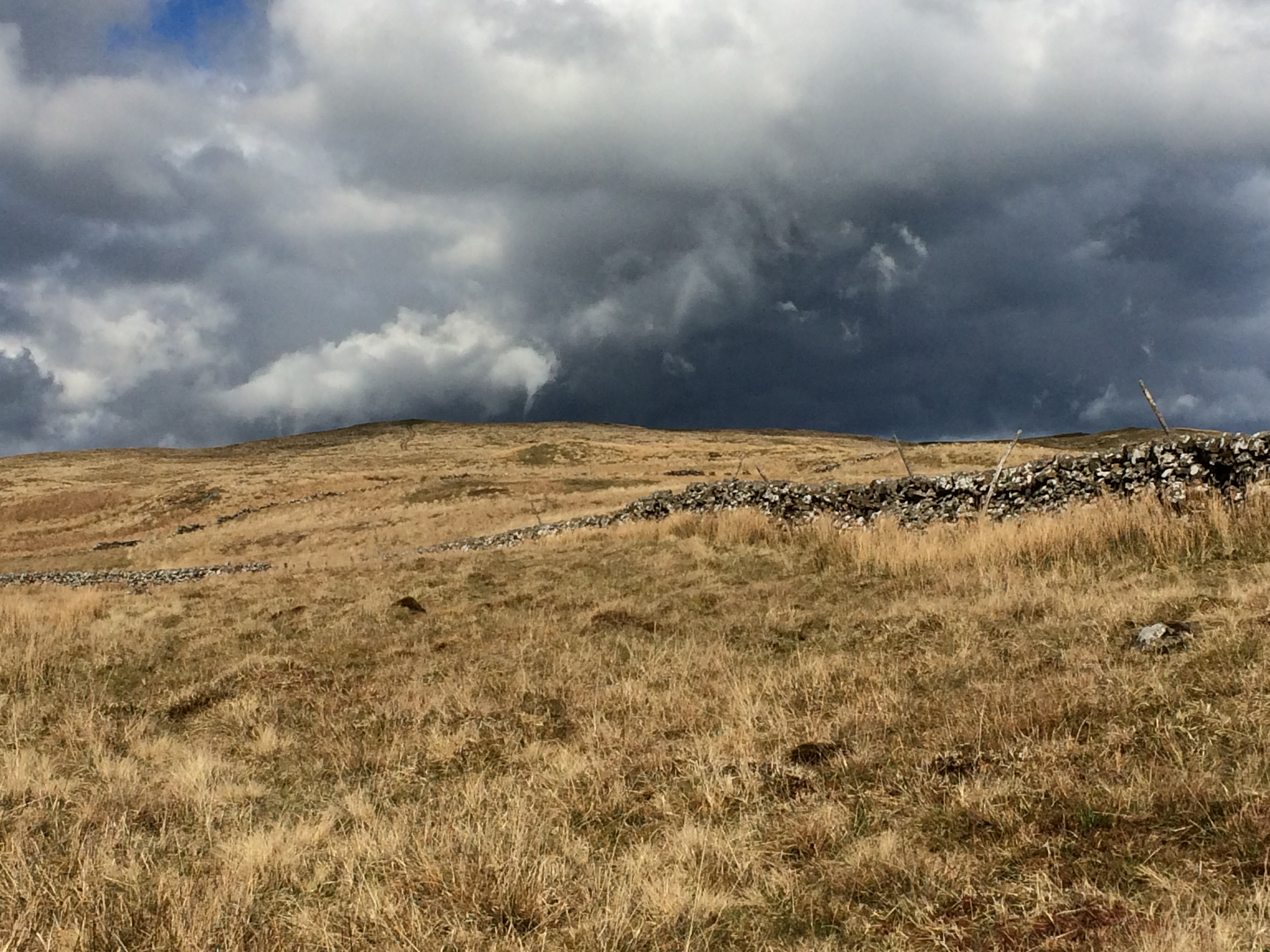
Up on my grandfather’s place, “The Chayne”, once famous for its birds, I’m now facing a year without any curlews at all. It’s likely this will be the first time in many centuries that our hill will go into spring without the sound of curlews.


 Bog Myrtle & Peat
Leave a reply to Christopher Land Cancel reply