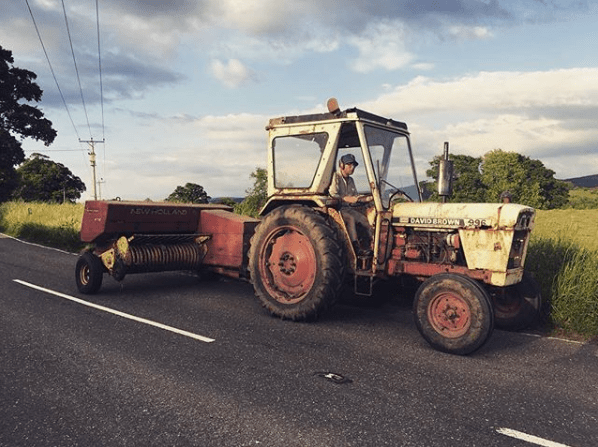
The hayfield is turning green again. The rain came and soaked out the rooty yellow stubble which was left after the baler came, and now the field shows a shimmer of life again. The baler came and it has stayed – I ended up buying it; a New Holland Hayliner 276. This machine might just be the most exciting and complex object I have ever laid my hands upon, and I have already spent a good deal of time oiling and greasing each of the many moving parts.
You could argue that I hardly need my own baler for the sake of three or four hundred bales a year, but hay balers are hard to come by and I value my independence in this project. My first steps into farming were utterly governed by the whims of contractors, many of whom felt that I was just a pipsqueak. I was continually sidelined and knocked to the bottom of the queue, and I have since worked hard to have my own machinery so that I can work as I choose. It’s hard to imagine how any small project can function successfully in a world of big machines and mega-contracts, and this baler should give me the freedom to work on my own terms.
It is also worth quickly recording an idea which came to me as I struggled and sweated through haymaking this year. Farmers often say that haymaking became unviable when the weather became wetter and less reliable. I agree – it’s wetter now than it was, but now I think this simple explanation is part of a more complex picture. We cut our hay on a Saturday, turned it on Sunday and Monday, then baled it on Tuesday. It is almost perfect; the best crop of hay that lots of neighbours have seen for years.
However, the job required a huge amount of labour and special attention to get the grass dry and ready for baling. I was able to tackle a six acre field and we took just under three hundred bales from it, but I’m not sure how I would have fared with ten or fifteen acres. Perhaps I could have managed fifteen acres in three days, but I would have needed a good deal of help.
The reality is that haymaking is much more hands-on than making silage – the level of human involvement is much greater. Hay is fiddly and subtle, and it simply doesn’t suit big operations which depend on volume over detail. Weather plays a part, but even the worst years often have three days of good weather – you can grasp a momentary window of good weather if you only have one field to worry about, but it’s harder if you have to tackle several hundred acres. Weather plays a part, but industrial economies of scale are probably more significant.


 Bog Myrtle & Peat
Leave a reply to Three Fields of Hay Cancel reply