The cold weather has held everything back, and April is slipping away as if it were March. It has hardly been worth looking for any signs of black grouse yet, and the curlews are oddly subdued by the cold winds which run over the hills from the North and East.
Stretching our legs last night, my wife and I climbed on to some high ground behind the house to get a feel for spring’s progress. This hill is an awkward, tricky place to reach at the best of times, and extensive areas of dense commercial forestry place the summit beyond the determination of most people. It so happens that this is a good place for ring ouzel and it forms the last tiny stronghold for black grouse in this part of Galloway. It’s always worth the hard, brutal slog through miles of broken forestry, and in many ways it’s a wonder that public land has been allowed to become so inaccessible. I’m certainly not complaining, as the lack of visitors make this a valuable place to walk and watch birds.
Red grouse cackled on the flat, heather-buried top, and we found some fresh signs of black grouse where the moss had fallen away and the hill’s bare knuckle was exposed in a ledge of granite.
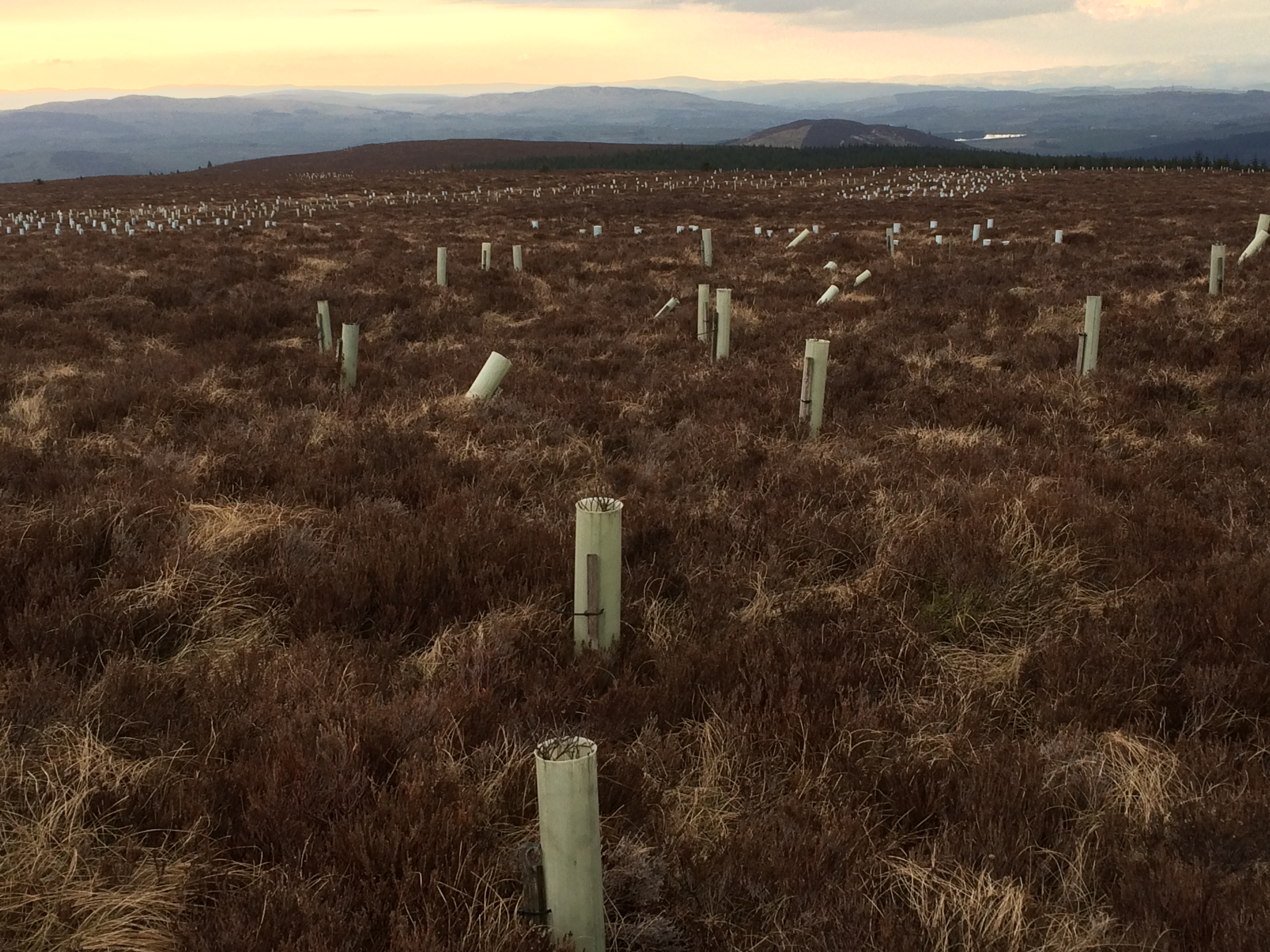
As always, we were staggered by the extensive mass planting of native trees which took place here over a decade ago as part of a Heritage Lottery Fund conservation project for black grouse. I remain utterly unconvinced by the logic of this planting, which would have served only to break up a good (and increasingly rare) piece of open hill ground – but my opinion hardly matters because the trees have almost all failed. Many are dead, most have been nibbled into bushes by the deer and perhaps one in every hundred has survived to extend a sad, bushy twig more than a few inches above the top of the plastic guard. It’s a cold, exposed spot and it would be unfair to expect rapid growth on the summit of a tall hill, but there are major problems here which go beyond aspect and altitude. There has been zero follow-up or maintenance for this planting, and the roe deer have been having the time of their lives.
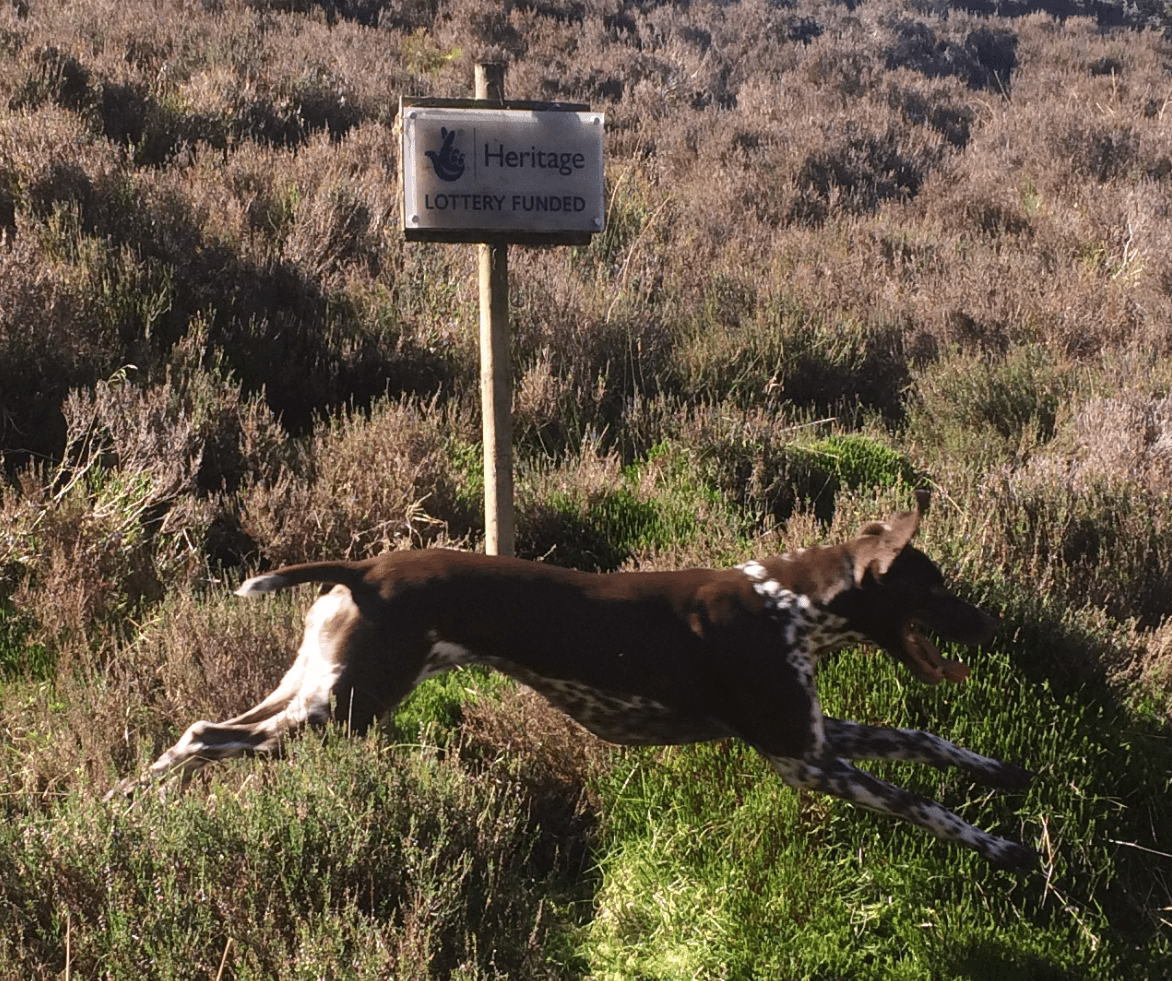
It’s not easy to find much information about this project, but it seems to have been a partnership between RSPB and the Forestry Commission. I’m happy to be corrected on this, but as you walk up the hill through a dark, moss-covered forest ride, there is an utterly bizarre plastic Heritage Lottery Fund sign which claims ownership of the work. It’s a creepily corporate spectacle, and it stands so far away from the planting that at first sight you have to wonder what it’s claiming credit for.
Ten years on, the only thing this work has achieved is the wholesale desecration of a stunningly beautiful piece of open hill ground – thousands upon thousands of empty plastic tubes stand whistling in the wind. They will never be removed and survive as a permanent reminder that trees do not come to anything without long term deer management. It’s hard to convey the scale of the planting in a photo (above), and now I’m hoping to borrow a drone and get some aerial views which would help to make the point.
It is very difficult to create useful habitats for any species with a single “one-off” lump sum, and it’s bizarre that so much money was spent without any real follow-up or maintenance. Black grouse are a particularly expensive species to conserve because they require proactive, dynamic management across entire landscapes – this looks more like a momentary splurge of funding, jettisoned into the wind before the end of the tax year.
As if to emphasise the value of continuity, I note from some small records of the project which still survive online that heather management was also undertaken when the trees were planted. Some lines were mowed in the undergrowth, and some of this work is visible on old satellite imagery (grid reference is NX913630). But again, plants have a habit of growing back and this management has now almost vanished from sight. Perhaps it would have had value if it had been sustained, but you cannot manage a moor for a single season and then consider the job done forever.
I can’t help thinking that this work has been brushed under the carpet. A lack of sustained input has rendered this work utterly meaningless, and it would be nice to see the project partners taken to task for wasting a decent slab of conservation funding. As it is, nobody knows it ever happened and nobody will ever see the dead plastic forest on the hills between Dalbeattie and Dumfries. The black grouse which survive on this hill do so because it’s a good spot, well-linked to several areas of suitable habitat. They probably owe their survival to a lack of human disturbance, but their position is precarious and seems to be on a constant knife edge. I can’t see that they derived anything more than a brief and tiny boost from the heather management, and zero benefit whatsoever from the trees.
Brexit has presented us with the chance to review how we look after wildlife and fund conservation work. I hope this project (which amounts to little more than semi-industrial littering) serves as a useful case study for how black grouse should not be conserved.


 Bog Myrtle & Peat
Leave a reply to Alan Jackson Cancel reply