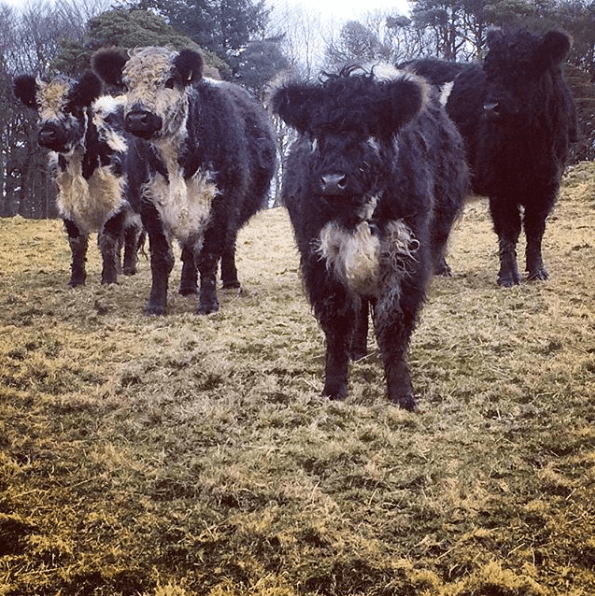
I can hardly write about the soil without a quick mention of the cattle, which continue to thrive in the bitter cold. The hardy, hairy beasts have hardly blinked at wild winds and stinging ice. They are now eating a big bale of silage every five days, and there is a glowing pleasure to see them tumbling down through the gorse to meet me when I arrive on the tractor, huffing and squabbling amongst themselves like teenagers.
On reflection, I am so glad that I decided not to have them scanned to determine pregnancy at Christmas time. This would have revealed which heifers were in-calf, and I would now know exactly what I am in for in May and June. There were various factors which turned me away from the vet, but the main one was the prospect of more bills and additional cost. As it is, I have no idea which beasts are in-calf and I am left constantly guessing.
From what I have gathered, heifers are very slow to develop their first udders, and while I can see promising signs in one or two beasts, there have been absolutely no clues from others. Recalling the chaos of last summer’s bulling, it may be that some of the heifers will not have calves until July and it’s perhaps no surprise that they should be keeping their cards close to their chest. In the meantime, the suspense is killing me and I analyse every movement they make for some new clue. I had not reckoned it would be so exciting, particularly since a good deal now hangs on success or failure. I agree with my father’s comment; that having pregnancy tests is like opening your Christmas presents early…
And perhaps I will regret the decision not to have the tests carried out. If it turns out that one or two of my heifers are not pregnant, they run the risk of growing too fat and heavy to conceive in 2018 and may never be good breeding animals. Of course it’s a risk, but this process is such a steep learning curve that I can hardly cover every potential hazard. If it’s a mistake then I will learn the hard way.


 Bog Myrtle & Peat
Leave a reply to James King Cancel reply