I never meant to keep cattle indoors. I wanted to work with low maintenance, traditional animals which prospered beneath a changing sky.
But life intervened. We have been forced to convert the old garage into a mini cattle shed to house the new bull calf, and work is in progress to make this arrangement more permanent and robust. This bothered me to begin with. I understood why so many cattle are kept indoors, particularly in the winter, but I felt sure that the beasts could only perform their fullest role in conservation if they were outdoors as nature intended. In reality, it seems that housing animals can offer some interesting and unexpected angles for wildlife.
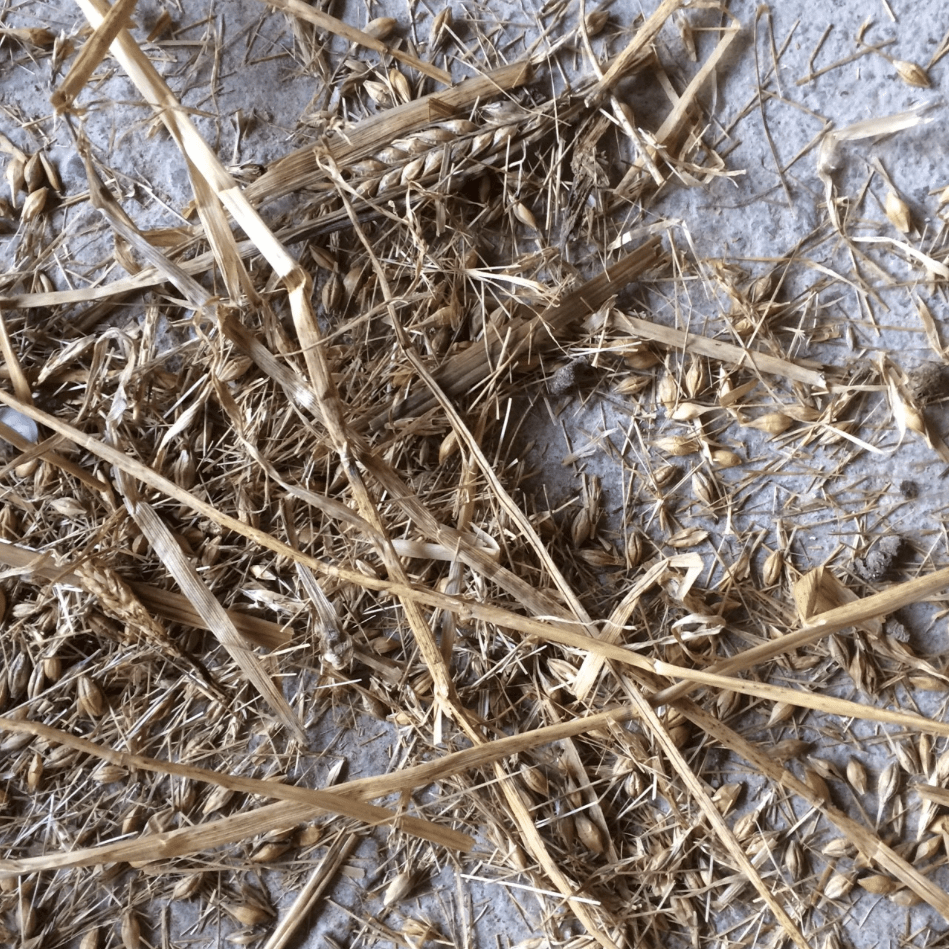
Indoor animals require bedding. This concept was new to me after three years of outdoor cattle, but I begged a big bale of barley straw from a neighbour and set about it with a knife. As I slashed open the outer web of netting, the enormous bale exhaled like a girdled belly and collapsed into something resembling a giant poached egg. Amongst the straw, a million pearls of barley skittered out over the shed floor. Some grain is usually found in a bale, but this was excessive – there must have been something wrong with the settings on the combine harvester.
Our chickens gathered round in ecstasy as the bale continued to collapse, and the birds scratched out the grains from the concrete floor. This was just a greedy bonus for our birds, and the spread meant more to the feral pigeons which live in the yard and go unloved. These birds gorged themselves, and passing jackdaws eyed the plunder greenly without the courage to come down and steal it for themselves.
The banquet rambles long into the night, but I am not invited. Mice scuttle through the pile of straw, and bigger beasts besides. Rats are insatiable, and they fumble at our scraps with their fleshy, mobile little fingers. They have been raiding the pigsty for several weeks, but their thrilling, berry-bright eyes were soon transfixed by the barley. The shed where the straw is kept has become a thief’s bunker, but the rats’ enthusiasm has come at a price. I pulled apart a very fresh barn owl pellet this morning and discovered the skull and teeth of a teenage rat, cocooned in a sticky swathe of hair. An entire mini food-chain has been established around this single bale.
Meanwhile, the bull shits. His straw is soon foul and needs to be cleaned out. It takes him a week to fill my quad bike trailer, and I have started to chuck this out on the hayfield. We will soon be ploughing this field, and the mix of muck and straw will vanish underground to help the soil and feed the worms to feed the wading birds. But while we wait for the plough, cow muck (and a regular barrow-load from the pigs) is weathering away in the frost and rain. Scattered gems of barley, straw and filth attract all manner of birds, from rooks and starlings to pheasants, partridges and finches. The uneven mounds of waste make a compelling attraction for wildlife, and it has been fascinating to see nature respond.
Perhaps I’m leaning too heavily on silver linings. Most farmers would interpret this tale as bad management – I’ve provided a food source and now I’m being ravaged by “vermin”. I agree that it’s hard to see rats, jackdaws and feral pigeons with much enthusiasm, but they are still relevant. Rats feed owls; pigeons are plucked by falcons and hawks, and I have a place in the chain.
And this little surge of activity is encouraging at a more abstract level. This farm should be a place of activity and change; a place where nutrients are cycled and wildlife is kept vital by the movement of soil. I have stumbled and clambered over this point many times and have never been able to express it clearly, but I feel sure that nature responds to active management – to human beings “stirring the pot”.
Wildlife has been lost for so many reasons, but I think we underestimate the importance of “stirring”. It is no surprise that nature should fall asleep when large areas of the countryside are placed under repetitive, snoozy regimes boosted only by the occasional dose of Nitrogen fertiliser. Turn the soil, grow a variety of crops and waste some in the harvesting; spread the muck and trample the grass with hooves; keep things moving and surely nature will respond. I am determined to put flesh on the bones of this idea – the possibilities crowd around me.
Of course I would prefer my work to benefit “nice” species which provide interest and diversity, but I’m aware that the definition of “vermin” is subjective and the word itself has become an ugly antique. I might not have chosen to promote jackdaws and mice, but perhaps they’re just a beginning. I would gladly host both if the alternative was nothing at all.


 Bog Myrtle & Peat
Leave a reply to New Moons For Old Cancel reply