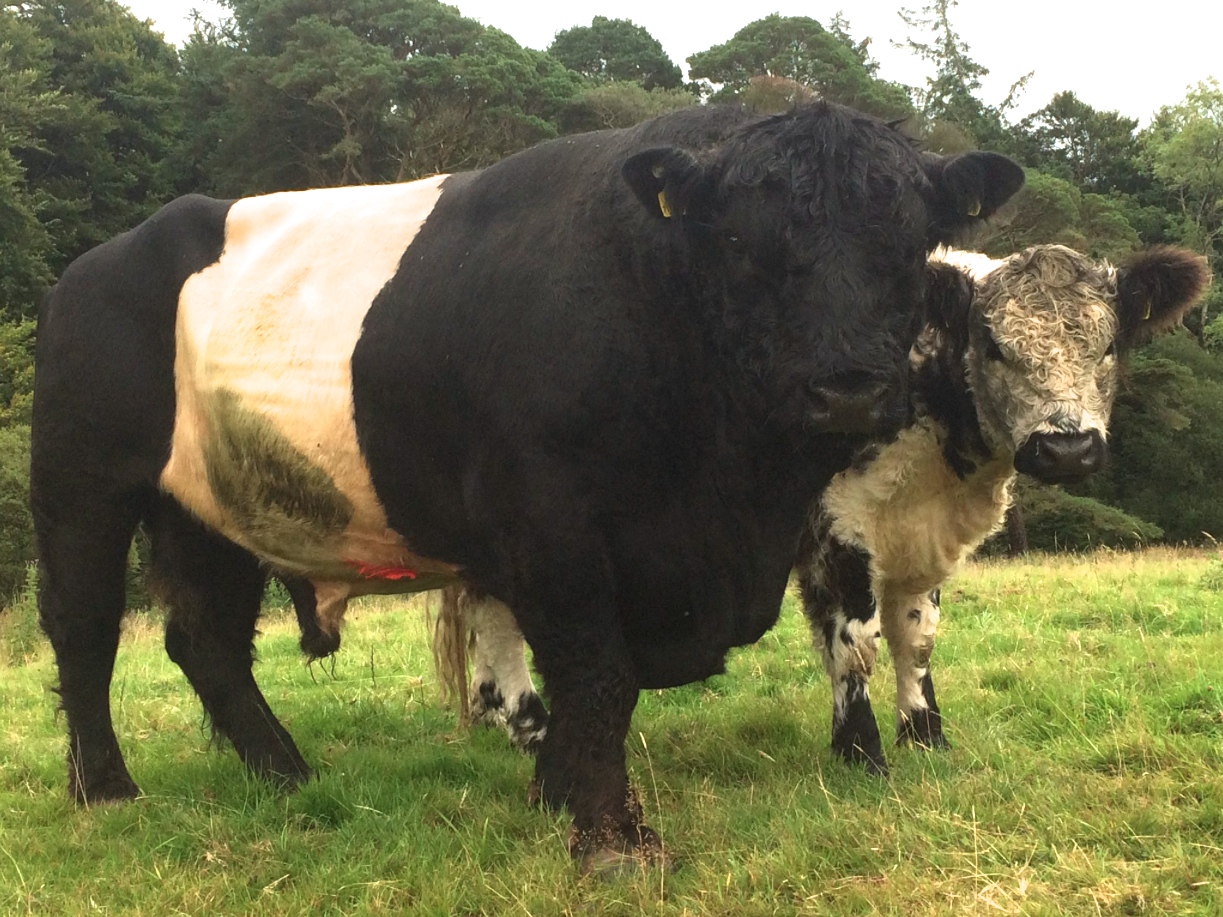
The saga surrounding my galloway cattle continues to unfurl as further doubts are raised over the potency of old Charlie, the beltie bull who came to the farm last month. I have a sneaking suspicion that the old boy has worked more often than he is letting on, but the farm he came from is willing to do a deal and will swap him for a younger animal in order to salvage something of this year’s bulling.
A replacement will come on Tuesday, and I hope that the new fellow will tie off any loose ends which still require attention. I’m very grateful to Charlie’s former owners for this, and I’m encouraged that the old boy will live out the rest of his days in retirement – there’s no doubt that he is an absolute gentleman, and I’m proud to have owned him.
But at the same time, we are now so far off Plan A that I scarcely recognise the original project. Much has changed over the last month, but I am coming to see that buying a belted galloway bull was a mistake. The thought process made sense at the time: I found myself without a suitable bull in June, and I panicked. Working on the assumption that “some calves are better than no calves”, I made a half-blind departure from my riggit project and entered the world of belted galloways as a means of rescuing a badly organised fumble.
This current situation has brought me to understand two important issues:
“Galloway” cattle are extremely varied. The name “galloway” is a cover-all for an extensive range of disparate animals, and belted galloways stand apart as a totally separate breed. Belties are perceived as fine, iconic symbols of southwest Scotland, but they’re not really my cup of tea.
I was wrong to cross my wires and assume that because they were both “galloways”, a belted galloway bull would be a good fall-back choice for a riggit heifer. The consequence of this (if not by Charlie then by his replacement) will be mis-marked “mongrel” calves next summer – I don’t regret this at all and I’m sure I’ll enjoy the challenge, but I must confess that it is a botched job. There will be no real market for the calves except as stores to be fattened and killed, and I may struggle to afford this. I will be lucky to recover my costs at the end of the process, and while I didn’t enter this project expecting to make my millions, panic and poor planning have not helped. I now have to set this error to one side and focus on what comes next.
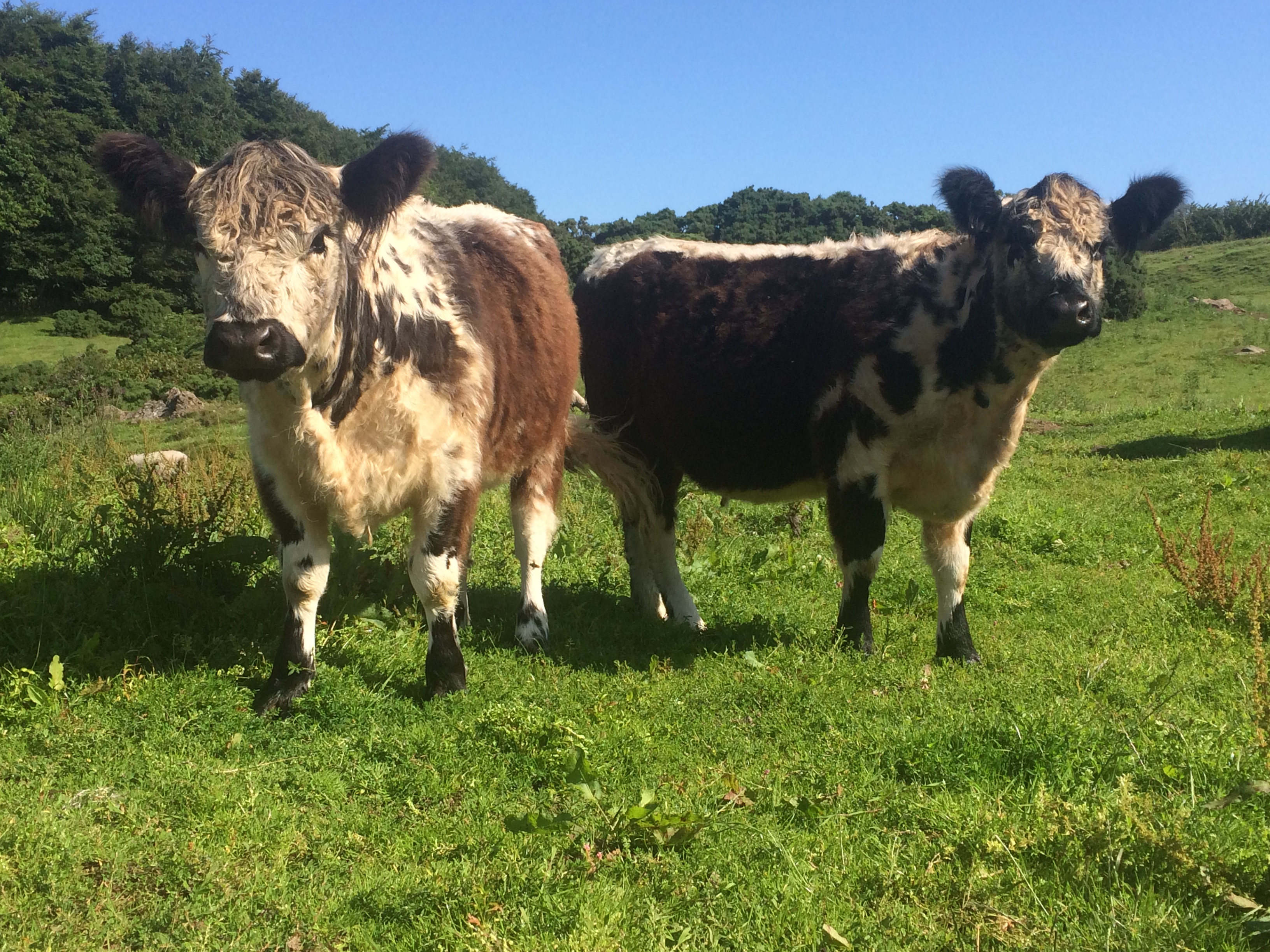
The second (and perhaps more significant) issue is that while I admire belties, traditional type riggits really float my boat. I hadn’t realised until a visit from the Riggit Galloway Cattle Society earlier in the month that I happen to own some really excellent heifers. The visitors’ praise went beyond politeness, and I was delighted to hear resounding enthusiasm for my heifers. One beast in particular (of which more anon) was described by a few people as “perfect”, and a visitor solemnly informed me that she was “the best riggit I’ve ever seen”. I can hardly claim much credit for this, but I can’t deny that comments like these make me glow with pride. More importantly, they also help to refine my thinking.
This cattle project satisfies several criteria in my head aside from my driving passion for conservation. Entering my fourth decade, I was keen to create and develop something that I could be really proud of – something I could hang my hat on. Until recently, I didn’t recognise the significance of my genetic stock or the potential I had to do things really properly.
“Working for Grouse” is a long term project, and I hope that cows will grow to be an increasing part of it. I don’t have much money to spend, but it makes sense to me that I should focus on working with the very best pedigree livestock I can afford. This not only conforms to the idea that if a job is worth doing, it’s worth doing well, but it also makes the entire cattle project more relevant. I daresay I could achieve my conservation goals with any old ragtag bunch of misfit galloways, but building a tip-top herd of pedigree animals in tandem with my other aims would be an active endorsement of integrated land use. I am always impressed by the grouse moors which take on sheep to mop up ticks and end up not only with more grouse but also top prices for their fat lambs – everyone can be a winner with properly balanced management.
Riggit galloways are never going to be a mainstream cattle breed, but there is a universal relevance in getting the best out of your chosen breed, whether it is a Charolais or a Shetland. I need this project to be sober, focussed and relevant, otherwise I’m forever doomed to be a conservationist playing at farming. Of course there’s plenty of leeway for experimentation and fun, but a top notch end product is going to be key.
It’s become clear that once the dust has settled on this first distracted year of belted galloways, I am going to set my sights on the real prize. I already own the blueprint for the “perfect heifer”, and my challenge is to find a way of producing more. From this moment on, it’s riggit or bust.
Perhaps I’m wearing my heart on my sleeve a little too much for public consumption. In many ways, this article makes me look like an idiot, and I must admit that I have doubts about publicising my own errors. However, this is a record for me as much as it is a public forum for criticism. I’m writing this to be honest, and it wouldn’t be a very useful piece of writing if it glossed over my many and varied errors. At the same time, errors can be extremely instructive – I’ve thoroughly enjoyed chewing over these dilemmas, and (more importantly) I have learnt a great deal .


 Bog Myrtle & Peat
Leave a reply to Alan Jackson Cancel reply