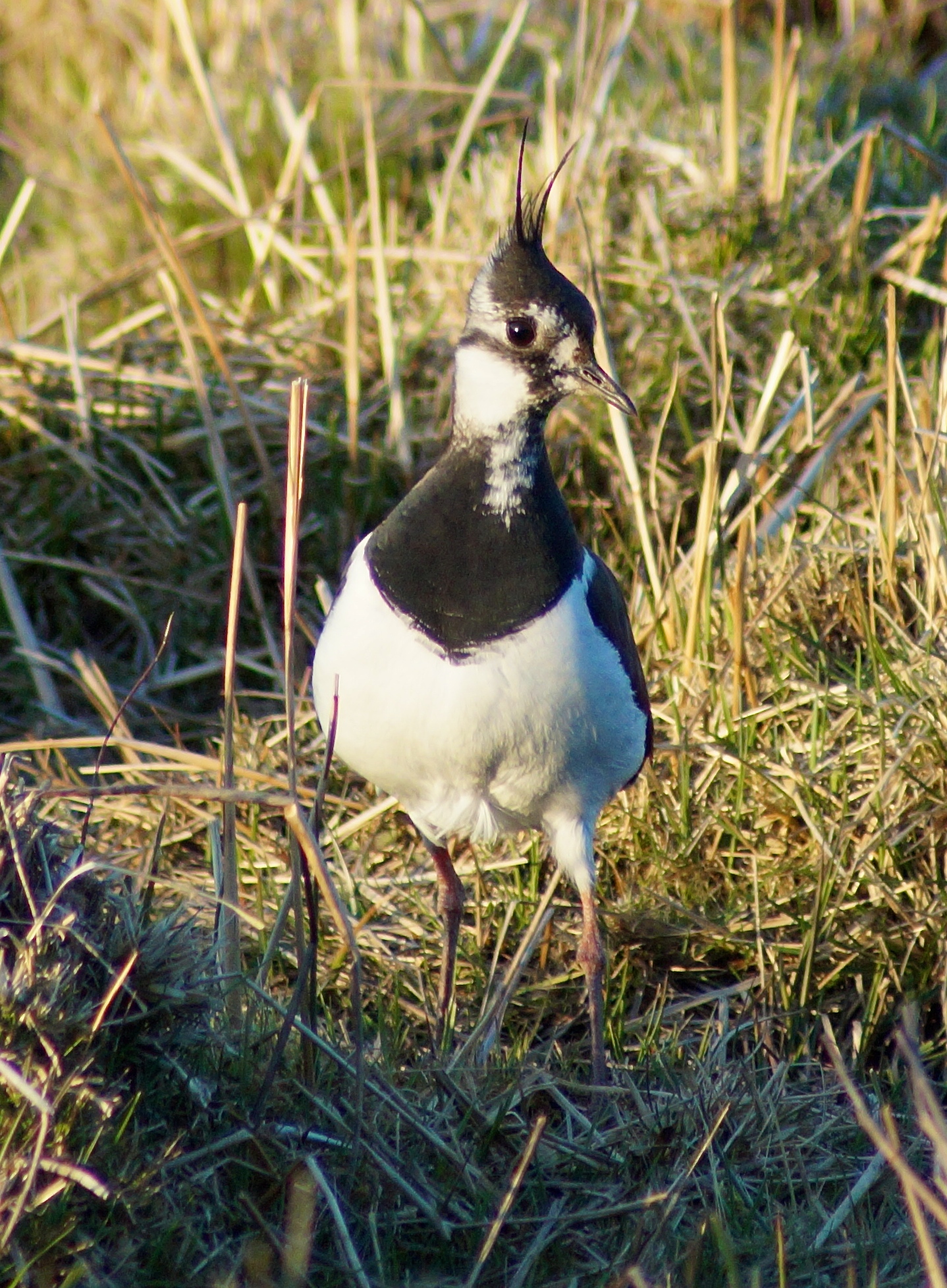
Strange to see a single male lapwing return to the hill for a period of intense displaying over the weekend. There have been no truly viable attempts to breed in the glen for five years, and there have been no birds at all for the past three. This one bird added a lively fizz of song to the still evening chorus of snipe and blackgame, but now I think he’s gone again.
Most waders are strongly faithful to their original place of birth and will always try to return there to breed – this is why it is so hard to expand their range or re-establish them after they have been lost from a particular area, so this single cock is probably just venting his hormones after having failed elsewhere and is trying the glen on some speculative foray. Perhaps he was hatched here several years ago but moved away and now considers the glen to be “worth a look” in passing.
We have all kinds of waders passing through each spring. The oystercatchers from further down the glen sometimes turn up and feed, and some large trips of golden plover turn up on the high ground throughout April and May. They never really intend to breed with us, but their return is like some half-forgotten memory of bygone days when everything was different. Within a single human lifetime, there were redshank, dunlin and plover breeding on the hill, but I wouldn’t advise them to try it today. The hill has changed, and even with the best intentions, I can only hope to make a small dent in the tide of predators which combs through the grass around the clock.
So much of this wandering wader traffic takes place at night time, when peeps and squeals ring against the stars. Only a relatively small percentage of a population will breed each year, and perhaps it’s no wonder that youngsters or non-breeders are feeling footloose and happy to explore under cover of darkness. But at the same time, it’s easy to imagine that these half-heard sounds are the ghosts of Springs long past.


 Bog Myrtle & Peat
Leave a reply to rupert stutchbury Cancel reply