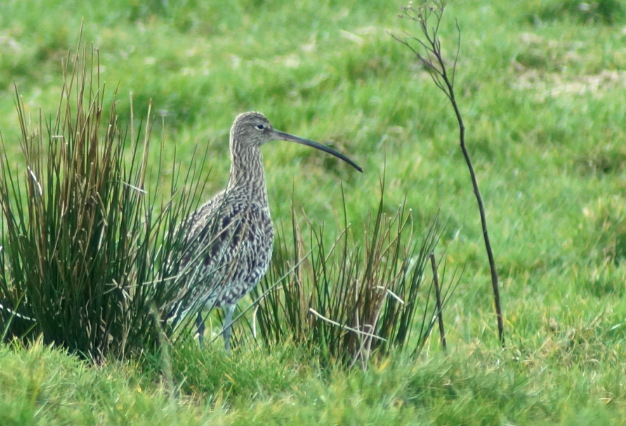
Big things are happening up on the hill. The curlews came back in dribs and drabs from the 25th March, and the wheatears were close behind them. Larks and pipits tumble out of the sky like confetti, and every burnside has a pair of grey wagtails holding territories. I sat beneath the curlews on a sunlit hill yesterday and inhaled the warm, sunlit moss. It was hard to decide whether I should laugh or cry with delight.
I have been a bit obscure about these massive, life-affirming events on the blog this year, not only because I’m working on my painting and time hasn’t allowed me to rhapsodise as normal, but also because I’m compiling several years of notes on curlews for a book on the subject. Details are still a little vague, but it’s a very entertaining project to work on and I’m excited by the possibilities it raises.
This is a key moment for curlews in Britain, and if I can capture something of their exceptional value on paper, then perhaps it could serve as a wake-up call for their awful decline. I have been watching the tragedy unfold, and as we stand on the precipice, we need to act.
I’m drawing on books and scientific papers, but also from the archives of this blog and the extensive piles of notes that I painstakingly copy up every night, and I’ve amassed such a huge library of material on all kinds of upland waders that I hope the final result will be a punchy, powerful piece of work.
More to come on this, but again, be aware that much of what I’m seeing and doing is being compiled elsewhere…


Leave a Reply