Last year I found a dead mute swan on the beach at Dundrennan. Thrilled to find that it had a leg ring, I took the details and contacted the BTO, hoping to be told wild, romantic tales of migration across the arctic ocean. The response was very quick from a bird ringer on the Isle of Man who had been keeping tabs on this particular swan for several years. It would seem that its story was no more interesting than an ambiguous death and some tidal movement from Ramsay harbour to the Scottish Solway coast. While it wasn’t as thrilling as the first swallow found in Durban, the dead swan did provide an insight into the world of bird ringing. The mechanism which allowed the man who had ringed the swan to get in touch with me just a couple of days after contacting the BTO was quite impressive, and I was pretty surprised not only to find details about the swan’s life but also a photograph of the bird itself during a more animated period in its existence. An entry on the Manx Bird Ringing Blog recorded the incident in more detail –
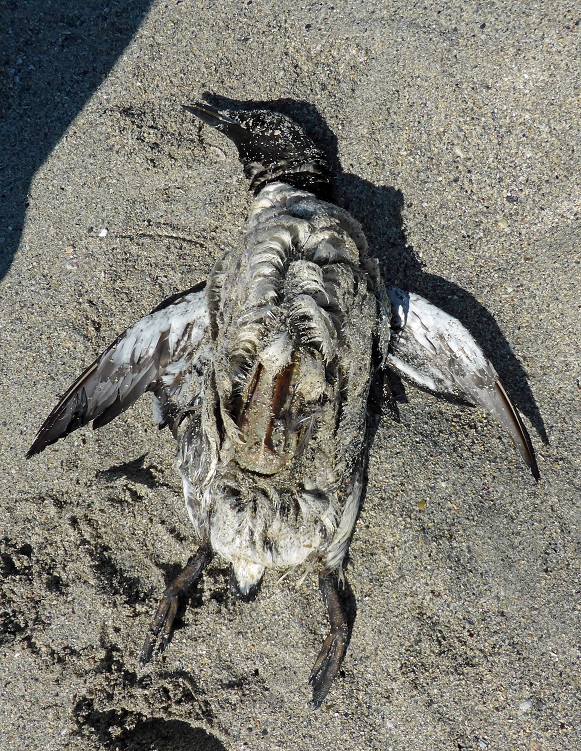
Although my first encounter with bird ringing was not the most exciting, I recently found a dead guillemot on the beach at Ballevullin on the Isle of Tiree. Although the dog’s first instinct was to roll in the melting cadaver, I spotted that it had a small leg ring. Putting the small fold of metal in my pocket, I remembered the excitement of hearing back about the swan and wrote to the BTO as soon as I got home from my holiday. Having received a response this morning, I can now say with some surprise that the dead guillemot was twenty two years old! I had it somewhere in my mind that seabirds do live for extended periods, but the fact that this bird has been going about the inner hebrides since I started primary school is quite extraordinary. Ringed on the Isle of Canna on the 3rd July 1991, this hardy little bird would have posed some difficulties to even the most determined chef, and it is no wonder that the residents of those far northern isles around Greenland and Iceland deliberately rot meat before eating it, presumably to convert the leathery sinews into something more palatable. Presumably a young guillemot would be quite acceptable (if somewhat fishy) fare, but to go head to head with a twenty-two year old would require black and decker cutlery and a jaw like desperate Dan.
It is worth mentioning to anyone who spends time in the countryside that there are huge numbers of bird ringers on the loose, and they have managed to ring a staggering number of birds. If you do come across a dead bird of any species, take the time to check it for a ring. Now that it is digital, the process of returning rings takes very little effort and it does give you an odd swell of pride to contribute to research. After all, it takes a trained professional to ring a bird, but the process is fairly fruitless without soft-headed amateurs (like us) keeping an eye peeled for rings and feeding them back into the system at the other end.


 Bog Myrtle & Peat
Leave a reply to Andy Cancel reply