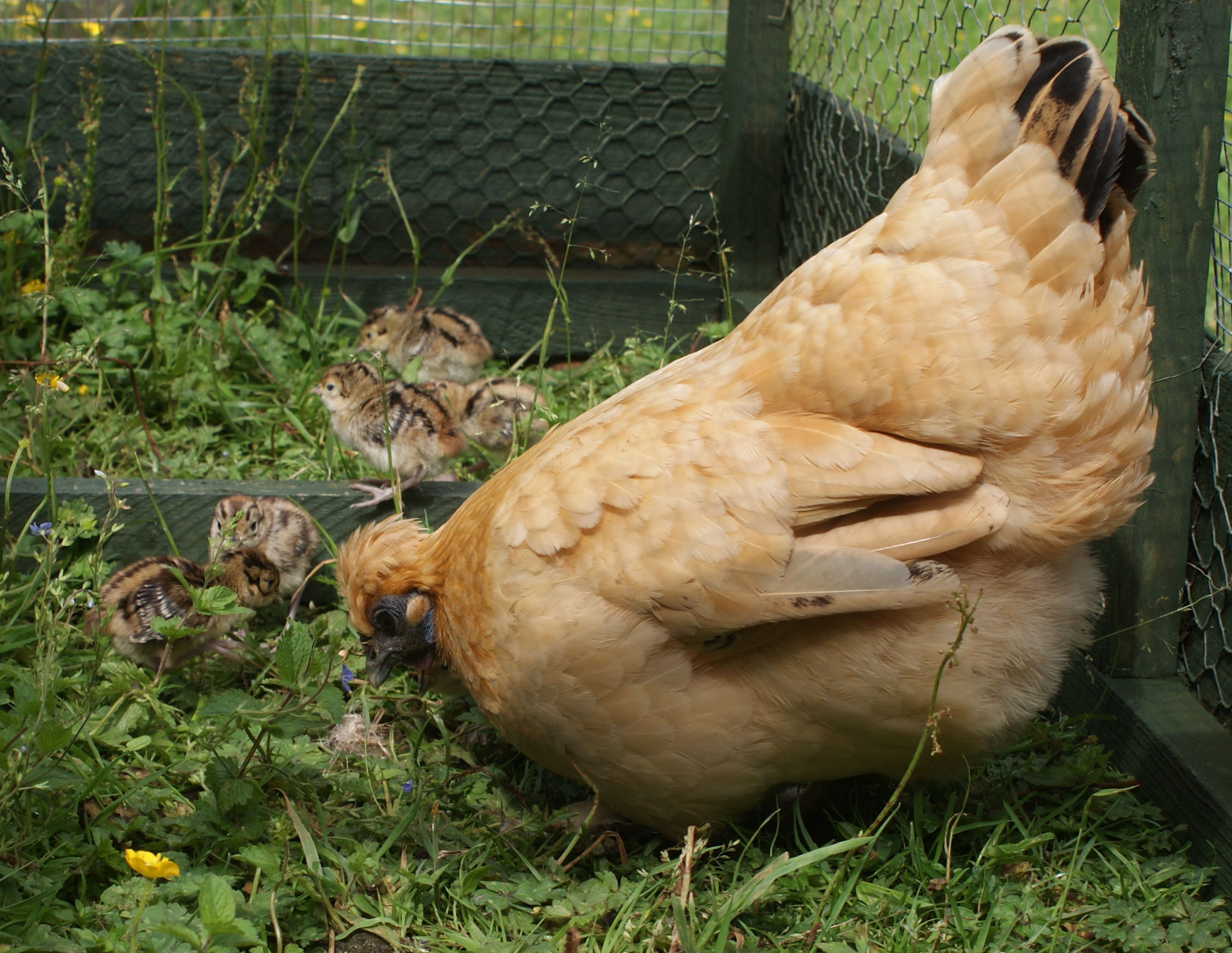
After the stress of Monday’s bloody hatch of pheasant chicks, it’s worth mentioning that I now have seven healthy chicks beneath a broody. I know this is effectively the most basic thing for a would-be gamekeeper to have done, but it’s been a real thrill and amazingly satisfying to sit and watch. It’s still early days, but I’m confident that these little birds will become far better pheasants than others reared in an incubator. The broody is teaching them things every second of the day, and you can almost see their brains growing as she sets them little tasks and challenges. By comparison, a chick reared in an electronic brooder would have nothing to do except consider the possibility of pecking other chicks.
I’ve got no specific problem with the mass production of game birds. I don’t know very much about it, but I have seen how seven week old poults react to their first taste of life outdoors, and I can’t help thinking that there are better ways of doing the job which might prepare young birds for a life in the wild. Obviously, there are financial constraints to producing game birds and going back to the ways of the 1920s is totally unrealistic.
There is a demand for large quantities of affordable birds, and it’s not for me to wade in and even suggest a criticism of an industry that I don’t really understand (although ignorance doesn’t seem to stop many anti-shooting commentators). All I mean is that I’m delighted to have found a way of producing birds which suits me, not only because the resulting pheasants will be high quality birds but also because I get to see them growing and learning in a more natural environment.
This broody hen sat on thirteen eggs. Four of the eggs were infertile and she killed two chicks. Every fertile egg hatched, and if it wasn’t for the killing, she would have turned 100% of the viable eggs into 5 day old chicks. This was the same with the black rock bantam which hatched off 100% of the viable pekin and sebright eggs under her last month, then accidentally killed one by scratching a turf over onto its head. You’d probably struggle to get the same results in an electric incubator, and the more I see of hens as broodies, the more convinced I am that this is the way forward for me. After all, reduced to its most basic advantage, there is no work involved whatsoever. You have to make sure that there is food and water, but the broody regulates heat, brings them in from the rain, teaches them how to forage and shows them what danger is. Once they’ve hatched, all you have to do is sit back and watch.
I now have to deal with an incubator full of grey partridge chicks which are due to hatch today. My only regret about this summer is that the timing never worked for me to hatch grey partridges under broodies, but if these eggs hatch as the chipping suggests they will, I’ll have my own breeding stock next year and things will be a great deal more flexible.


Leave a comment