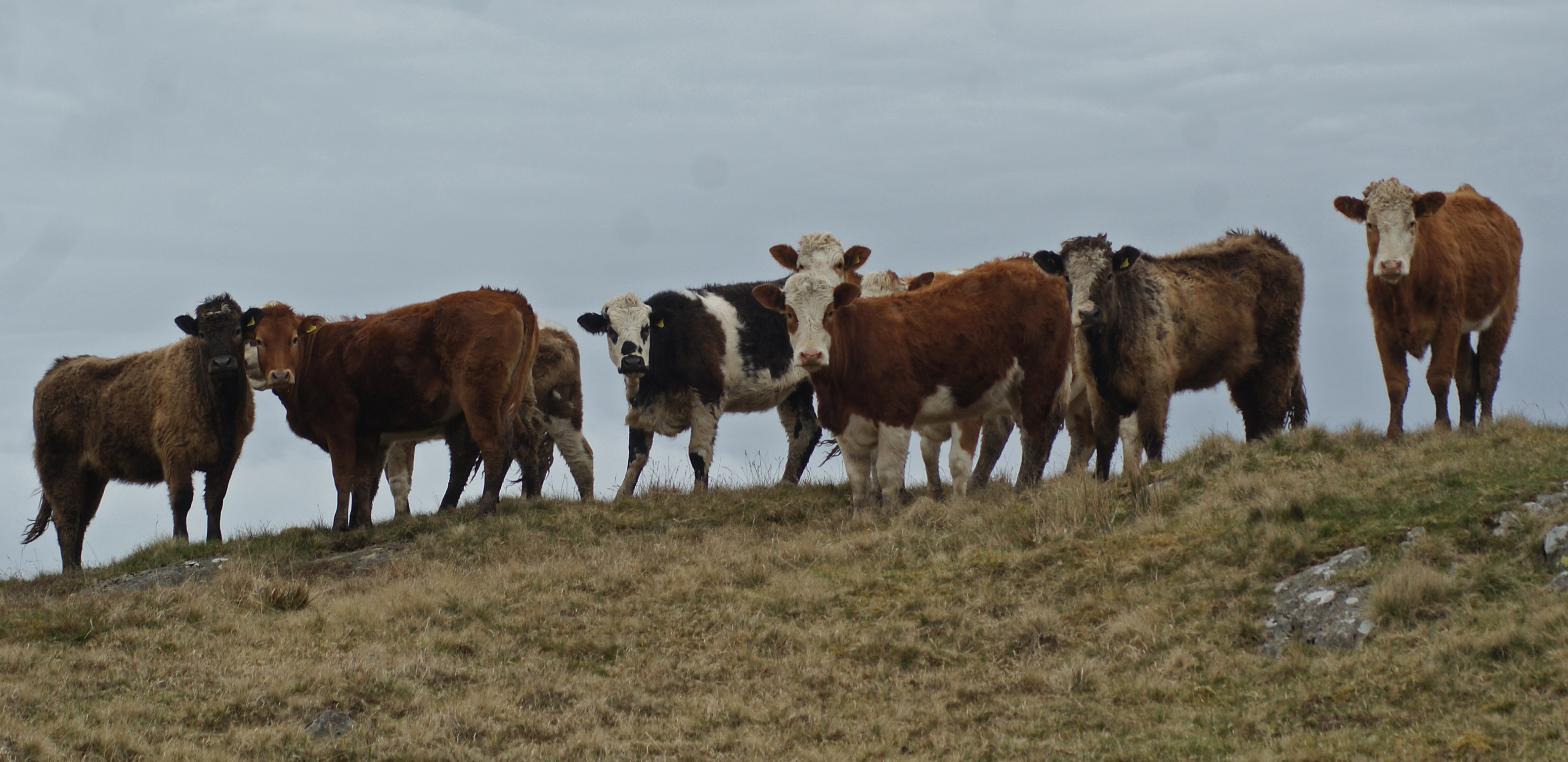
A few days ago, the cows returned to the Chayne. I usually dread their arrival, because they quickly go wild up on the hill and stampede at the slightest provocation. It’s frustrating to lie out for a fox and have forty cows staring at you with the same amount of fascination as if you were a grounded NASA satellite, or to stampede them at a crucial moment when a red offender is sitting in the crosshairs. The smash up the fences, knock the copers off the dykes and generally chase their heels around the hill with a free reign until September, when they are taken home to a farm by the Solway coast again.
However, and it’s a big however, recent research has shown just how important cows can be to black grouse numbers. Land grazed by sheep and cows produces three times more black grouse chicks than land grazed only by sheep, and the root of that difference is in the quantity of shit that cows produce. Every cowpat becomes an instant city for any number of bugs and beasties, and these are vital as a source of protein for black grouse chicks during their first few days of life.
Where cows go down to drink, they mush up ditches, burns and puddles with their hooves and cover the whole lot over with copious quantities of shit – starting a chain reaction which ultimately leads to monstrous numbers of insects – the perfect location for a greyhen with a team of cheeping poults in her wake. It’s not pretty, but it fills those young crops and gets them off to a strong start.
When my grandfather bought the farm, he kept pedigree Galloway cattle on the hill throughout the year. This can only have helped the place, and there is a chronological correlation between the removal of the cows and the decline of the last birds. It probably wasn’t the reason for black grouse decline, but it was one of many small contributing factors which brought the birds to their knees. Only recently have cows returned to the hill, and it’s not hard to see what a difference they’re making to the insect life in their favourite spots. Used carefully so as not to damage the heather, summering cows on the farm should make a difference to how successfully black grouse and a variety of other species breed, and that can only be a good thing.
Extra Update courtesy of Harrier Fanatic: "The link with cattle and Black Grouse is largely due to the sward that cattle promote by their grazing. It
creates an uneven sward structure that as been proven to benefit invertebrate numbers. Sheep nibble favoured areas while largely ignoring others,
whereas cattle wrap their tongues around vegetation and pull it out indiscriminately which helps create niches in the vegetation ideal for invertebrates.

Cattle also benefit moorland by controlling unpalatable grasses as well as opening up the sward for heather seed by poaching the ground. The diversity
in the sward structure should benefit broods too by providing areas of shelter with drying off areas.

I do disagree with you regarding dung, most bovines are treated with Ivormec which not only acts as a great agent for removal of bovine parasites
it carries on being effective months after it passes through the body, So any insect that tries to digest the dung is killed by the Ivormec.
Also Invertebrates that are favoured by chicks are lepidoptera and sawfly larva which generally feed on vegetation". [from a comment - below]


 Bog Myrtle & Peat
Leave a reply to Harrier fanatic Cancel reply