When you set out to create a wild shoot, you can’t be picky when it comes to which game species responds to your efforts. Although pretty much all of the work I have done over the past two and a half years on the Chayne has been in the name of black grouse, snipe seem to have been the main benificiaries so far. I look forward to visiting the Chayne over the next six or eight weeks to hear the first drumming birds over the bog, and it really has been surprising just how quickly these little waders have responded to vermin control and the management of rushes and wet ground. Looking back, snipe really flourished last summer in an area where I was running three larsen traps, so it could well be that their numbers up to that point had been limited by theiving crows with an appetite for eggs. This summer, I flushed two broods of four snipe from an area where there were only ever lone pairs, so it’s clear that breeding successes have improved markedly as the result of just two springs spent trapping.
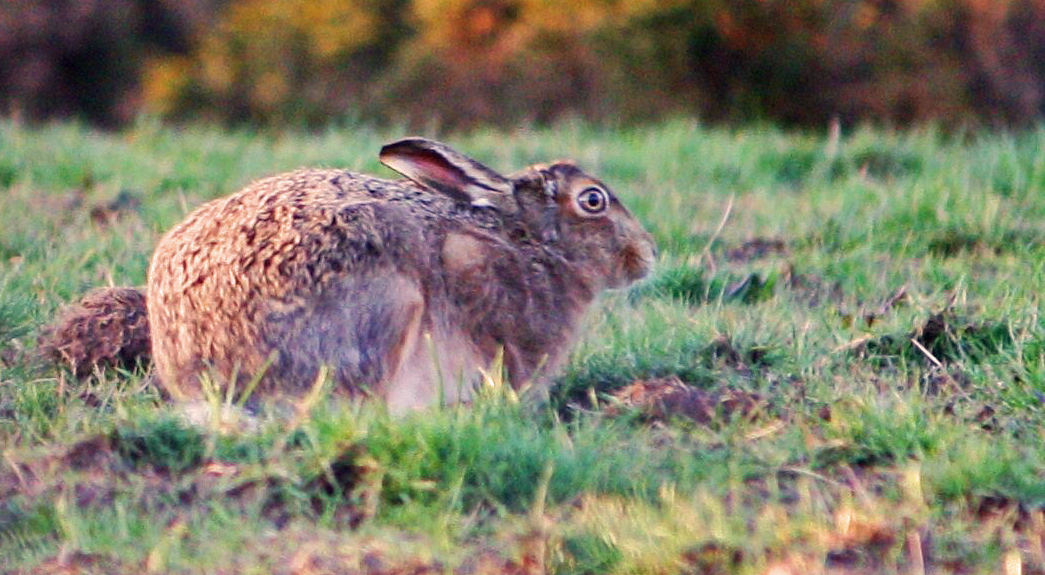
Next to respond to my work seems to be hares. Although the Chayne is sadly not high enough to hold blue hares, there are one or two brown hares up on the inbye fields. When I say “one or two”, I really do mean it. In all the time I have spent working up on the hill, I have never seen a single hare, but droppings and footprints in the snow give me a vague idea that they’re around. These past few months have brought more signs than ever before, and the shepherd tells me that she put one up on the lekking ground as she drove through it on the quad bike. It was the first hare she has seen on the Chayne in nine years, and it gives me hope that it is there because of my work.
Most country people look at hares as being little better than rabbits, but I’m a big fan of those grand, lolloping critters. The idea that they are responding to my attempts to manage the hill is very heartening, and I will bear them in mind in future. I wouldn’t have much interest in shooting them, but if I can get them up to a reasonable number, I certainly wouldn’t have a problem bagging the odd one for the pot. Hare is a great meat, and the animal itself can be an exciting thing to shoot when it rises unexpectedly infront of a team of walking guns.
My planned experiment for game cover crops this year should see some elements of arable farming reintroduced to the farm after an absence of more than twenty years, and I feel confident that if anyone is to benefit from this new project, it will be hares.
Not many shoots allow hares to be shot nowadays, and this has become so even in my lifetime. Apparently, the logic of “no ground game” has its roots in the fact that so many people are new to shooting and that hosts can’t rely on their guests to take safe shots at running game. On some shoots, even foxes are taboo, and while this makes sense on rough ground where spotting beaters and neighbouring guns can be tricky, it is a little inappropriate on a broad partridge stubble or a carpet of fresh heather where it’s obvious who is where. This is a great shame, since hares were once a valued game species and many thousands were shot every year as part of walked up and driven shoots. Given that my ultimate goal is to recreate the same sort of mixed rough shooting on offer to a 1930s sportsman, I need to be able to offer hares to complete the (now lost) sense of variety which defined that period of shooting, and it will be up to the guns themselves to decide whether to take the shot or not.


 Bog Myrtle & Peat
Leave a reply to Snakehuts Cancel reply