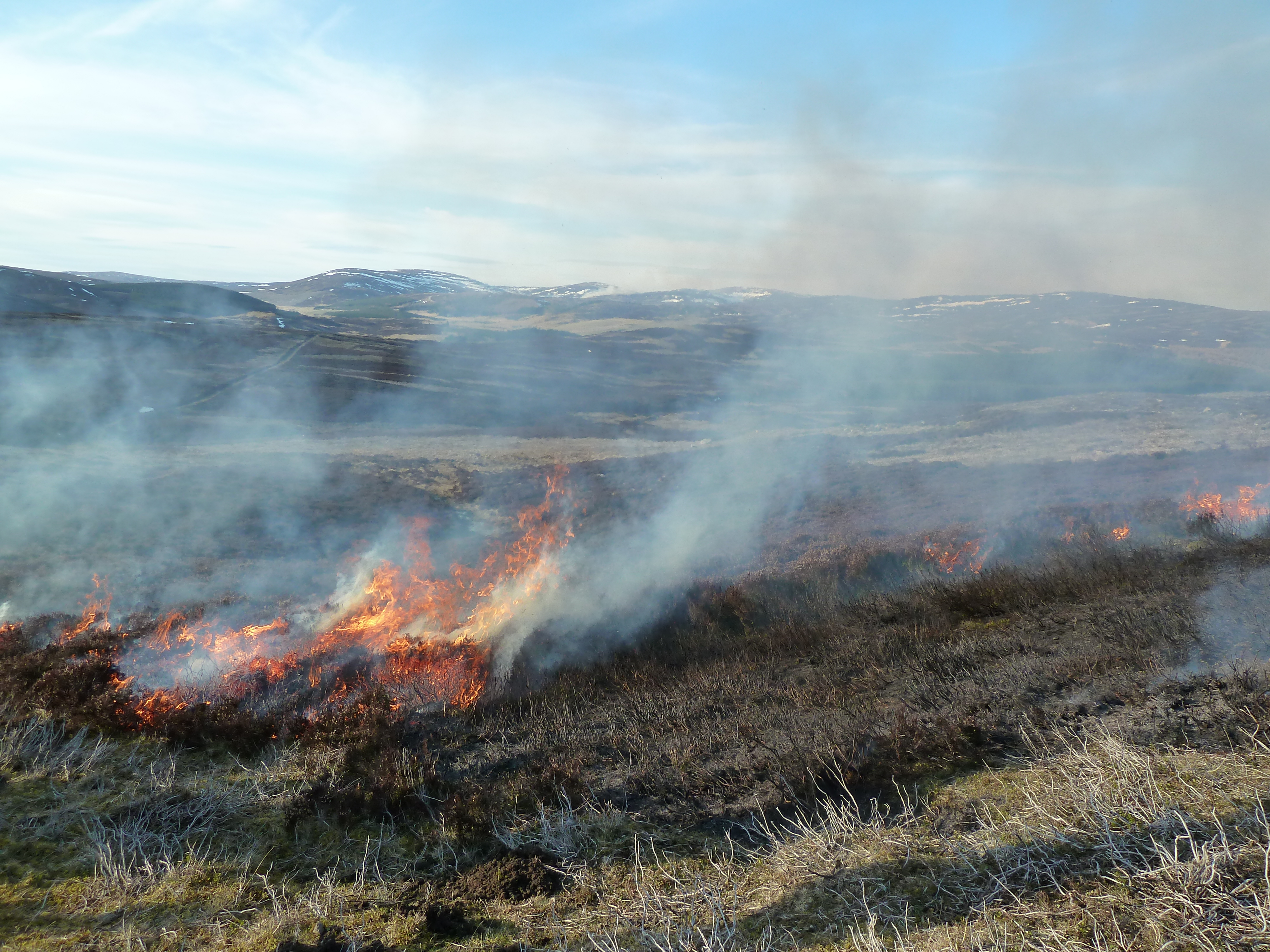
For someone who pretends to be a grouse keeper, I really do know an embarrassingly small amount about the classic areas of that profession. I had actually never seen heather being burned until Monday afternoon, when I was invited to attend a workshop of muirburn by the Heather Trust on the Candacraig estate near Braemar in Aberdeenshire. I had vague ideas of well drilled professionals in sheets of billowing smoke, patting flames with pan scrubbers and steering the vast and lethal blaze on a pre-ordered path. In actual fact, what I saw on the hills of the eastern highlands was less dramatic but equally well controlled and managed.
The day was divided into two halves. The morning was dedicated to the theory of burning and the advantages of periodical burning on the quality and variety of plants available for birds and sheep. It all sounded rather technical until the afternoon, when we headed out with a team of keepers to start a fire and demonstrate the practicalities of the process. Before even walking one hundred yards from the parked cars, a botanist had shown us the tremendous profusion of cowberry, bearberry and crowberry which had rushed up within years of burning, as well as the great regeneration of ling from burnt stalks and seeds which are actively germinated by chemicals found in smoke.
It looks odd to see it written down, but heather likes to be burned. It makes no sense from a conventional perspective, but without burning, plants become rank and inaccessible to birds and wild mammals, and the higher and denser individual plants become, the more they smother out lower growing berries and shrubs altogether. We were shown an area of heather which had been burned and an area which hadn’t, and we were invited to compare the two. The burned area was crowded with life, while the thigh-high unburned heather had shaded everything else out altogether. A good patchwork is vital for grouse and sheep, and burning is by far the best way of keep plants “on the move”.
Before the first fire was lit, a fire break was cut downwind by a flail on the back of a tractor, and then it was simply a matter of setting the ball rolling. Within seconds, the fire was far too hot to stand near, but it progressed slowly through the knee high undergrowth with a satisfying crackle. Within ten minutes, the fire had burned off almost an entire acre of heather, leaving singed moss, blackened berry bushes and ragged stalks on the moor. It was textbook stuff, and given the fact that the grouse seemed to cackle encouragingly from all angles, it is sure to have the desired effect.


Leave a Reply