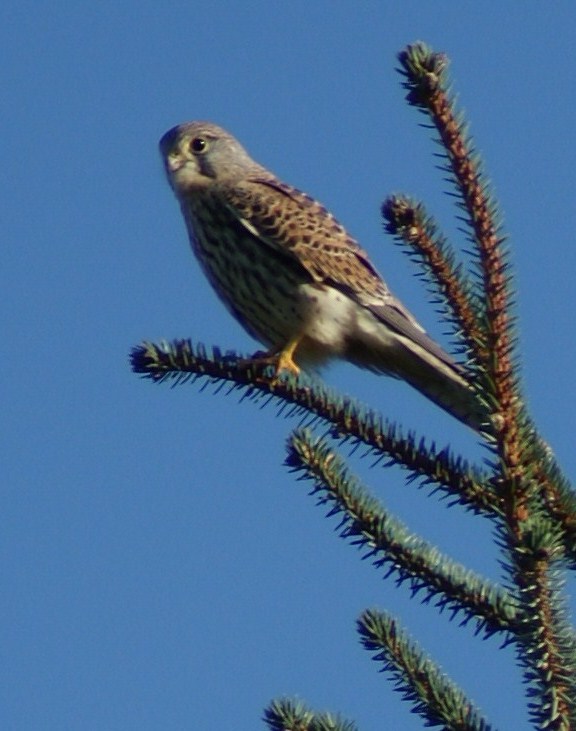
The Chayne is accessed by over a mile of single track road. Grass grows green between the tyre tracks, and cattle grids buzz past underneath the car as you follow the narrow path around the hillside. Telephone and electricity cables run along the verge, suspended by a series of worryingly crooked poles, and it is not unusual to see kestrels meditating on the rough wooden summits.
A pair have lived along the road for the past year, and I now feel as though I have rather got to know them. During a cold afternoon in February, I watched one chase a meadow pipit over the snow with astonishing agility. The meadow pipit was forced to use every trick in the book to escape, and eventually found sanctuary under my car after a tremendous amount of panicked fluttering and tweeting.
In the last few days, the pair of kestrels seem to have brought this year’s brood out into the open, and the telegraph poles are literally covered in serious tiny shapes. I counted eight young last time I went up to the Chayne, and then saw six on the way back out again.
I’m sure that they won’t be able to maintain such high numbers for more than another few weeks, but it’s certainly nice to have them around. Some diehard gamekeepers insist that any bird with a hooked beak is a threat to ground nesting birds, but I can’t help thinking that kestrels are utterly harmless.


Leave a comment