
There are Pictish symbols in the town of Strathpeffer, twenty miles northwest of Inverness. “The Eagle Stone” displays an upturned horseshoe motif, cross and criss-crossed with eyelets and waving lines. Beneath it, the very indistinct shape of an eagle stands with wings folded across its back.
Like many of these outdoor carvings, the detail has been almost completely blown away by countless interlinking generations of rain and ice – and it’s often hard to connect with Pictish stones themselves because most of them have been moved from their original locations over the years. Shifted, bumped and sandblasted by rain and cold weather for fourteen centuries, they’re approaching the more indecipherable end of connectivity with ancient Pictish people. They almost don’t exist at all, and yet we can’t quite say that they’re meaningless.
The eagle at Strathpeffer is almost invisible, but the bird strikes an odd chord of familiarity for those of us who have been pursuing Picts for the last few months. It’s almost a direct facsimile of an eagle that is featured on “The Birsay Stone”, which was found on Orkney and is now on display in the National Museum of Scotland. In fact, when you put the two eagles together, they’re pretty much identical. It’s the same silhouette in profile – the same posture and both birds are even facing off to the right. The Birsay eagle is more carefully rendered in greater detail, but perhaps that’s because it’s been restored and cleaned up by museum staff.
I was drawn to these carvings because I’m interested in how we relate to animals and wildlife – but I start to think that they aren’t really animals at all. They’re far more like symbols, and the repetitive “copy and paste” nature of this symbolism goes beyond the literal significance of birds and animals. After all, several versions of the famous Pictish bull motif have been found in the northeast, particularly around the town of Burghhead. It’s not so much a real-life bull as a logo – the symbol of a tribe, an individual or a place. Eagles seem to fall into the same pattern, and the same can be said of salmon – every salmon stone I’ve seen is more or less based on the same design.
Dozens of Pictish stones have survived into modernity, but we have no idea how these objects were seen in their original context. Perhaps bulls, salmon and eagles were primarily associated with wood carvings or textiles – and maybe carved stones were extremely unusual. Perhaps the Picts would be astonished to realise that we only know them through a handful of extremely atypical stones when the reality of their lives was reflected in some medium which has vanished or melted away. The puzzle deepens because some archaeologists think that Gaulish stone carvings discovered in France were an attempt to make more durable versions of earlier designs which were traditionally carved into wood – and all the while, the incredible regularity with which these symbols were rendered suggest that they must have been copied from some kind of portable source material – much as much later medieval woodcarvings were copied from manuscripts. The reference material has fallen apart, and now it’s hard to understand why they all look the same.
It’s generally reckoned that Pictish stone carvings represented expressions of ownership – a statement of family, tribe, union or boundary. That theory seems safe enough, and if “Mr Eagle” ran an empire which included Orkney and Easter Ross, it’s no surprise that he’d deck both places with his own personal eagle insignia. But this has a neat parallel with nomadic and semi-nomadic peoples in Central Asia who developed the “tamga” as a means of indicating the same kind of ownership.
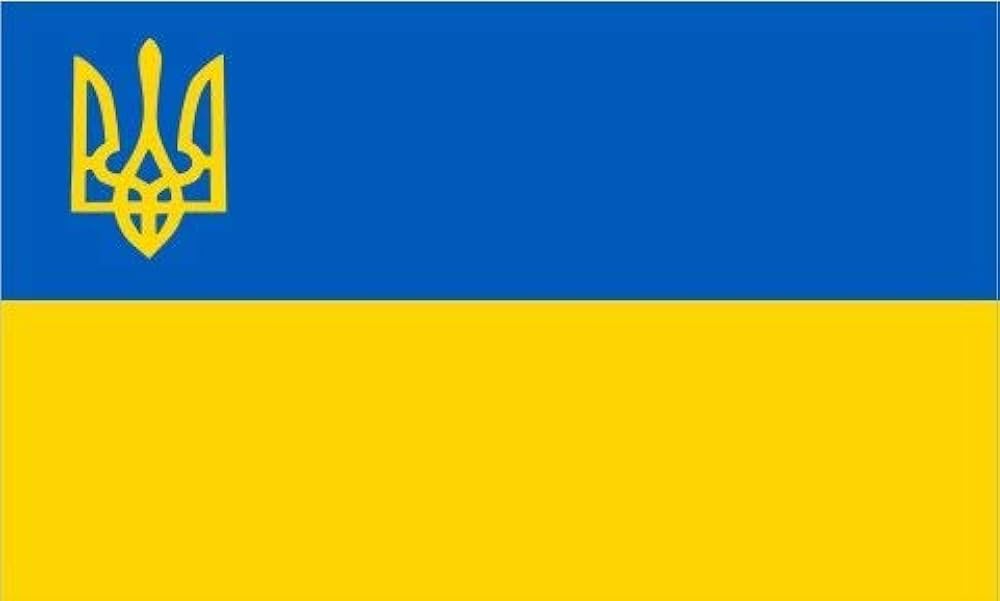
From Turkey to Mongolia, tamgas were carved into stones and branded onto goats and cattle to denote tribal property and boundaries – some were very simple and many were just a few lines in a certain arrangement – but others clearly represent animals and people. I found several of these tamgas on display at the National Museum of Kazakhstan in Astana, and the idea stays with me because a kind of tamga persist today in Ukraine where, since the Russian invasion, the national flag is often augmented with a stylised “trident” coat of arms. It’s not new – it’s a very ancient kind tamga based on the shape of a diving falcon – a relic of tribes on the Great Steppe.
It would be a stretch to say that the Picts were using tamgas, but the overlaps in symbolism are certainly similar – and if it’s quite possible that “Mr Eagle”‘s cattle were also branded with the shape of an eagle, it’s obvious why we can’t ever know this for sure. It has been fun to tease out many similarities between Celtic cultures and others from Asia and beyond, but it often seems like there’s no such thing as a direct connection. All I can do is point at the patterns which seem to emerge again and again between cultures which are divided by thousands of miles. After all, the Medieval Scots believed that they were descended from the Scythians of the Great Eurasian Steppe. We can use genetic data to demonstrate that they weren’t, but it’s tantalising to realise that so many similarities existed between two such distant geographies and peoples… and wonder if connections are really so impossible?
(Picture: the eagle on The Birsay Stone)
(Picture: Ukrainian Flag with trident “tamga”)

 Bog Myrtle & Peat
Leave a comment