Twenty five million elm trees were killed by disease between 1960 and 1980. By the time I was born, the survivors had become a novelty, and it’s hard to imagine how common these trees were until the beetles and the sickness came. I can think of only three or four elms in this entire parish, and they’re nothing like the extraordinary trees depicted in old photographs and paintings of English parkland. They’re scrubby little wimps, more like cherries than powerful, sky-climbing monuments.
Over the last ten years, I’ve grown and planted elms from seed – English and wychelm both – but neither have roared into prosperity or failed altogether. They do “fine” when they’re planted out, but I’m told that if I want to keep them alive, I need to keep them coppiced. Tall trees are killed by the disease – the only safety lies in keeping their heads down.
Three years ago, I pulled a heavy old tree from the river below the house. It had been washed down in a storm and was stuck beneath my bridge. I wrote on this blog that as I pulled up beside the river with my tractor and trailer, a salmon spurted away through the water. He’d been lying in a pool between the stems, and I had a glimpse of his tail and the spots of his back as he rushed upstream. It was a grand moment on a cold day, and it was fun to imagine a fish lying between boughs where birds used to perch.
Wading into the current, I broke that tree into several pieces and dragged them onto the bank – but it had been in the river for some time and all the bark had blown away. Not knowing elms, I didn’t recognise this wood and assumed it was a cherry tree because when I finally began to break it into firewood, the stringy fibres ripped and splayed apart like fabric. That was disappointing. I’ve had indifferent success with burning cherry before, but I’m always keen for new firewood and I filled a trailer with various bits of the black, ambiguous tree. If nothing else, it’s good to have a mix of species in the woodshed.
But then a friend came and pushed his hands across the grain of this timber. It seemed to waken old memories for him, and while he didn’t say anything at the time, he later rang to guess that I had found an elm tree. God knows where it had come from – it’s not as if this river draws upon vast areas of uncharted native woodland. It rises eight miles further up the glen, and zigzags tidily through heavily plundered farmland. There are so few elm trees here that it wouldn’t have been absurd to make enquiries about it, and instead of having found “an elm tree” in the river, it seemed possible that I had found “the elm tree” – blown down from a place of celebrity, recognised so widely for its strangeness that perhaps somebody was missing it.
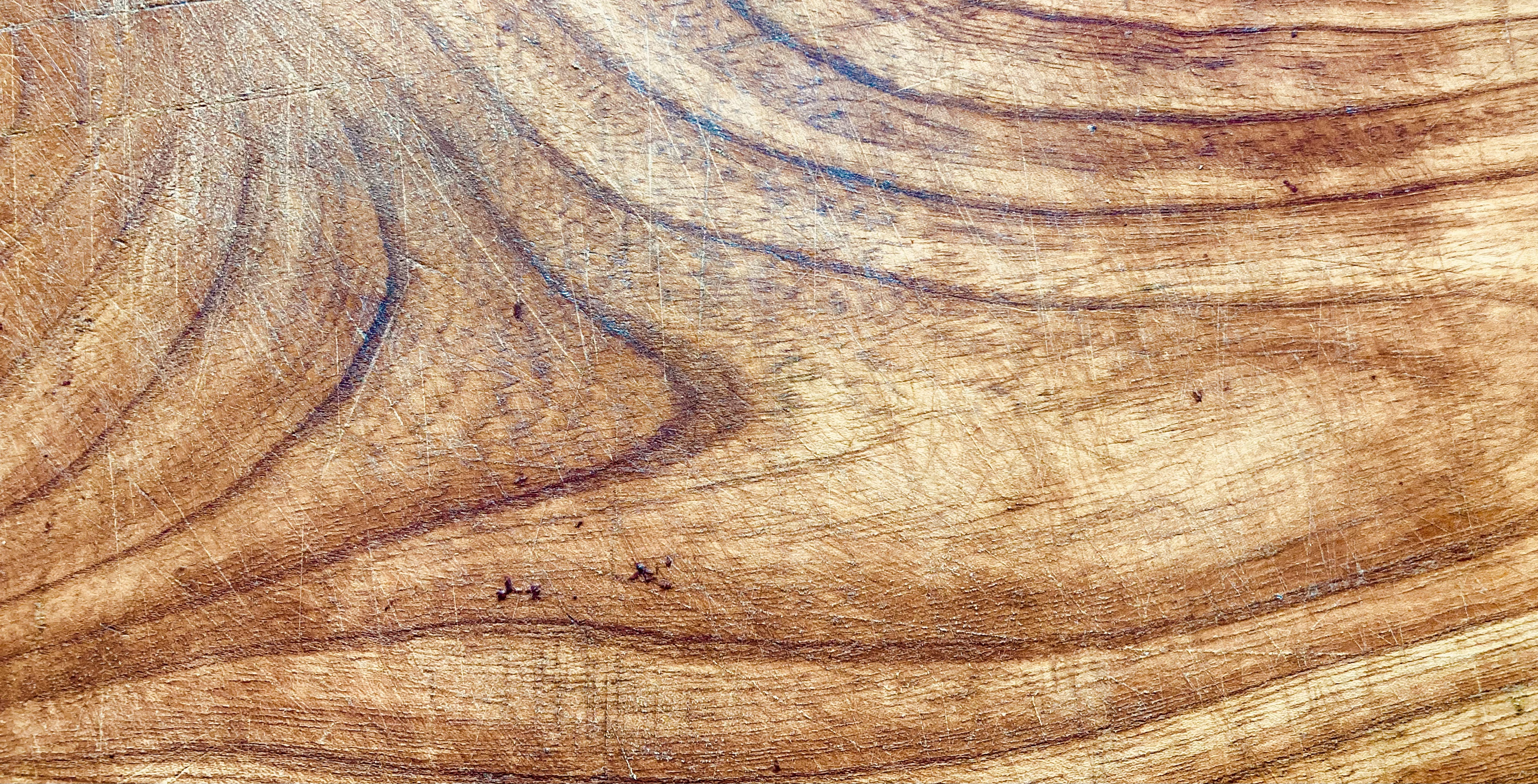
It was far too interesting to burn, so instead I milled the best of it and made boards which I later span into chairs, a bench, some boxes and a small coffee table. The wood was old and dry, but it sprang into life at the touch of linseed oil. Parched, peachy grains roared into marbled depths of caramel and treacle; some of the wood was spalted and burred with a knotwork of freckles and catspaws. Even the roughest bits which I polished into chopping boards had a strange beauty – this photo (above) is just a scrappy piece of elm that I use for butchering meat. It’s scruffy and rutted with knife marks, but it’s glorious.
I tried to make best use of this wood in my amateurish working endeavours, and now when people see the makeshift furniture I made, they ask where on I earth I found such beautiful elm. Of course they’re flattering the wood – not me – but it seems obvious that having lost access to so much of this rippling, interlocking soapstone of a material over the last fifty years, it’s all too easy to forget how mesmerisingly wonderful it can be.
I only milled the best of stuff, and I flung the poorer and more rotten-looking bits into the back of the woodshed. Now that they’ve lain there in giant segments for three years, they can be broken up into firewood. At a glance, much of this old elm was rotten and crumbly. It didn’t weigh right – by which I mean that handling a small section of this wood came up much lighter than its size or volume suggested. Just as ash or sycamore can lose its weight and turn to pointless powder, I felt certain that this elm was spent. But now that it’s been broken up into crumbly, stale-bread chunks, I find that it nurtures a powerful glow in the stove – and what’s more, a shoe-box sized block of elm keeps the fire going from five thirty in the morning until ten o’clock in the evening. Stoked with peat overnight and kindled into life with gorse in the morning, it’s hard to imagine a better wood for the stove.
And here I am thinking of this once-abundant resource as a piece of magic; something to be cherished and taken seriously.

 Bog Myrtle & Peat
Leave a comment