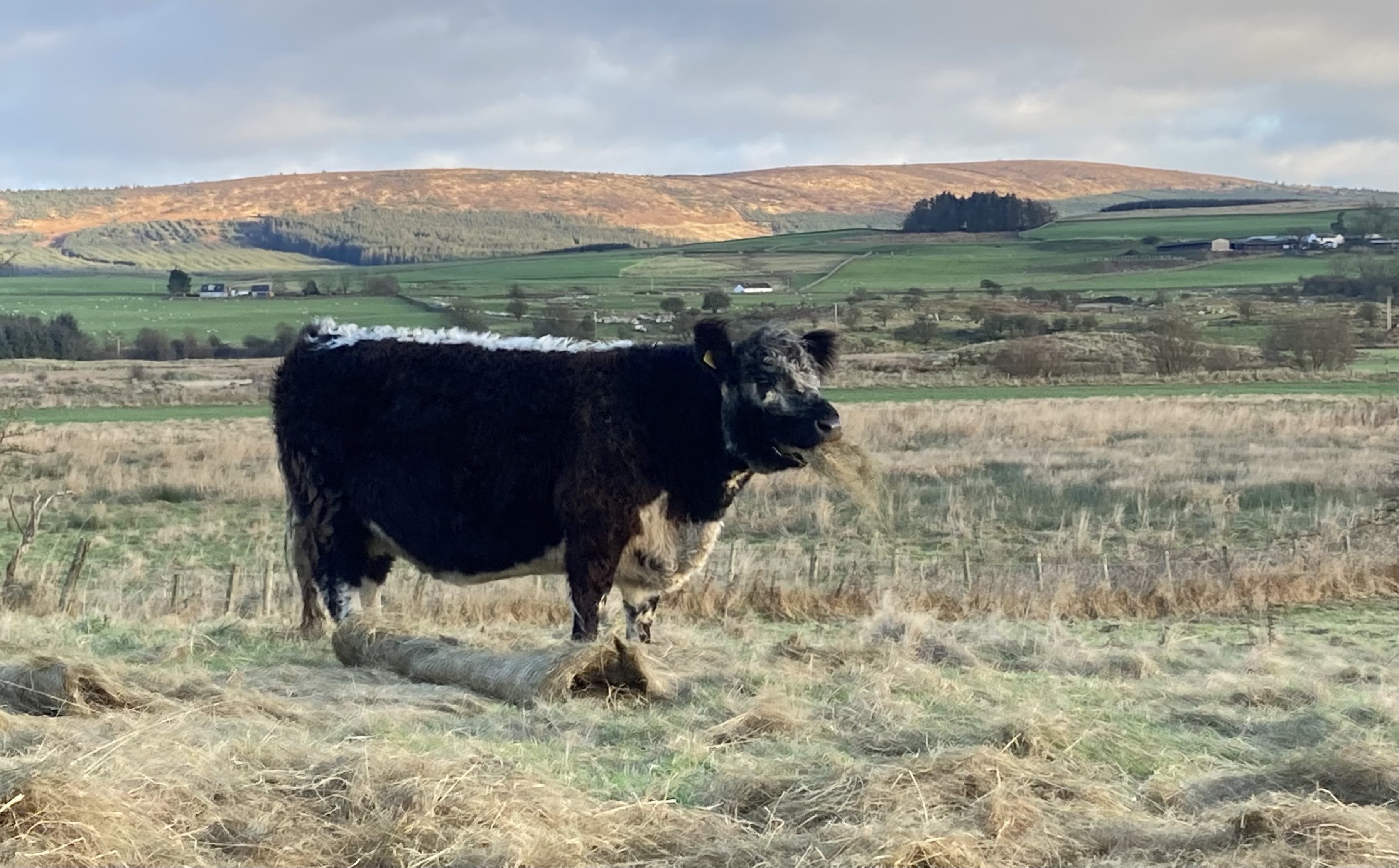
Ongoing experiments with bale grazing have shown more promising fruit. Set against the many advantages I’d seen so far, I also grumbled that the beasts tend to waste more when bales are rolled out and unfurled in the field. They trample it down and shit on it, and afterwards refuse to eat silage which they themselves despoiled. In more tight-fisted and parsimonious moments, I resent this loss – but the difference is being made up by an unexpected compensation.
Galloways are famously thrifty and economic animals. They’ll not only survive but thrive on thin, outwintered grass, but that doesn’t mean they’re infallible. Against their immense resilience, they also nurture a sense of profound laziness and entitlement. They can survive on bleak hills with almost nothing at all, but they’d really prefer not to. And when they’re fed a constant supply of silage in the same place every day, they’ll generally just stand around and wait for things to play out in their favour.
My cattle are currently grazing a sixty acre block of grass, rushes and blackthorn scrub. The best of this place can be cut for silage, and the less-good areas are left to be grazed and pecked around by cattle over the winter. But pecking around is hard work, and the cows prefer to eat good silage from their normal ring. By carrying bales across the property and unrolling them onto leftover grass, the cattle are being forced to spend their time far more evenly across the land – and it’s fascinating to see how this impacts on their behaviour.
This land is only lightly stocked, but in previous years a great deal of grass has been lost or wasted because the cows simply can’t be arsed to go for it – and they know that I’ll just give them silage, so they don’t have to bother trying. I find that as I take silage out to far-flung corners of the place, the cows are grudgingly following me – and they’re grazing as they come. I would usually have to feed a round bale every 24hrs, but I can now get away with two every three days – the difference is made up in grass which would otherwise have been wasted or trampled or grown in. I suppose that this boost will diminish as the grass runs out and gets harder to find over the winter, but it’s a much better use of what’s naturally available on the place – for the simple cost of making cows work a tiny bit harder for their supper.
Of course the downside remains that this process takes considerably more effort on my part, but it’s all time spent on the land with the cows – I probably end up with a better idea of what’s going on and where. I’m also slightly limited by where I can go with heavy machinery and silage bales on wetter and more sensitive areas. That was the great advantage of the old system – it made a terrible mess, but it was all in one small place. I don’t want to tear up the better turf with my wheels, but when a decent frost comes, I can probably get bales out into really awkward, out-of-the-way places where cattle never usually go. It’ll be interesting to see what the beasts make of that.
I used to do this kind of work with small hay bales, but it was an endless pain and I lacked the space to keep hay dry until I needed it. Big bales are far more practical and economical – and even this small change has made a big difference to how cows are using the available forage. As much as the beasts find the new technique tremendously inconvenient and irritating, it’s time they were put through their paces. They might bellow and complain, but I often shout back over my shoulder to remind them that it’s good for us all to get some exercise and see a bit more of the world.


 Bog Myrtle & Peat
Leave a comment