I think of Seamus Heaney on the shore and in the view to Antrim. His name is very present in the recent rasp of autumn grass and the swell of a thin green sea, but I have no claim on the man himself. I know a handful of his poems from back to front, and I’ve often been consoled by an engagement with his early collections – but I doubt that I’ve read half his work. I’m forever discovering new poems by Heaney, and it’s hard to call myself an enthusiast when my grasp on the Collected Verse can often feel so slight. I’m not a scholar and I lack the academic’s eye for detail and completion; I just love what I like, and I feel sure that I’ll come to the rest of it (or not) as life requires. So from where I stand, Heaney is less of a man and more like a mood which sometimes comes in the sunshine or the whirl of condensation which blooms after days of rain. His reality is beyond me; I’m dealing with a shadow flung behind him.
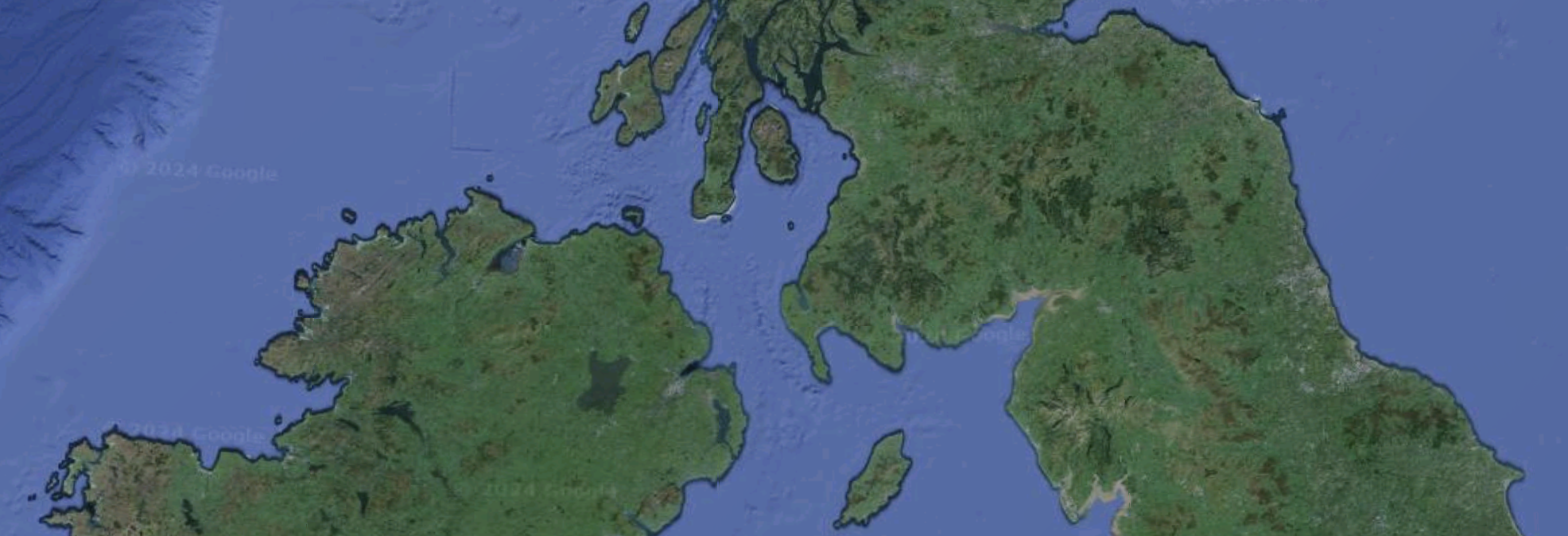
I’m glad to have this imagined version of Seamus Heaney near me in a pattern of associations – from the quick and whitlow of Kavanagh’s work-hardened hands to Yeats’ overwhelming surge of love. Heaney is the brush of dew at Lough Beg and the crunch of a longboat’s hull on the shore at Annagassen – I discover a thousand ways to overlap with this imagined Irishman; I welcome his early Christian saints on the rising tide – and on the ebb, my Black and Tans are dispatched to fight at Killeshandra. Heaney is the face of these histories, and yet Ireland can’t exist in isolation. Surely Heaney can’t be withheld from me because I’m not Irish? On the coast and beneath lumbering clouds, I feel my own place in a soft contiguous sweep of land which runs from Durham to Donegal; Galloway is the midpoint in this sensible cross section of the British Isles, and if the world regards Hadrian’s Wall as a barrier between North and South, it also makes sense as part of the old road from East to West.
I feel Heaney’s reverberations in the West just as I sense the rise and breath of Lindisfarne and the whisper of St Cuthbert in the East. I build arguments to support the idea that this latitudinal strip is a single entity with Galloway as the fulcrum; a mix and the balance of both extremities; of rain in the peat pools of Pettigo and a bitter wind in the North Sea marram at Bamburgh. I believe it’s a credible whole, but it needs to handled with care. I use Heaney as supporting evidence, and to be sure, it helps that he is broad-shouldered; he’s calm and far-thinking in his place; he’s of and all around his point like a legend. But it’s not all plain sailing, and I sometimes resent his massive stability and calm. I fight against him, not knowing how or where to kick.
When I draw upon Heaney to support my sense of east-to-west, I know that all I have is a few poems which reflect my own memories, and perhaps the knowledge that in having translated Beowulf, Heaney lay within touching distance of Bede. But I also know that he translated Virgil and Beaudelaire – and by emphasising Heaney’s connection to Saxon English, I’m twisting him to fit.
Confusing the line between the man and his work is risky, and titans like Heaney are unusually available for appropriation. In stronger moods and with a growing awareness of place and time, I am deeply indebted to the idea of that man out there; a man I know only from the distant ripples of his vanished movement. He is the projection and the name I give to a box of my own connections, as if tidying out the experience of life was an exercise in categorisation, and where should I put the smell of stacked hay or the smell of burning gorse? Easy; file them under Heaney. The same is true for the smash of hooves on wet bracken; the growl and funk of puffins; the steam which rises from warm, wet wool. Stack them under Heaney’s name alongside horse hair, tattie skins and the spark of aniseed in asphodel. I’m grateful for what he’s given me, but most of what I know of the man is simply a system into which I lay my own life – and if I am determined to understand my place in this rich, latitudinal landscape, I’ll need more than a few glancing engagements with the work of a stranger.

 Bog Myrtle & Peat
Leave a comment