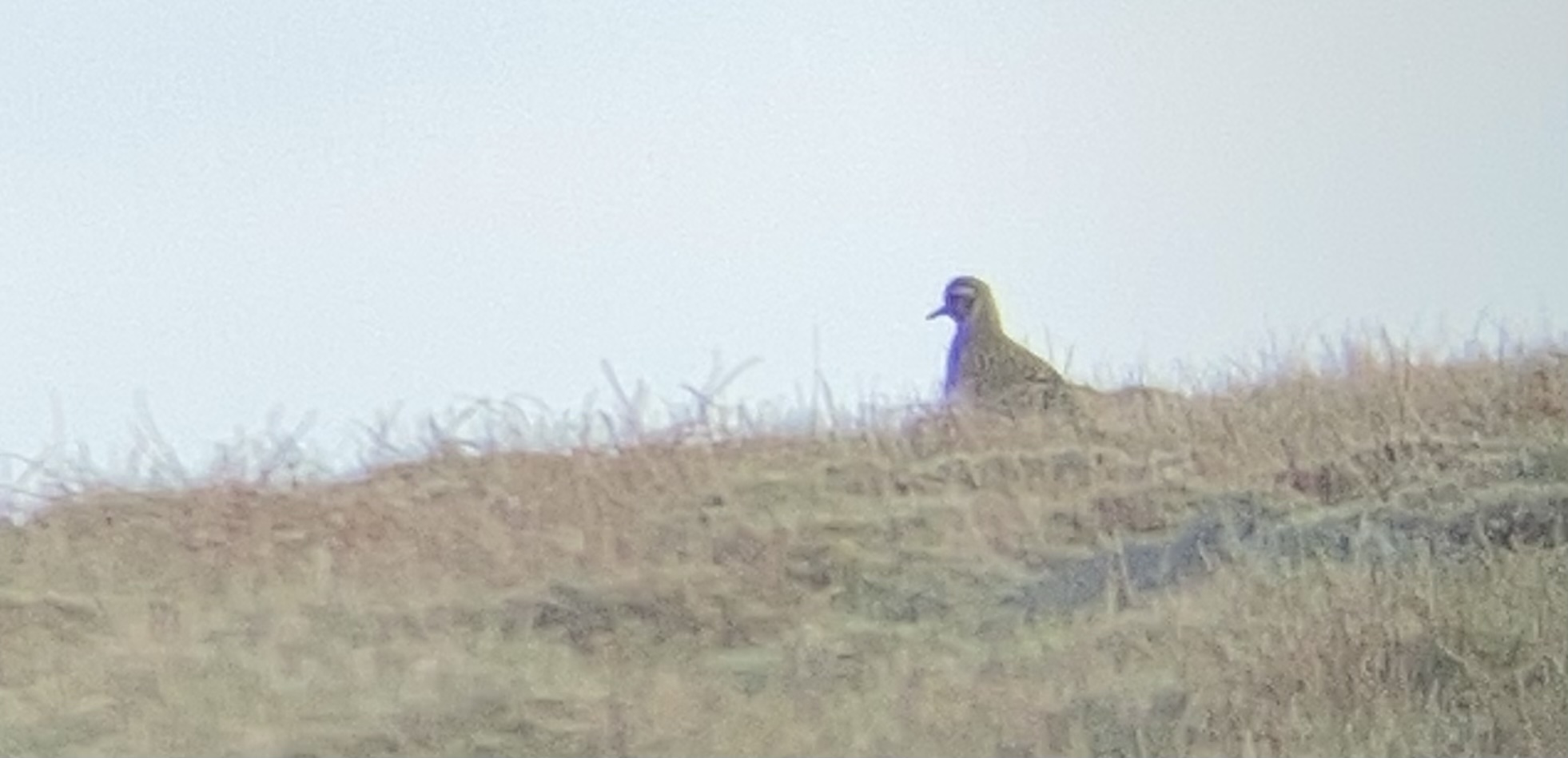
Golden plovers cried above the crags and the deep, indented pads of moss which lie beneath the summit cairn. This is one of only three places I know where the birds still breed successfully in Galloway, but it’s almost as far as you could hope to get from civilisation, in a location so high and remote that perhaps I’m the only person who goes there. Between mountain hares and a fluster of wheatears in the rocks, it’s like climbing into a separate world and having done with normality. There were even dotterel here once; two of them, rust red and dewy eyed as lambs in the moss. Galloway is no place for dotterel, so surely I was far from home? But in a half turn towards the east, I could easily see the wink of my own house and the steading ten miles away.
I love to see movement on the high tops; the distant, moaning silhouette of plovers in the peak of their wariness as the cloud barrels up between the corries. This walk is like an act of pilgrimage which takes me out of myself and into a world which doesn’t belong to any human being. But I never make such a clear connection to birds as when I find them on my own terms, at the hinge or the grind of my cumbersome day.
After several hours on the rocks and the high plateau, I came down in the twilight. My truck was parked by the pens at the foot of the hill because the farmer’s a friend of mine and it seemed like sensible way to stay out of his road. I was glowing with the sight of those plovers as the shadows fell upon me and the day died in the gloom. In a litter of small reminders, I returned to earth and familiarity again; coming to the pens, I stopped to watch a pair of brown hares communing on the track before me in a sunset which smelled of sudden cold and the wince of violets in the new bracken. They were sniffing around in slow circles, underlit by their own white bellies while the ewes huffed and the burn rummled quietly between the primroses. A stonechat sang, and I caught the sound of something flying high overhead.
It was a mallard in tone and length and scale against the dusk. You’d say it was a duck in almost every respect, and I would agree with you – because what other bird flies with such single-minded focus on its own against the first few stars? And having said it was high, I’ll be clearer and add that this shape was three hundred feet up, small as a speck of mica in a face of newly blown granite. But was his tail too long and square-ended for a duck? And why did he sometimes break from a wingbeat to glide?
You could forget every single one of your plovers and your dotterels then. They’re fine for a day off and a trip to check in with the weird and the wonderful. But stand instead in the shit of your old pal’s sheep pens and watch a blackcock coasting out to roost in the myrtle pans beyond Clatteringshaws. That’s a heavy dose of my old normality in the tallow of dusk and the blare of blackie lambs with their horns in bud, and I watched until he was gone, a mile away or more – the thought never crossed his mind to change direction or lose altitude in all that time; powerful bird, and brother of mine.

 Bog Myrtle & Peat
Leave a comment