Snow which comes down into Galloway from the north has usually been exhausted by the hills of Ayrshire and Lanark. We only get the dregs from a northerly wind, and the harm has gone out of heavy pressure systems which first made landfall at Kirkwall or Stornoway. Likewise, snow which blows in from the south has been robbed by the Lake District and the mild, salty flats of the Solway. By the time it arrives at Garlieston or Rascarrel, the fat’s burnt off it. There’s never much snow which comes in from the west, and there’s almost no bite in the clouds which have made their way across the Pennines from the North Sea. So it follows that Galloway is rarely all that bothered by snow, and the effect is only lightening with time and warming winters.
Down by the coast where my farm lies, snow figures nowhere on the list of my winter worries – so I’m free to enjoy it like a child. When I watch the forecast change and the predictions lean towards a falling of snow, I come over giddy and strange. I forget the inconvenience of snow which used to fall and stayed fallen for a month, thinking only of the blunt and holy pleasure of snowflakes tumbling in the headlights, or the muffed-up silence of dawn. And when the forecast stumbles or changes its mind, I’m devastated. If it rains for a day and snow finally comes when the land is too soaking to make sense of it, I’m cross. If the beautiful signs of emerging snow are battered to slush by sleet, I’ll lose my patience altogether. I’ve even found myself asking questions of the snow, and begging it to make sense – because it acts like it doesn’t care how it falls.
When snow came last week, it fell in heavy screeds overnight. I found the sum of several white hours at first light and was delighted by it. I ran and played by myself in the darkness before dawn, then marked the way that light came strangely over the hills in a contusion of purple and red like a Peter Brook painting of somewhere remote and exotic, like Swaledale.
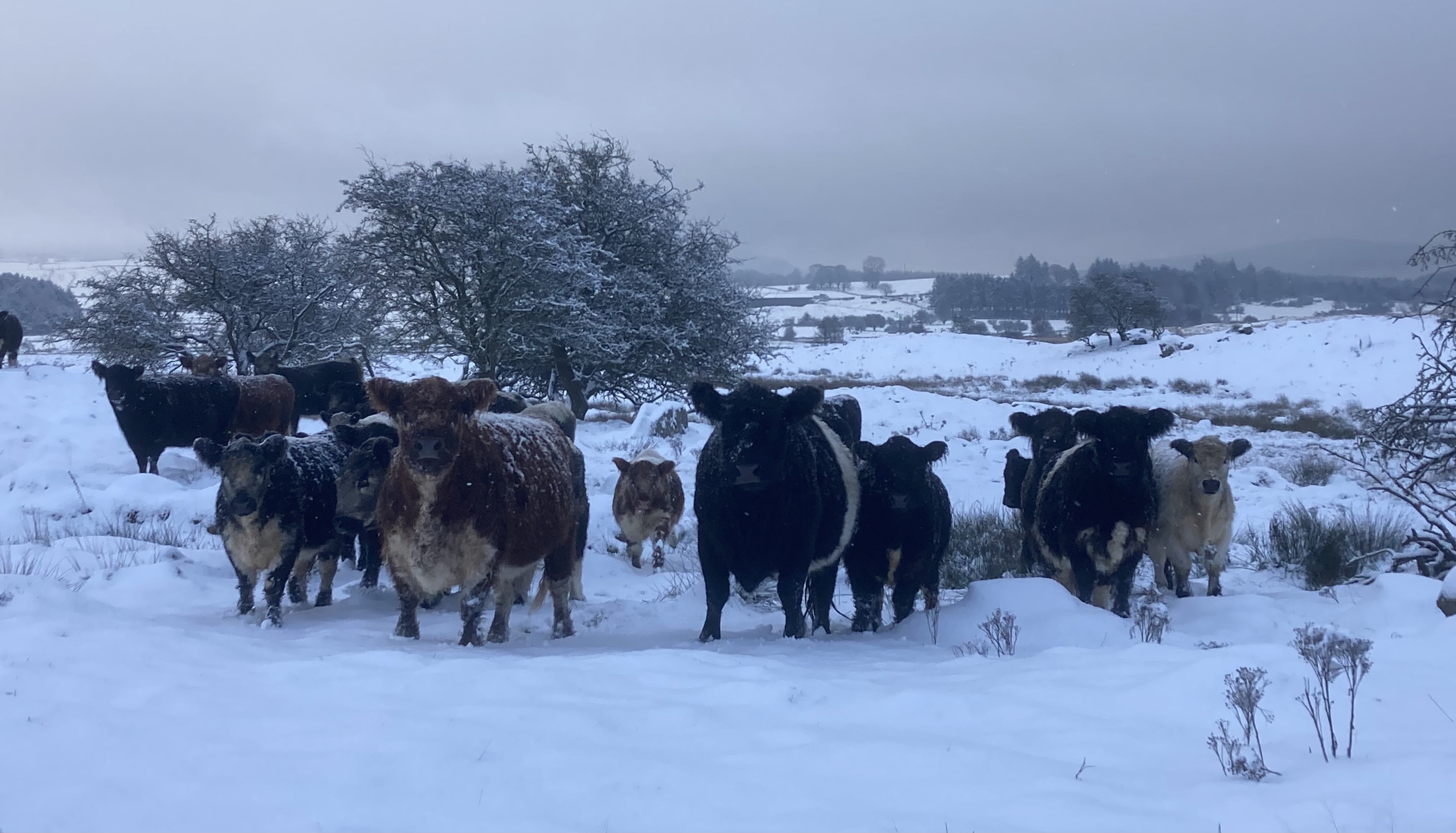
I fed the cows and found them over-coated with a weight of rime; they puffed and stumbled for the hay beneath the crab apple trees, and overhead there came black-headed gulls in dirty shades of blue and grey. Nothing taints a natural white like snow, and even the purest of my sheep seemed stained and sick in the drifts; my famous Leicester tup as if he’d been towed through a ditch behind the bike.
Walking back in from the fields, half a dozen waxwings rose out from the thorns before me –immediately recognisable as friends who summered in Finland or Russia. They were fat as tennis-balls in the low light, purring away like kittens above the river. Like the snow, waxwings rarely make it this far into Galloway. There are too many distractions in the cold, convenient east of Britain, and these were the first birds I’ve seen here in ten or fifteen years. But by the time they’d made it to the end of the fields, they were black as crows and warped by the low light.
Snow writing could be a kind of travel writing, and for those of us who are fixed like commercial ovens to the floor of this place, snow brings novelty without the need to go searching. Waxwings will come back some day, and if you wait in the same place for long enough, change comes to find you.


 Bog Myrtle & Peat
Leave a comment