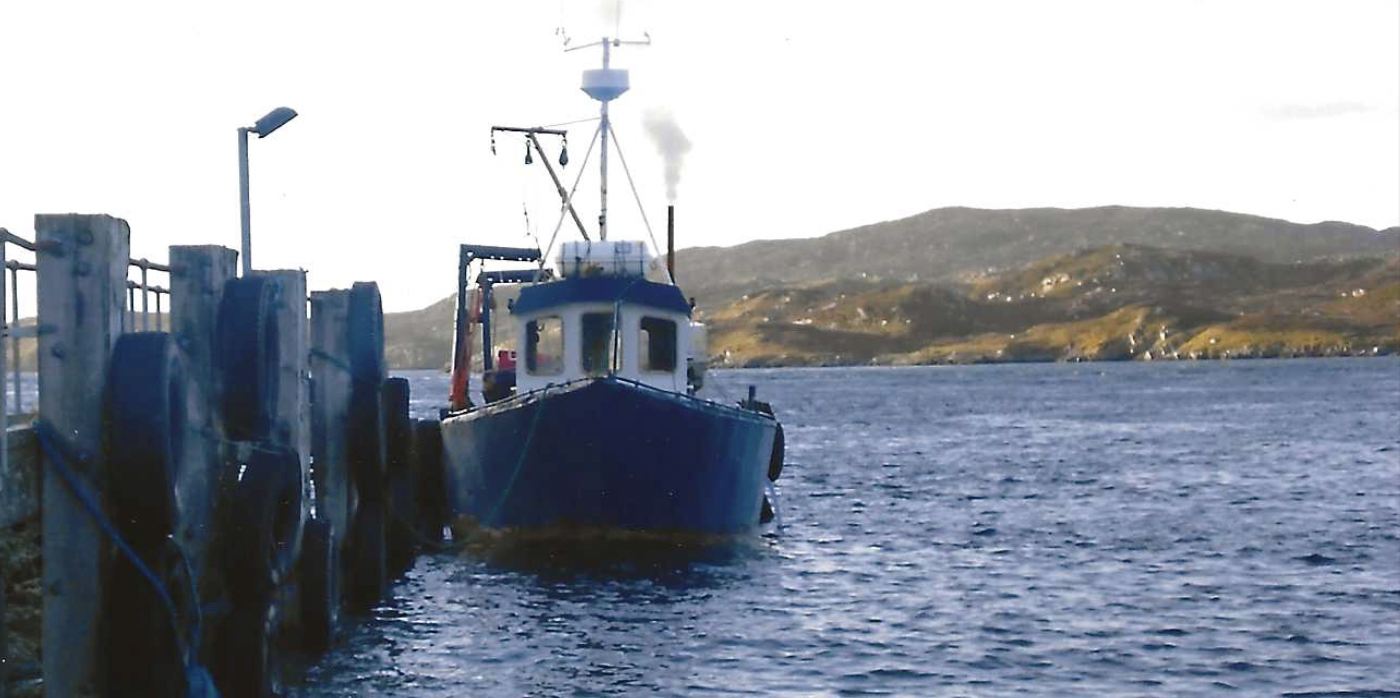
It would be wrong to say the man was heavy. We couldn’t tell for sure, and when we pulled him out of the sea, he brought a weight of water behind him in the bag of his overalls. There was a lot to lift; a great, unhelpful slop of oilskin, and even when he’d been placed on his back and the sea pooled out from his oxters, he was obviously wet through. I wouldn’t guess at my own heaviness in such unflattering terms.
He’d been in the water half a day, and the lifeboats had only just begun to search for him. We were simply passing nearby and found him on the edge of a ripple at a break in the tide. He was floating face down, just as Mark Twain said he would be; men float face down, women belly-up. It made sense for Twain to know this as a product of long experience on the Mississippi, but this was my first encounter with a dead man. I tried to adjust my senses to their finest setting; to interpret and understand my own reactions. But he was very dead and so unlike a person that he left me cold. We put my jacket on his face, and a few other things to cover him up – but not in any sentimental way. We did the same when we had boxes of langoustines or mussels on board and the sun threatened to spoil them. Then we sailed for the search party, remembering that the rudder always pulled left and compensating accordingly.
We didn’t help the lifeboat boys to move him ashore. They’d taken over by then, and we sat back in the wheelhouse smoking. I knew one of the paramedics quite well. He hated cigarettes, but even he held back from the normal complaint that “those things will kill you” then. The body seemed to make a nonsense of that line, because there was no reason why it shouldn’t have been any one of us pulled up from the water. And afterwards we couldn’t leave. They didn’t need us, but nobody came to say “as you were” or “on your way”. So we just went home when the sun failed, and the polis never rang or followed up.
I didn’t know the dead man, but Iomhair knew him slightly. He was mainly Uggie’s friend, and Uggie came to see us that night when we were burning boxes at Caolas. The word was out by then, but Uggie wondered if we’d been able to take anything more or different from the experience of having found him. We told him everything he already knew, but he didn’t like the fact we’d felt so little, and we couldn’t tell him why. Truth be told, we were surprised to find that Uggie felt so much. The conversation stalled; the boxes boiled and plastic foamed in the fire, and Uggie left because the smoke had found his eyes.


 Bog Myrtle & Peat
Leave a comment