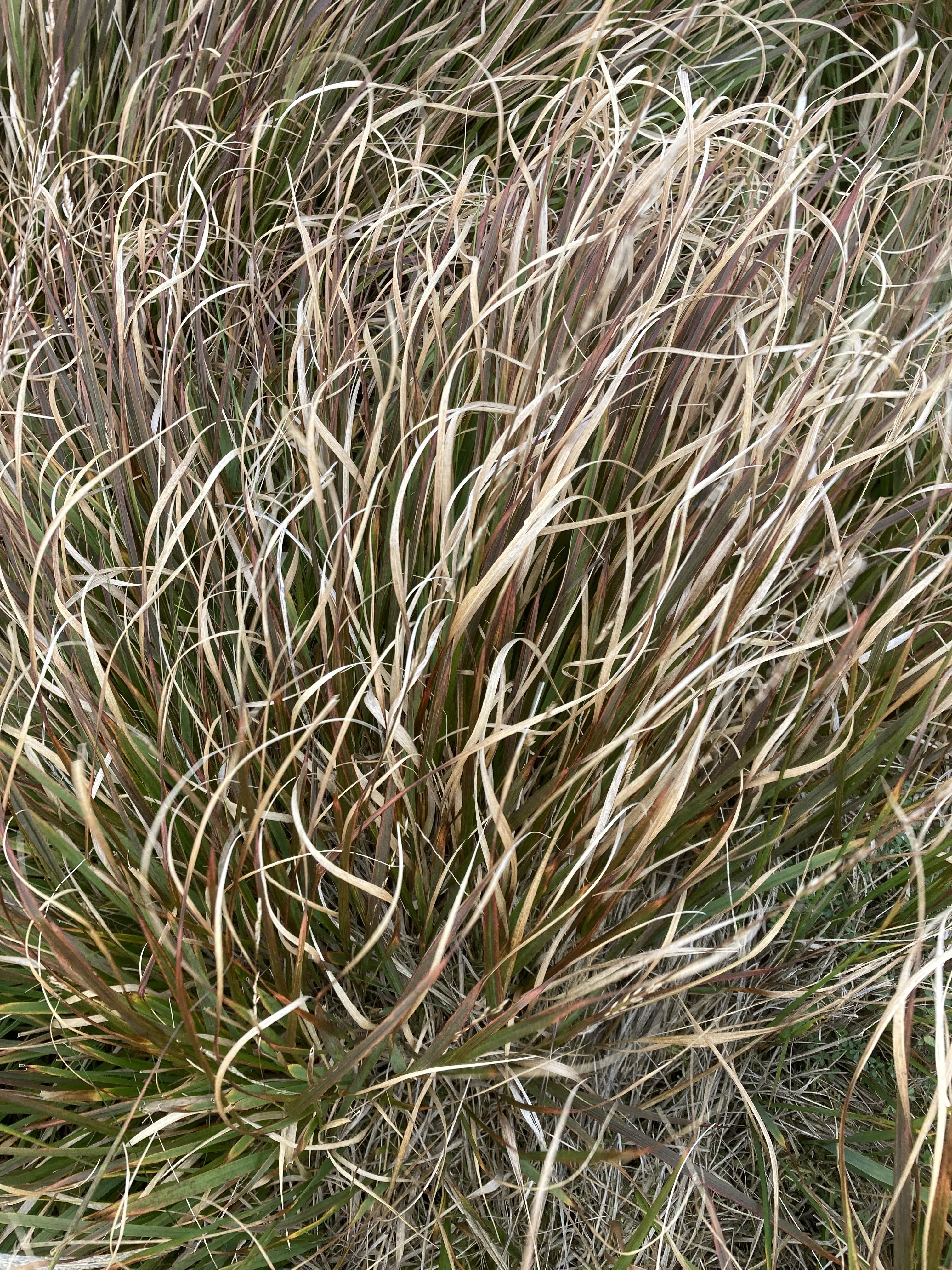
It’s a fair walk out to the hillbacks, and the ground’s anything but steady underfoot. There’s moss and cranberry tangled in the peat pools like mesh from the bags that oranges come in, and grass which has been green all summer has finally relaxed into redness. Now the colour’s blowing out from the tip-ends first; the red’s become grey and the visible wind ripples away towards Lanarkshire. In another month, these tall-standing tussocks will be finished and suddenly airborne; the first decent wind of October will send drifts of flying grass to snag on fence wires and the looping strokes of telephone lines. But they’re stable for now, and sunlight trails across an enormity of moorland in ragged frames of light and cloud-shadow. In open country like this, you can stand and watch the same patch of sunlight coasting away or towards you for half an hour, diving and plunging through gullies and cleughs to make a big place seem bigger still.
People hate the open hills. We’ve been taught to regard them as sheep-wrecked, and while there is mile upon mile of this stuff in the Southern Uplands, it holds nothing like ascendency now. The Market and government policies are striving to repurpose moorland places, and they’re vanishing at a rate of knots. I feel a need to defend them, and my opponents are gathering steam. Many would argue that these hills should become a forest, and they’re a perfect site for windfarms and development. Because it’s “degraded”, and the modern world cannot afford to harbour wastelands which are capable of little more than the production of lambs that we don’t want to eat. But I can’t turn my back on the very roughness and texture of places like these. It’s before me, no matter where I turn. And I refuse to apologise for the high and breathless space which gave me life; I turn my defence into attack, because I love these hills more than I can understand. To be sure, I see their flaws – but I see the riches too; riches which are never articulated in debates and controversy around land use and climate change. Perhaps I’m in the wrong, but I choose to go down in flames regardless. If I can’t die on this hill, I won’t have amounted to much.
If activists talk in general terms about how mankind made these broken hills, they’re being polite and sharing the blame between us all. But I claim a personal share of the “destruction”; I’ll elbow myself to the front of the queue to claim credit and kudos for doing this. After all, it was the work of my father and his father and their fathers before them; George and Thomas and all the Williams who bore the surname I’m now proud to carry. What better canvas to paint my shadow upon, and while it’s true that everybody is differently complicit in the act of breaking, I held the hammer – blame me, and it’ll be my pleasure to snarl back at you.
Flecks of rain now fly above the mad and endless horizon. It’ s hard to see where it’s falling from, turning in strange diagonals from any number of dark, potential clouds. Droplets fall upon asphodel shells and blaeberry turning red as old machinery; sheep shit and the spherical castings of mountain hares. Then when all the hills around are cast in blue shadows, a single shaft of yellow sunlight strikes me and the acre of my walking. Timing the moment with an eye for drama, a blackcock springs loudly into the wind before me. Impossible bird, I laugh aloud to see him go in a flare of lamb-white and blue. He pauses to glide, but only when he’s thrown a sufficiency of distance and height behind him. And he lands a mile away, his vague and tiny shape consumed by the moorland grass like a snowflake falling upon water. It’s a trick I hope to pull myself one day.


 Bog Myrtle & Peat
Leave a comment