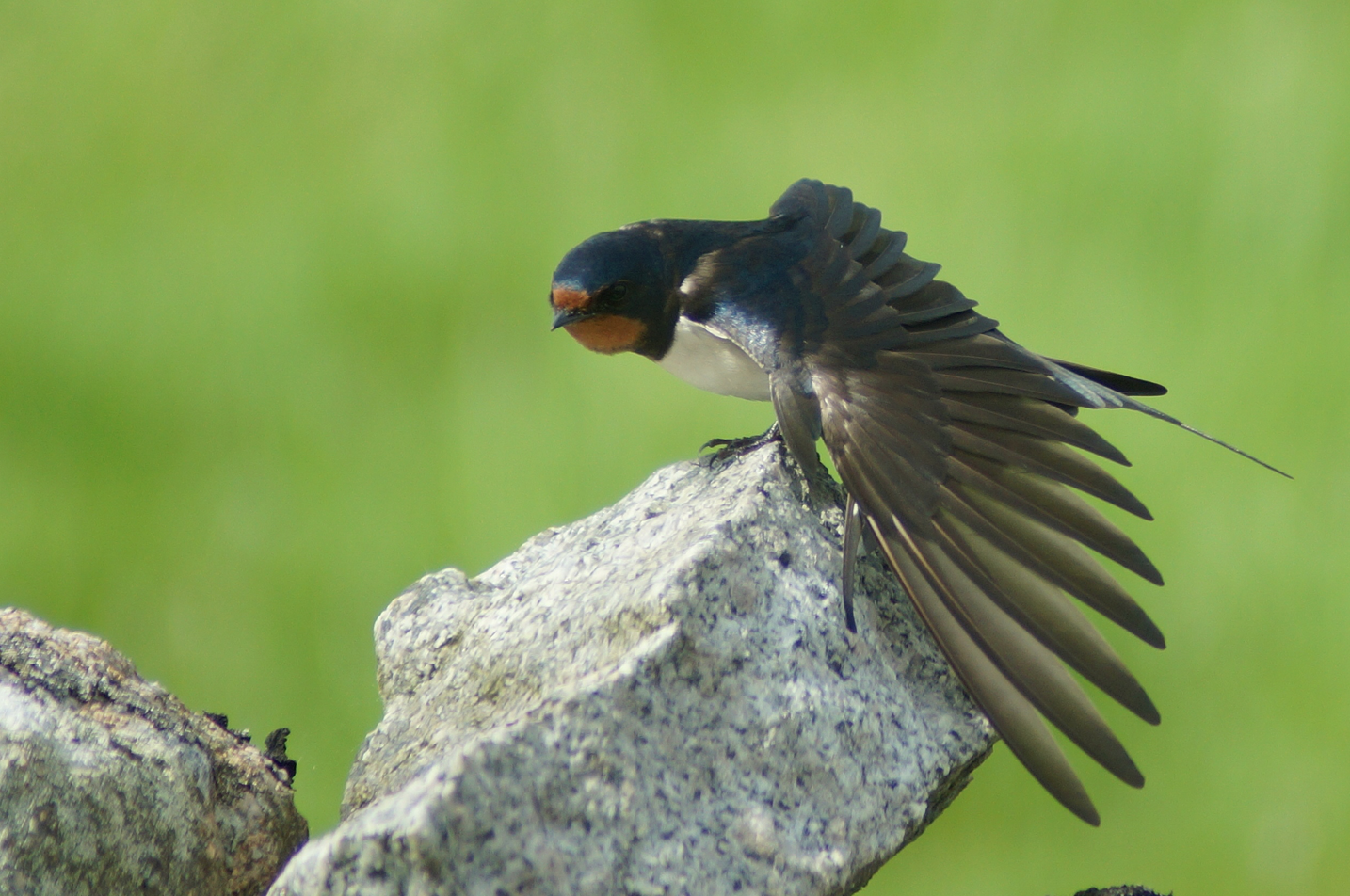
My cousin came up from the south of England, and she said that I was lucky to have so many swallows. Where she lives, the birds have simply vanished over the past ten years, and now there are none. So she stood in my yard with her mouth open like a child and watched swallows sweep noisily around her; thirteen pairs and something like forty juveniles from a first sitting. A second sitting’s underway, and it’s not uncommon to finish the summer with a hundred or more birds on the telephone wire above the close. Sometimes other packs will come over from the neighbouring farms in the evening, and they’ll all fly together in a raucous, clattering swarm. I took my cousin into the house for coffee, but she asked to come out again. We carried our cups to a bench in the garden where the swallows were hawking above the nettles.
After she’d gone, I was moving new-milled boards of elm in the workshop. They’re still not dry, and each one has to be stacked and turned to stop them warping. I lifted one of those timbers and found an entire brood of dead swallow chicks beneath it. They must have fallen out their nest in the rafters a month or more ago, and they’d lain there in silence until they starved to death. Each bird was well-feathered, and if they hadn’t fallen, they might soon have been able to make their way in the world. I picked one up and held it in the palm of my hand, empty as a shuttlecock and light as the down from a thistle. The corpse had left a black stain on the board where it had fallen, but the moment for moisture had passed. There wasn’t even a smell. The others came up crusted together like a scab, and when I put them in the bin, they landed with the same lightweight whisper as planer shavings.
They say that swallows are declining everywhere, and it won’t be long until they’re gone. My cousin’s visit reminded me that these birds are precariously balanced, and it was suddenly tempting to imagine that the death of those chicks in the workshop had contributed to a wider failure of the species. But this kind of tiny tragedy is inevitable, and the reality of extinction is more subtle and insidious than a few youngsters lost here and there in sad and memorable accidents. The way it seems to work, a number of swallows will depart in the autumn and fewer return in the spring. So there are no heaps of dead swallows for the Council to shovel up from the pavement in the town, and no indication of how many birds should be here but aren’t. There’s just a gentle easing-off which runs until one day you wake up and find there’s nothing left.

 Bog Myrtle & Peat
Leave a comment