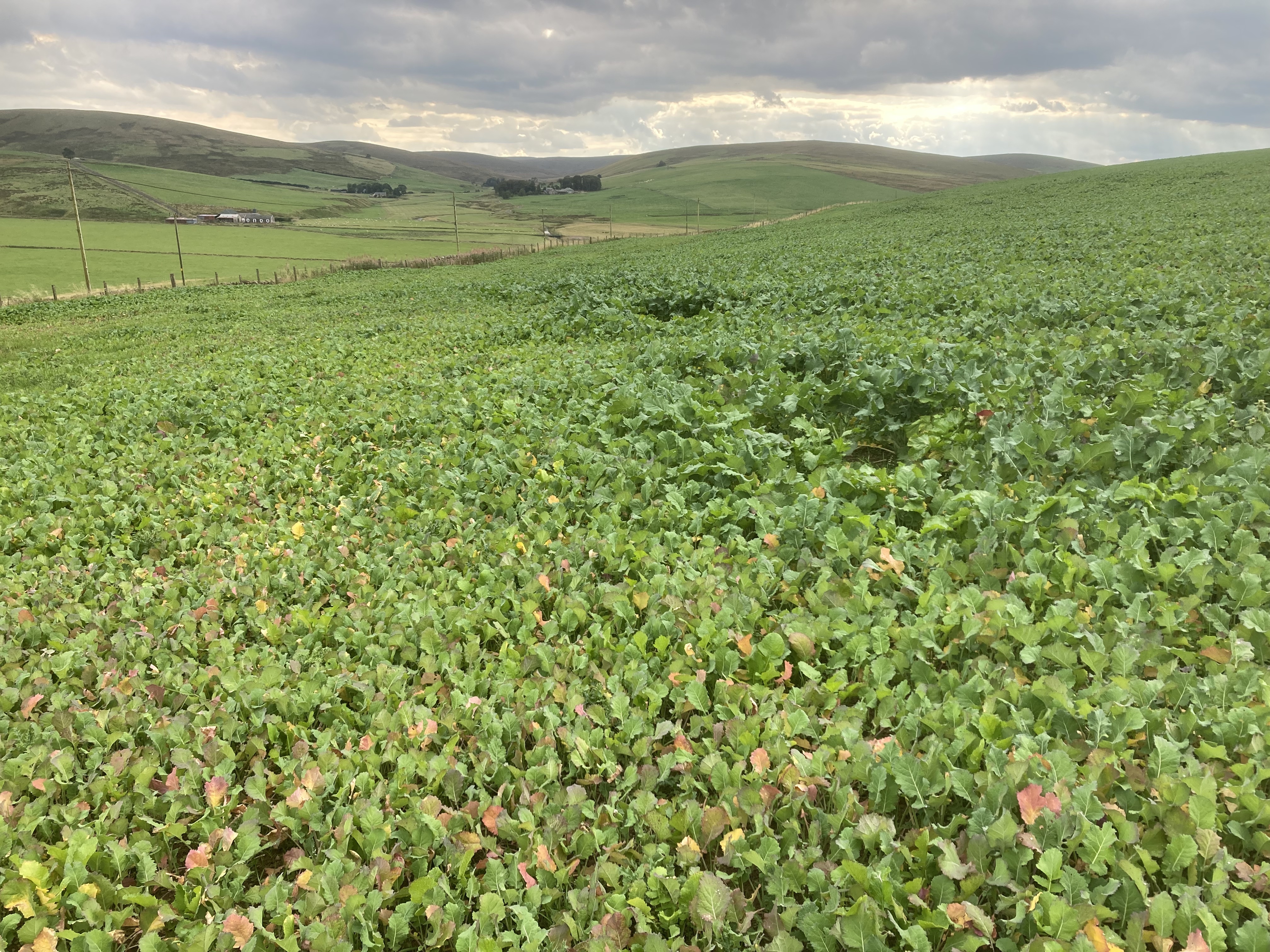
They’re working on a plan to grow brassica crops for wading birds in Lanarkshire. It doesn’t immediately make sense, and it certainly doesn’t conform to any standard conservation technique you’ll find in the manual. Waders are said to prefer a grassland fringe, particularly in the uplands. That’s where you’ll find their greatest wader strongholds, so it seems counterintuitive to support the birds by sowing crops of heavy arable leaves like rape or kale which are usually used to feed cattle or sheep. The explanation is not in the crop itself, which only exists during the winter months. By the time that waders return to their breeding grounds, the crops themselves will have been eaten – but the stumpy, trampled-in aftermath of those brassica crops is perfect for lapwings and oystercatchers when they come to nest. So it’s not the brassica crop which makes the difference in itself, but the residues left behind it.
This is not a new concept. It’s common knowledge that some wader species like ground to be worked around them, and provided they’re kept safe from being munched or trampled by heavy machines, arable farming and wader conservation go easily hand-in-hand. In many ways, this project in Lanarkshire is merely just an attempt to turn the clock back on common farming practices which took place in the 1980s and 90s when fields of kale and rape were common in the uplands. But this latest rediscovery was made almost by accident when brassicas were sown prior to a grass reseed near Crawfordjohn in 2020. Lapwings crammed themselves into the stubble stumps the following spring, and in an area where these birds are mainly declining, a single field held eight pairs of birds. There’s a fair case to support the idea that waders are most productive in more natural habitats – I’ve made the observation myself, but through examples like this, it’s also clear that wader conservation can be integrated into more intensively managed environments.
There are some funding options to plant brassicas for farmland wildlife. Farmers can be supported to do this kind of work, but the existing scheme is more about providing cover for finches and seed-eating species. Once the crop’s been established, farmers are not allowed to let livestock graze it off until the early days of spring – in fact, they can even be punished if it’s eaten. But while little birds need the crop to remain for as long as possible, waders need it to be gone by March or April at the latest. In this way, the payments which allow you to grow brassicas for wild birds restrict any benefits to specific types of wild birds – and a crop which costs the same to sow, establish and care for can be valuable or pointless according to what species you’re targeting.
These fields were ploughed and sown in July, just as the wading birds were leaving for the year. Visiting the valley today, the place was weirdly silent. In fields where I’m used to seeing lapwings birl, I only heard the sound of pinkfooted geese heading high and south for the Solway. We’re rushing into the Autumn, so it feels odd to be placing such a focus on birds like lapwings and oystercatchers which won’t return until March. But this long-view emerges as a pattern of patience and trust across all kinds of wader conservation; the year is like a vast merry-go-round, and the birds are far away out of sight during most of it. All you can do is boost them when they’re with you, pushing them onwards and hoping that your work will be rewarded when they come around faster and better next time.
The people who are working on this project in Lanarkshire hope that if they can prove the value of brassicas for waders, future support schemes will support them to do this kind of work. In the meantime, it’s little more than a heroic punt being taken by a handful of farmers who want to try something new. They know it’ll work, but as so often seems to be the case, they simply have to provide the data and continually nudge the head-honchos in government for change. Working together with help from a variety of supportive organisations, I wish them luck – and I hope we’ll soon start to see a lot more of this kind of stuff.
Photo – Brassicas in the hills of Lanarkshire – a paradise for lapwings in six months’ time – 20/9/22

 Bog Myrtle & Peat
Leave a comment