The soil in the stubble was dry like sand and the severed stems shot through with last year’s fallen oak leaves. Then I was in shade above the river Eamont, and the water there so pure that even the weeds shone cleanly in the pool-tails. After weeks without rain, this madly verdant corner of the Eden valley was finally in retreat. The grass was thready and tanned; the Pennines drab as old furniture. I crossed a style and the sheep rose ahead of me in a ripple, leaving pools of urine in their wake; concentrated, extra-strong stuff, more like cordial than piss in the thistles.
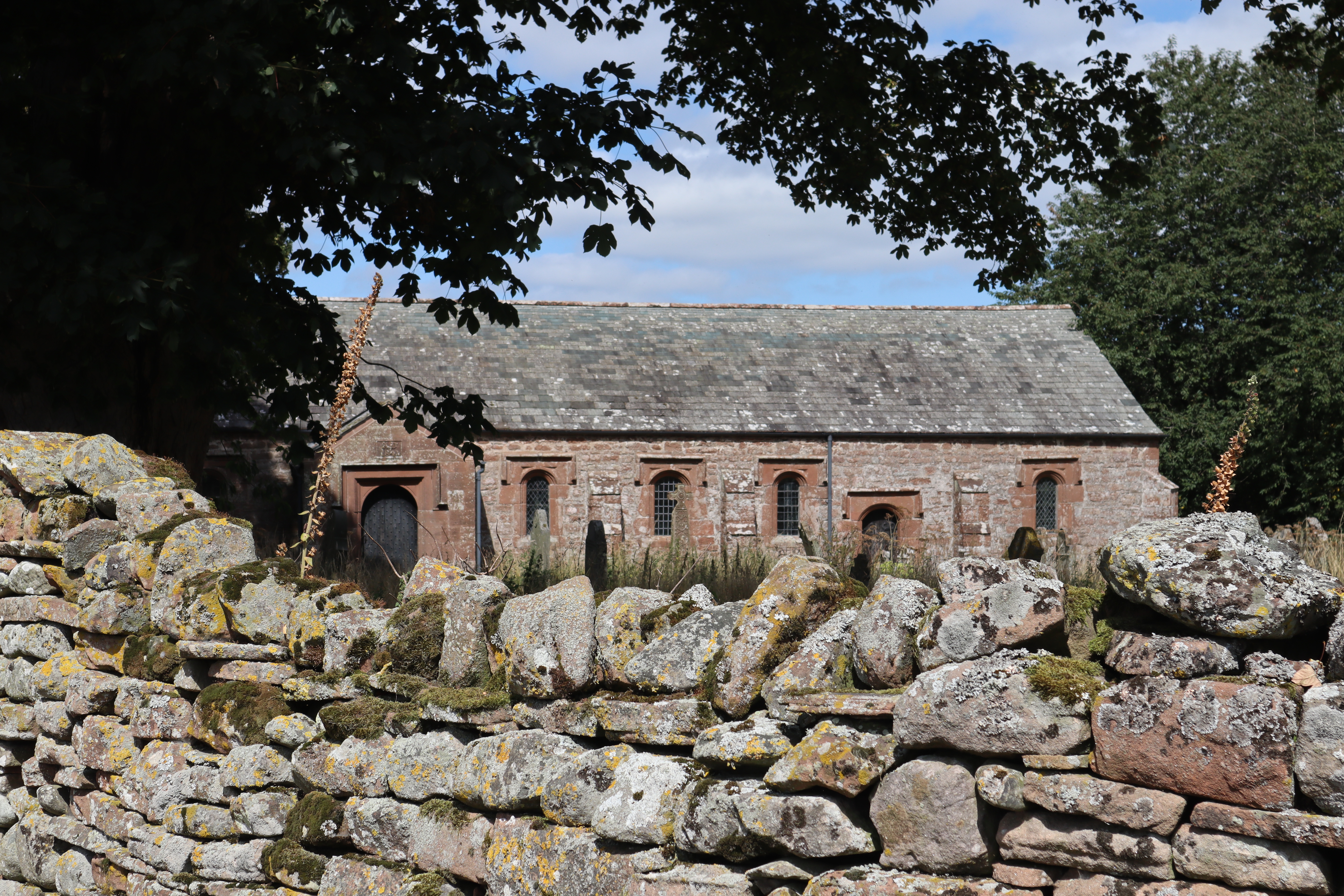
I was looking for St Ninian’s church at Brougham, called Ninekirks. Down through the fields and the shelter of knackered hedges, I found the building penned inside a wall beneath several tall sycamore trees. Trees like these are misleading. You imagine that they’re part of the landscape, but none of these sycamores were here when the wreck of old St Ninian’s was dismantled and rebuilt in 1660. In fact it’s become almost impossible to imagine this place when it was first consecrated in the Middle Ages. Even the little town which grew around this church has long since marched away, and the original Roman groundworks are only visible as wrinkles seen from aeroplanes.
It’s no wonder that Ninekirks was abandoned. It’s out on a long-discarded limb, and my own movements were by far the loudest disturbance during an hour’s careful stay. Betjeman called this church “unforgettable”, but I’m not so accomplished to understand why. It’s certainly cool and calming inside; dark timbers flash in high contras against the whitewashed walls and a certain smell of fungal damp. There are canopied box pews, and a beautiful sandstone font to match and mimic the quiet run of water across red stone nearby. But I’m still working on my ability to recognise and magnify smaller details, and I don’t always know where to look. Reaching for guidance, I dutifully followed a laminated sheet which offered “ten things you should see before you leave”. Despite my best and most sober intentions, this list turned into something like a treasure-hunt game. It was tick-offably tempting, so instead of feeling my way in this new place, I played.
Soon I had found an altar stone, a poor-box and a sandstone grave slab hidden beneath wooden shutters in the floor. I had to concede that I might only have found three or four of them without help or pointers, but none were quite my thing. And instead it was inevitable that my eye should have been drawn to a doorway panelled with relief carvings reclaimed from a Jacobean vestment chest. That was crazy; a mess of grinning faces, freckled lions and two mismatched dragons which coiled and back-bit towards each other. The work was ambitiously intricate, and also richer for having been so clumsily rendered.
Real master-craftsmen were able to conjure extraordinarily lucid and immaculate designs from blocks of raw timber. Wood carving is an art form, but when it’s too smooth the work can lose something of its human appeal. For my part, I almost prefer wood carvings which reflect a sense of the shambolic. I love mistakes and asymmetry; a kind of clunky “chunkiness” is charming when you know that the goal was often lightness and grace. My own rudimentary experiments with woodcarving have taught me what is possible to an enthusiastic amateur. I can admire beautiful woodwork, but there’s an additional appeal to recognise carvings I could have done myself. At such a distance of time, woodcarvers are almost always rendered anonymous. We’ve lost any sense of who they were, but I’m suddenly able to put myself into the shoes of those people when I see their mistakes.
So I loved the stubby-winged dragons and the wonky flowers, and I came away from Ninekirks feeling very satisfied by the trip. I hadn’t known what to expect, and those carvings certainly made me grin. But I had not felt any sense of the place as a whole, and the shadow of that checklist hung over me. I wondered if I might have done better to take a broader impression of the place as a matter of priority, then feed upon the details as they revealed themselves. More than anything, I was anxious of that acquisitive sense of “doing” a place, then marking it down as “done”. Of all the church-crawling I’ve done this summer, the only constant theme has been to slow down, open your eyes and take what you’re given. Trying to find sense between two meanings of a word, if you’re “doing” a church, you’re doing it wrong.
Picture: St Ninian’s “Ninekirks” near Brougham, Penrith – 17/8/22

 Bog Myrtle & Peat
Leave a comment