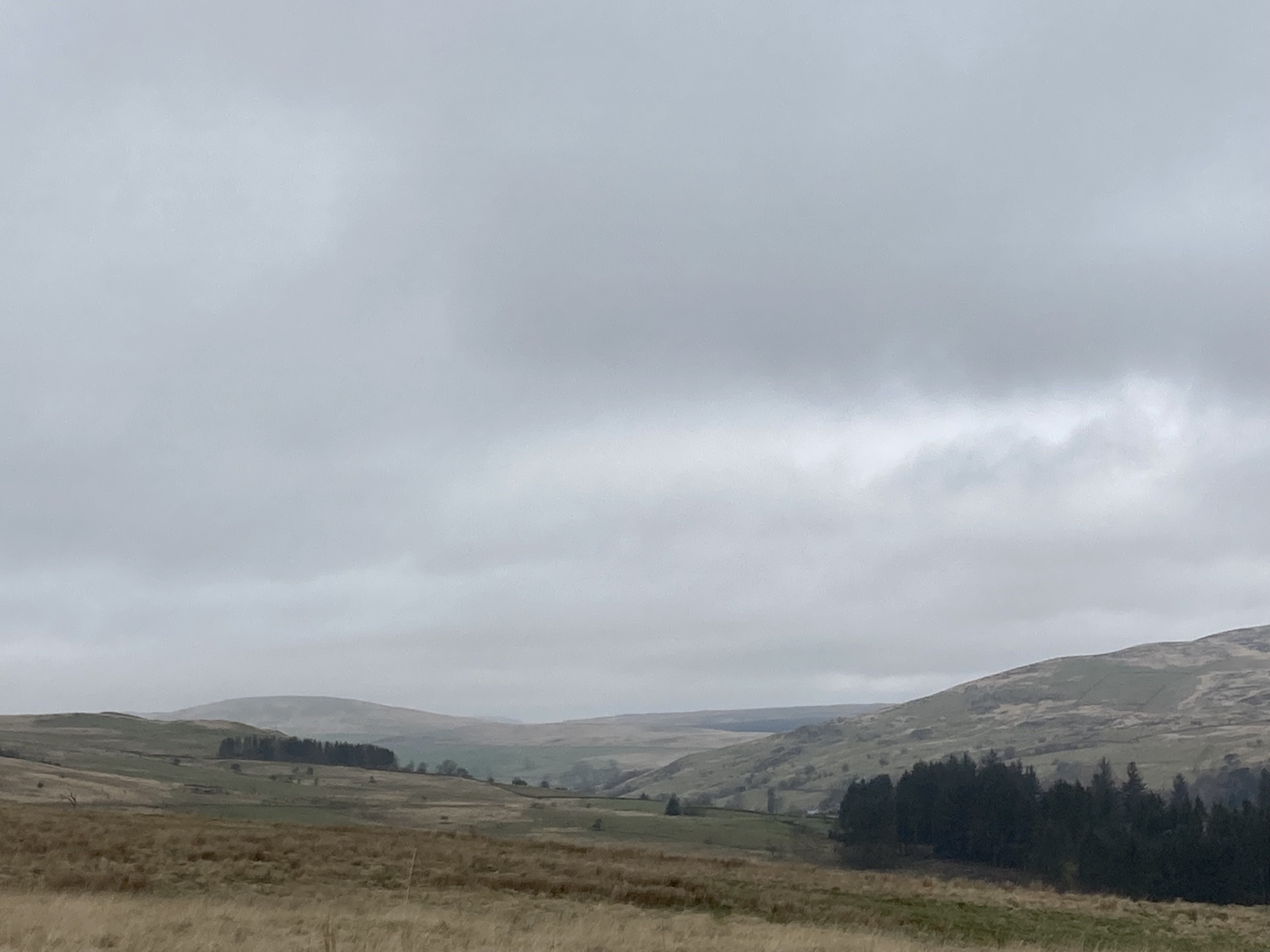
Following a recent post about curlews and forestry, I can’t resist the urge to carry those open-ended notes to their gloomy conclusion. A few people were in touch with me when that blog was published, and they added a useful degree of first-hand experience to many of the ideas I put forward. And I realise in retrospect that perhaps I did not go far enough into the issue of mitigation. Indeed, I might even have lent the idea some credibility it does not always deserve.
Because in many situations, there is no mitigation for forest expansion on wader breeding grounds. There’s a specific point of order at the root of all mitigation for new plantations; curlews cannot abide trees. The two interests are mutually exclusive at a fairly fundamental level, so it’s generally true to say that when a forest is planted on a curlew’s breeding ground, those birds are doomed. It often doesn’t matter how many compensatory wader scrapes are dug elsewhere to mitigate the harm – the landowner’s decision has turned a favourable habitat into an unfavourable one. The story ends there.
In this context, I’m slightly “over” the idea that curlews can live long and productive lives in the shadow of commercial plantations. I’m not satisfied that I’ve ever seen it done, so talk of mitigation often sounds like obfuscation and concealment of the hard truth that one outcome has been chosen above another. Habitat mitigation is still talked about as if it were somehow possible to have the best of both worlds, but often you simply can’t.
Knowing that forestry trumps curlew conservation is hard to stomach, but the clarity of that binary choice is clouded by matters of scale. The loss of a few curlews here and there is so marginal that it’s laughable to consider measuring it against the financial incentives of timber production. So perhaps you’ll lose a couple of curlews, but what’s does that tiny loss mean against a world full of birds, and there’s always somebody else to pick up the slack. It’s right that no single property should regard itself as the problem in its entirety, and yet all forested properties are variously complicit in an accumulative decision to shut the door forever.
Now that curlews are declining fast, even big strongholds look pitifully small. Developers might think twice about dumping a forest onto a breeding colony of fifteen pairs, but no such thing exists in Galloway. We only have a scattering, and I understand when people fail to see how losing a pair here and there will really make a difference. That’s a simple trade off, but the more insidious issue lies in the false promise that you can have your cake and eat it.

 Bog Myrtle & Peat
Leave a comment