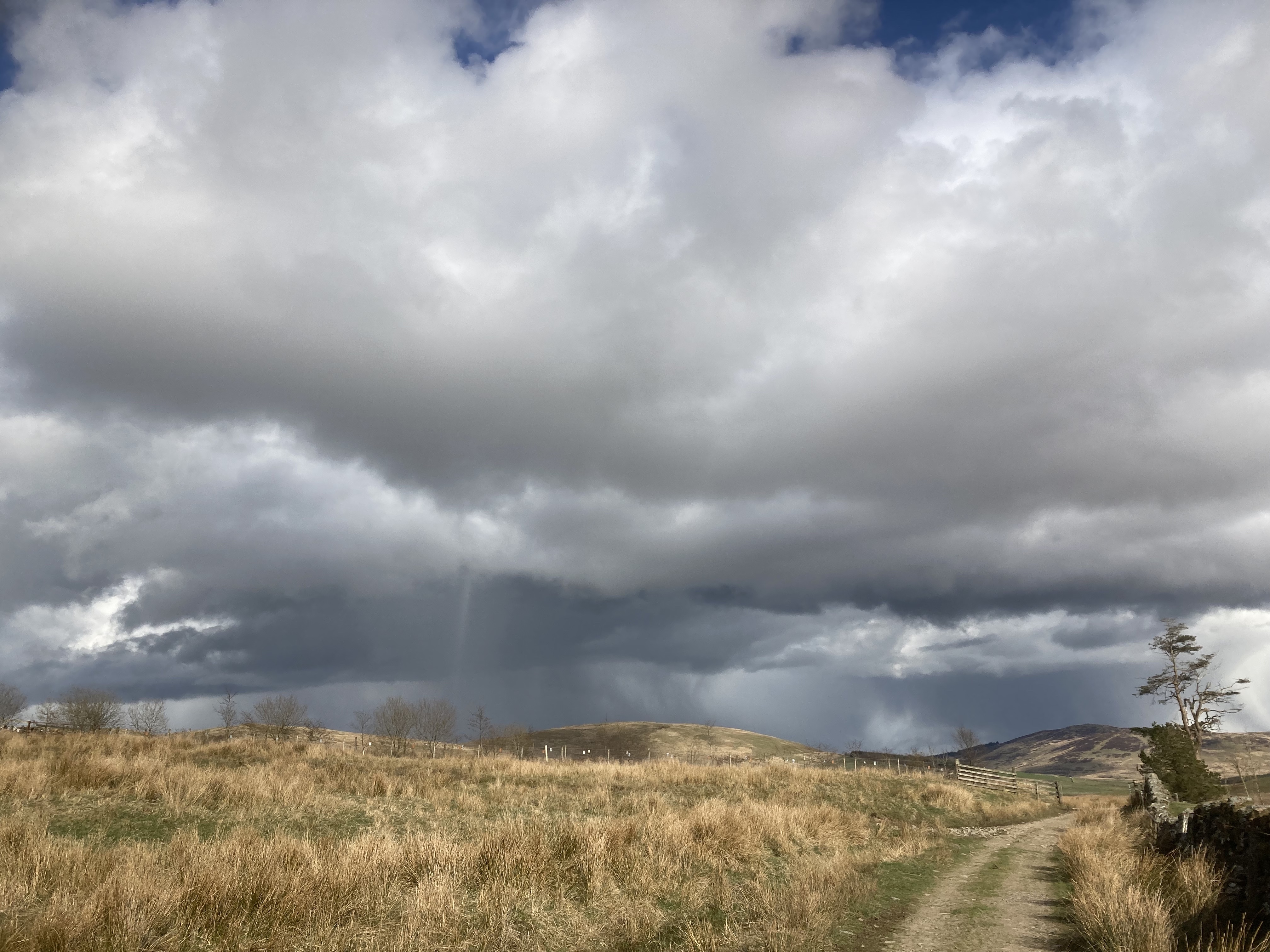
We cut more wood and made heaps to dry in the cold north wind. When our saws fell quiet, we pulled back and forth on a joke which kept coming up funny for hours as the trailers filled and we carted the timber home on the hill road. That joke lay in a rag by the end of the day like a toy torn out by dogs. I won’t tell it now, but it worked as hard as any of us did that day.
I stopped to sharpen my chain at lunchtime, and afterwards I loved the buttery pull of that spoilage which came squirting out beneath the bar in slippery coils. It’s a joy to work on a sharp saw, and hellish with anything less on jobs like this where all you’re doing is pressing and waiting. Soon we were down to the pork of the trunk, slicing the sections ever thinner as it thickened to be sure we could lift them into the trailer afterwards. Some of the final pieces were three feet wide, four inches deep and out at the very limit of what my saw can bite.
The wood was cold and hellish heavy, and there was a black vein through the middle of it. I’m told that that’s a sign of sickness, and it’s only disease that could explain why this tree came down in the first place with all its roots rotten off. It left a socket like an egg fallen out of its cup, and that doesn’t sit well with me at all.
After the storm when lots of trees like this were down, people were writing in the ‘papers saying please leave the wood to rot; it’s good for the insects and in time the fungus too. There are a hundred good reasons to let the timber rot where it’s fallen, but you can’t deny that a big tree might be worth five hundred pounds to someone broken up for stoves. And this kind of cleaning up is hardly a matter of tidiness either when the same ‘papers say that a new fuel crisis will send us all back to the Dark Ages; that jobless men will soon be sleeping three to a bed like an episode of Hancock’s Half Hour. So in the shadow of chaos, we’re told to ignore the logs which fatten and fall in our own back gardens, trusting instead to pipelines from places we’ve never been.
Cutting this wood in alternate shifts of sunlight and snow, my only complaint was that the weather called for ash to match the rushing colour of the day. When they’re first cut, ash trees are cold and citric inside; flecked with grey and yellow like a gosling’s down. That would’ve been the stuff to cut in a bitter wind on the last full day of March. But instead we had beech, which was far too rosy and warm in colour. Beech is a late summer wood for the palettes of August and September when the grassheads are turning. As the sap began to oxidise across the bare cuts, our beech began to glow like crazy terracotta. And later when snow fell over the hills to the glen again, it settled for a moment in the drifts of sawdust, heaping itself in a puzzling blend of cold and red confetti.

 Bog Myrtle & Peat
Leave a comment