Each year I mistake this bright weather for a charm, and to be fair that’s what it feels like after a dull winter. It’s a delight to find the place alive again, and grand to see the smoke come down from the hill fires. But too much of this dry weather is a curse, and now on the tenth consecutive day without rain, the land begins to feel edgy. I suddenly remember previous years when a dry March blew into a cold April and frosts held until the start of May. It’s a pattern which can hold the land in cold suspended pain for weeks as the daffodils nod and the forecaster says “plenty more beautiful sun to come”. It looks fine for a walk or a wander if you’re lacking Vitamin D, but it’s miserable stuff for those of us waiting on grass to feed cows – and it’s downright traumatic for wading birds.
Too dry in March upsets the curlews at their territorial work. That has a knock-on effect to their nesting and pushes them out of sync. In fairness I’ve often complained that hill-nesting curlews lay too early in the year, but I can’t deny that birds know best. I trust them enough to know that any deviation from their Plan A is a concern, and if it stays cold through April as it did last year, there’s a chance the birds will simply go and not come back until 2023.
We get het up about predators and forestry plantations as the driving force behind curlew decline in Galloway, but this dry weather has the power to go beyond nest failure – it’s the cause of nests never being laid in the first place. That’s fine for a year or two, but this could be the fourth or fifth consecutive year of cold, dry Marches on-the-trot. I’ve often bragged that curlews can live for thirty years or more, but that’s unusual. Most live for between five and eight years, and the first two are an adolescent period before breeding begins. So it’s quite possible that in recent years, curlews have been hatched, fledged, matured and died without ever breeding entirely because of the weather.
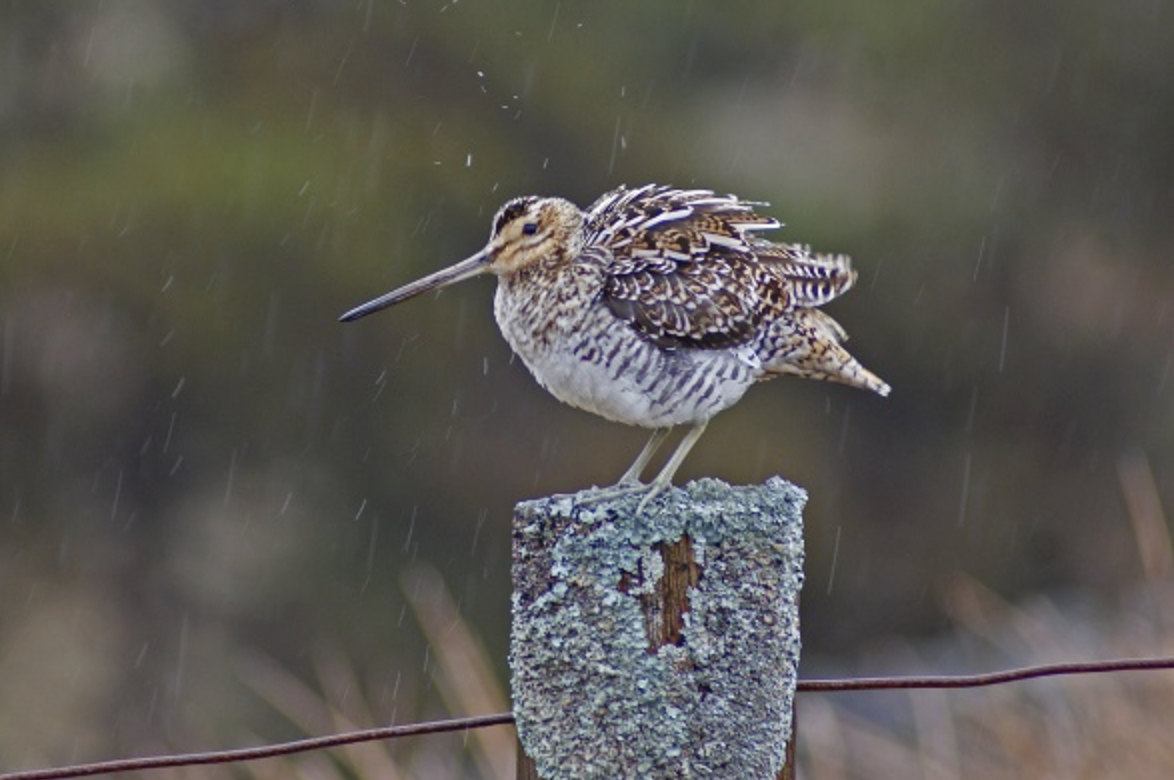
The difference between a wet or a dry March is even more visible in snipe. When the spring comes up warm and sloppy, snipe boom in staggering numbers and the first chicks appear between the fifth and the tenth of April. But snipe seem to be more sensitive than curlews in how they respond to the weather; when it’s cold and dry, they’re usually the first to vanish from the hill. A handful will always stay and try regardless, but the weather can make such a difference that when the conditions are right, you’ll have ten to fifteen times more pairs than when it’s too cold and dry.
Further downhill, these dry days have a similar effect on the lapwings, although the mechanism is slightly different. Some of the best areas for lapwings in this parish were spread with slurry at the start of March. Lapwings had already returned by then, and the slurry drove them away. Agricultural work like this is a major problem for these birds, but when it’s early in the season they usually return within a day or two once the slurry’s been washed into the soil by the rain. It’s much more of an issue when slurry is applied to fields once nesting has begun, so when I work with these farmers to protect the lapwings, I accept that they need to spread their slurry and I encourage them to spread it early rather than late. But in the dry weather, the slurry was spread and has lain ever since like a dark mat in the grass. It’s not soaking in, and it’s easy to see why the birds have not returned.
This effect is sometimes called “capping”, and it’s made worse when more slurry is applied on top of the stuff that hasn’t washed in. That happens here, and it’s only an accident sometimes; a few of the biggest dairy farms rely on the fact that most people don’t know enough to spot problems like these, and who would you report it to anyway? I can think of a handful of agencies and organisations to notify, but few have teeth and it’s surprising how many are still completely hamstrung and inactive on account of COVID restrictions. Besides, it’s more than just a wader problem anyway. Slurry’s a kind of toxic waste, and it’s only a small issue for waders nowadays because most farms where it’s spread actually lost all their breeding birds years ago.
I hope that rain will come in due course and the lapwings will simply try a little later in the year – but this is a further deviation from their Plan A, and another example of issues arising from a problematic land use being magnified by inclement weather to tip the balance ever further against wader breeding success

 Bog Myrtle & Peat
Leave a comment