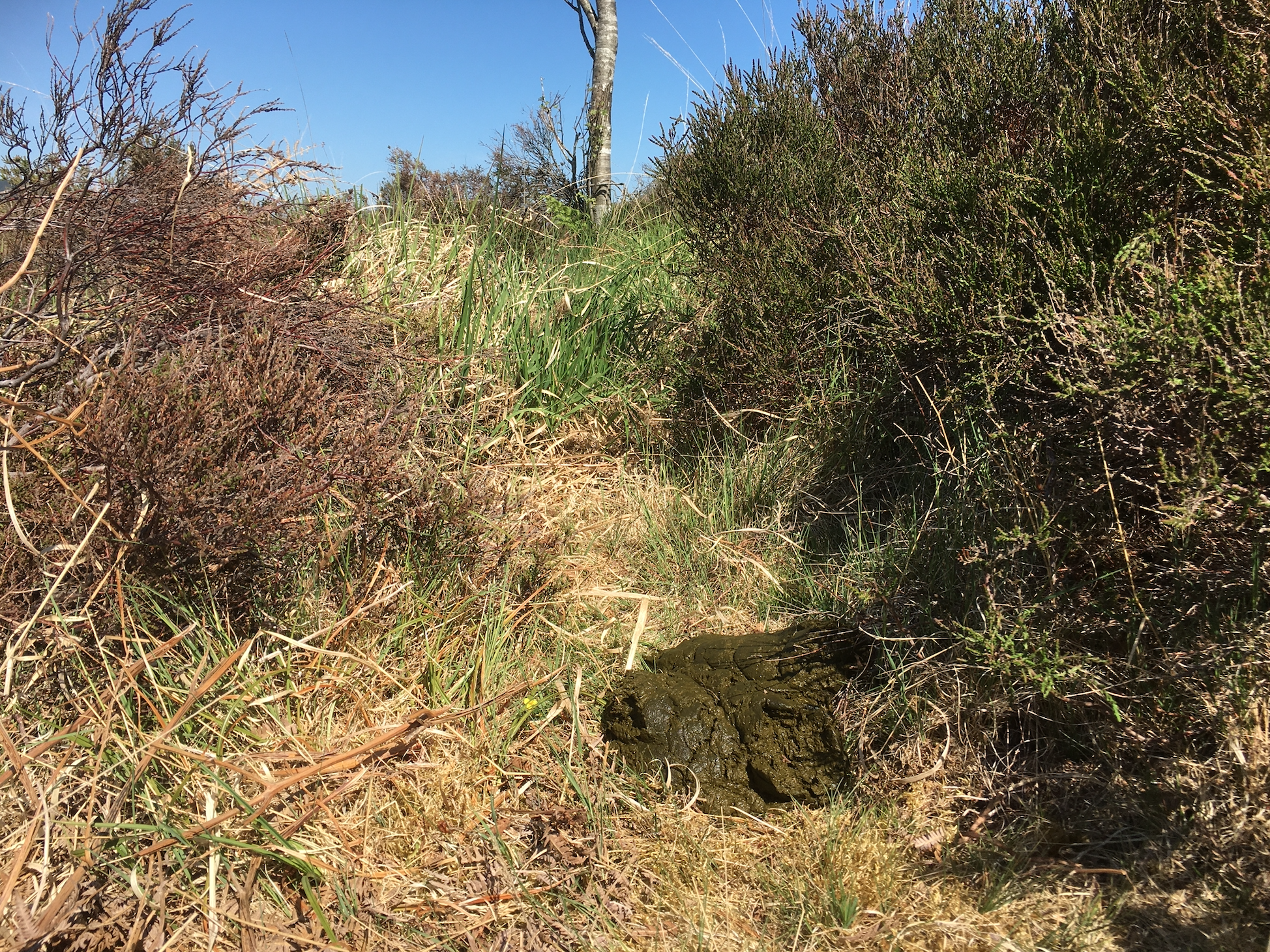
Low Airie, Glenkens – 31/5/20
It’s worth a note on the subject of shit, because as my cattle rove back and forth across the hill, they leave a visible trail behind them. I’ve always been curious about the conservation value of this by-product, and I’ve been steadily drawn towards the role of cow pats in healthy soil structure and diverse ecosystems. There is a whole world of intrigue and excitement around the study of dung beetles, and these little beasts are so closely linked to traditional grazing techniques that it’s easy to treat them as an indicator of how well you’re doing. Dung beetles and insects which depend upon cowpats have been in massive decline over the last few years, and it’s interesting to note that farming techniques seem to have driven much of this collapse.
It’s perhaps inevitable that cattle should pick up a host of parasites as they move around the countryside, from ticks and lice to fluke and worms. There’s some evidence that traditional livestock breeds are naturally more resistant to diseases caused by parasites; if they’re well managed, most old-fashioned cattle soon build up a healthy immunity to many of the worst illnesses. More commercial systems often depend upon chemicals to manage parasites, and there are some superbly efficient man-made treatments which kill everything in next to no time. These are often based on a substance called ivermectin, and the suffix “mectin” is used in many of the brand names available from vets and agricultural stores. I’ve used closamectin in the past when I’ve been worried about worms, and the treatment comes in the form of a blue fluid which is poured along the spine of the animal where it can be absorbed into the system. Closamectin is pretty expensive, but it’s given me peace of mind in the past when parasites have been breathing down my neck. However, the problem with the “mectins” is that some of the most potent ingredients are still active when they are excreted in the dung, and they continue to kill everything they touch – particularly dung beetles and many of the beasties responsible for breaking muck down into some of the useful ingredients for soil health.
Cow muck that is tainted with chemical treatments will draw in dung beetles from miles around, only to kill them or badly inhibit their reproductive cycles. It’s no wonder that many species of dung beetle have been wiped out over the last few decades since ivermectin was introduced, and it’s only in recent years that we’ve started to understand how deeply the problem can run. This was a conundrum for me, because I wanted to protect my young beasts but also had to balance that against helping soil health and dung-feeding insects. As a compromise, I treated them with Closamectin about five weeks before they went out to the hill. They were kept in a shed until the withdrawal period had passed, and I tried to make sure that their dung was not spread about or meddled with during that time. The cattle went out when they were “clean” and all the harmful active ingredients had passed through them – and as if to prove that this “quarantine” period was successful, it’s exciting to find that the cowpats they are now dropping on the hill are all filled with wriggling bugs and beetles.
I broke up a cowpat this morning and found it riddled with all manner of different creepy-crawlies, and some of the dung has obviously been riddled and probed by birds trying to feed upon the beasties. If you struggle to see the value of dung beetles in their own right, remember that they underpin a whole food chain which links them to all manner of other (potentially more exciting) species like snipe, woodcock and oystercatchers. As I learn to differentiate between the various different species of dung beetle, it will make for an interesting strand to the project to see if diversity or numbers increase over the next few years. I’ll try not to use any treatments for worms or fluke while the beasts are on the hill, and I hope that I can walk a fine line between healthy cows and healthy invertebrate populations.

 Bog Myrtle & Peat
Leave a comment