Low Airie, Glenkens – 31/3/20
There have been times when I have imagined that the restoration of a badly crumbled two hundred year old wall is eminently doable. I bite off three hundred yard stretches in a single morning, flinging up the fallen stones and repairing sections of bent or crooked boundary as if it were light work. It’s fun to fly through those lengths of standing stone, and I feel like the way ahead is brisk and easy. I have a month to go before the cattle come, and I’m tempted to say that I’m right on schedule.
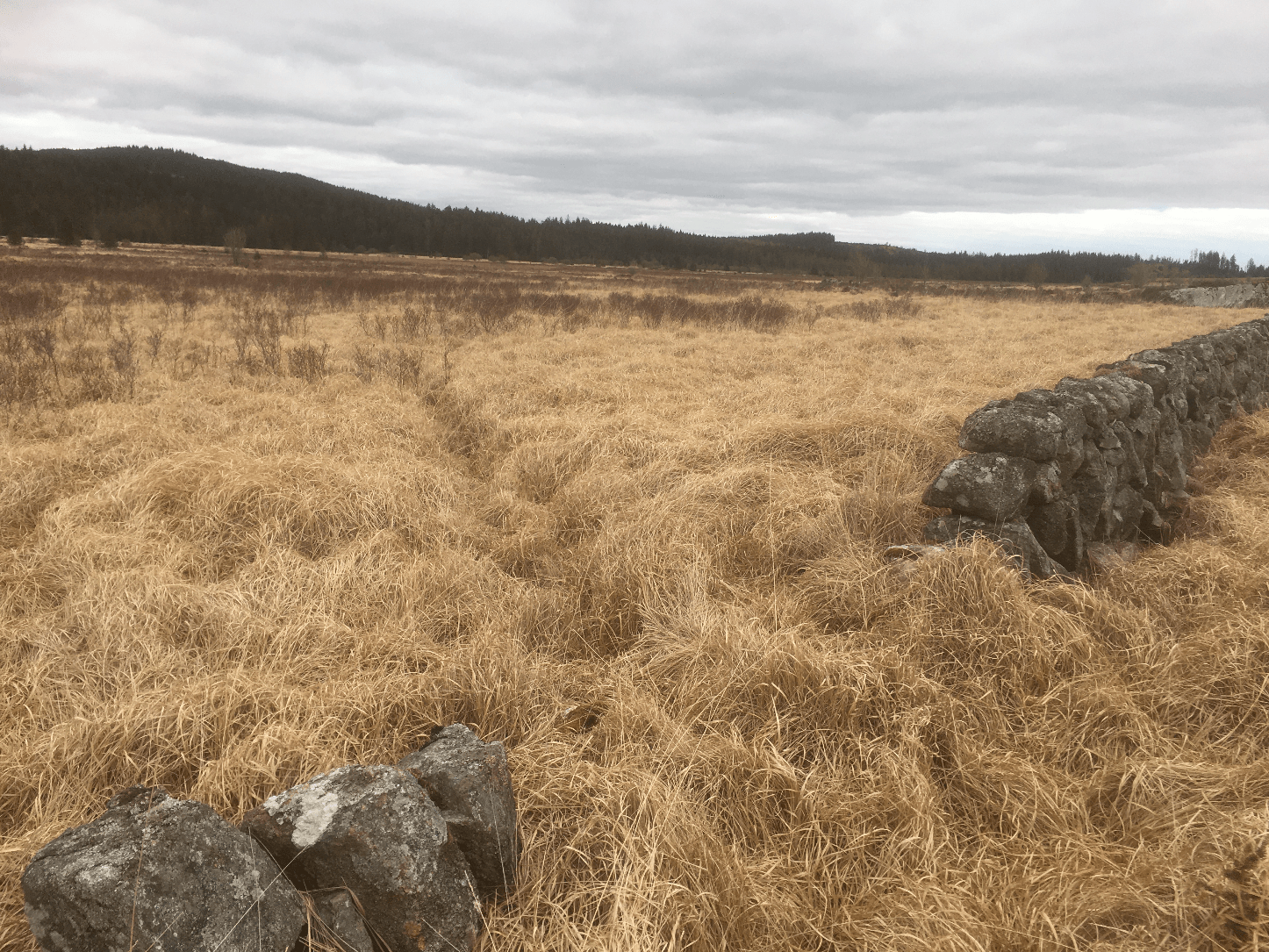
And there are other times when progress is so agonisingly slow that I wonder if I will ever be finished. I came upon a very badly damaged section yesterday (pictured above), and it took almost five hours to rebuild just a few feet of dyke. Most of the work arose from having to recover stones which had tumbled into boggy ground, and each one had to be dug up from a black, peaty soup with rose above the height of my welly boots. To compound the difficulty, each one was wrapped into a coarse, canvassy mat of grass roots which bound them together as if they had been stitched. I actually had to cut some of them away with my penknife, working eighteen inches under water and soaking my arms to the bicep.
The result was not pretty, but in working and churning the ground, I realised that this is a very wet area of the hill. I can’t imagine that cattle will linger here, and the dyke exists simply to provide a visual deterrent and the illusion of impassibility. If they wanted to cross here, they probably could – but I am relying on the fact that they have a great deal of space and no real reason to press the issue.
I often marvel at the beautiful straightness of old dykes, and I associate that precision with the old-fashioned love of tidyness and clean lines. The reality is that a straight and mathematically perfect stretch of dyke is stronger and lasts longer. A little chink or a missing topstone seems to invite exploration from sheep or cows, and they are inclined to peer over it. In peering, they rub the other stones and loosen them. A dyke begins to die the day a single stone is lost, and in no time at all, the whole lot has crumbled.
For all I focus on livestock, it’s interesting that many of the worst breaches have deer tracks leading through them (just visible in the picture above). There are red deer in this place, and they always choose the easiest path across the open ground. But then I begin to wonder what came first – the deer tracks or the dyke gaps? Were some of these crumbly chasms opened up by deer in the first place? It wouldn’t take much for a heavy stag to touch a stone in jumping and thereby loosen it. The same action repeated many times over a decade would steadily loosen the entire section of dyke and perhaps deer played a major role in bringing it down in the first place.
I’m also conscious that this process has not ended. Deer will continue to walk their tracks despite my work, and they will jump my new sections when the fancy takes them. Perhaps it is sensible to mark down the worst sections and keep an eye on them to ensure that they are not rumbled down again. I have similar concerns for the badgers which cross the hill at night. I’ve seen their footprints all over this place, and they are accustomed to crossing the dyke where it has fallen. When they return and find that their breaches have been mended, it’s likely that they will try and scramble over – pulling down stones in the process. I’ve seen badgers climb dykes before, and it’s a clumsy spectacle at the best of times. For all that I have worked hard to put this boundary up, there will also be plenty of work in keeping it up.


 Bog Myrtle & Peat
Leave a comment