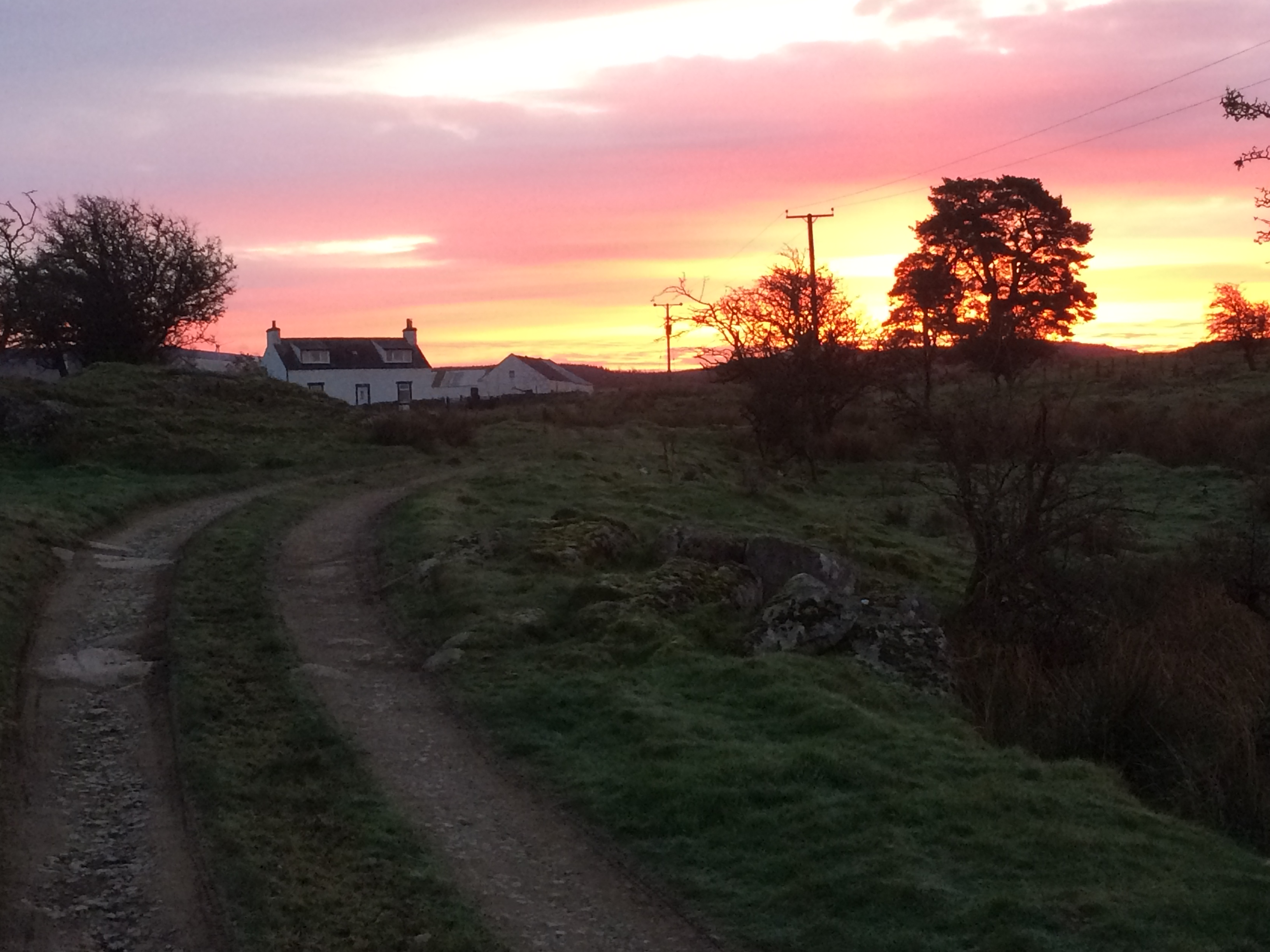
Our house has received mixed reviews from the local tradesmen. This building required a good deal of work when we moved in, and all kinds of people have been up to the house over the past six months to provide quotes and services. Few have been able to resist passing comment on the place, and fewer still have had anything positive to say.
General opinion was summed up on Saturday by the postman, who shook his head and asked me how on earth we could live in a place like this. When I replied that the small inconveniences of life here are vastly outweighed by the many advantages, he asked incredulously if I actually liked living here?
From my perspective, this place is not very remote. The nearest town is three minutes away, but there is an illusion of isolation when you drop off the main road and cross the bridge. The house beckons from the track, but the landscape is instantly broken and slashed by slabs of bare granite and the silhouettes of ancient thorn trees. The bumpy road may terrify the postman, but it’s very much in keeping with the character of the place, which probably hasn’t changed much in appearance for a century. The yard is built on a knuckle of stone, and the rough hill runs right to the back of the sheds – it’s an abrupt immersion into the countryside, but we can still hear traffic from the road some nights when the wind is in the west.
Talking it over with a friend from Jura, we agreed that there are few places in Scotland which could be described as truly isolated, particularly in a historical context. The word has merely become a synonym for “awkward”, and in a world of mild weather and super-convenience, the bar has shifted. Today’s “isolated” pales by comparison to stories from my grandparents who farmed near Tweedsmuir in the 1920s when the hills could be placed on “lockdown” for months by bad weather. People depended upon forward planning, and communities were proud of their stoicism, resilience and independence. Now we tut and moan if slushy snow makes it tricky to park our cars.
I was a little taken aback by the postman’s comments. Part of me wanted to go to his house in the town. I wonder how he might have responded if I had curled my lip and said “I don’t know how on earth you can live here” – but surely it’s better to turn a blind eye – to be an object of mild curiosity. With every comment like this, I begin to feel that I’m in a tiny minority, and perhaps this is a good thing.
I daresay that many people would like to come to this house for a holiday; for an escape from reality. But while this might be an “escape”, the idea of living here would be laughable for most. And I can hardly complain, because I would not be here myself if this land and this life had any popular appeal. When the time came to make an offer on this house, we came within a few pounds of our absolute final limit. Even typing those words gives me a cold shiver of what might not have been. The smallest financial increase from another interested party would have blown us out of the water. Luck, hard work and generous families played a part, but in many ways we bought this place because nobody else wanted it. There are advantages to being an oddball and prioritising curlews above bin collection.
We are longing for the swallows to come back, but we consider flocks of wild swans to be a fair swap. They preen and doze on the fields below the house, and I can hear their wings wailing at first light. My roots grow deeper here with every passing day.


 Bog Myrtle & Peat
Leave a comment