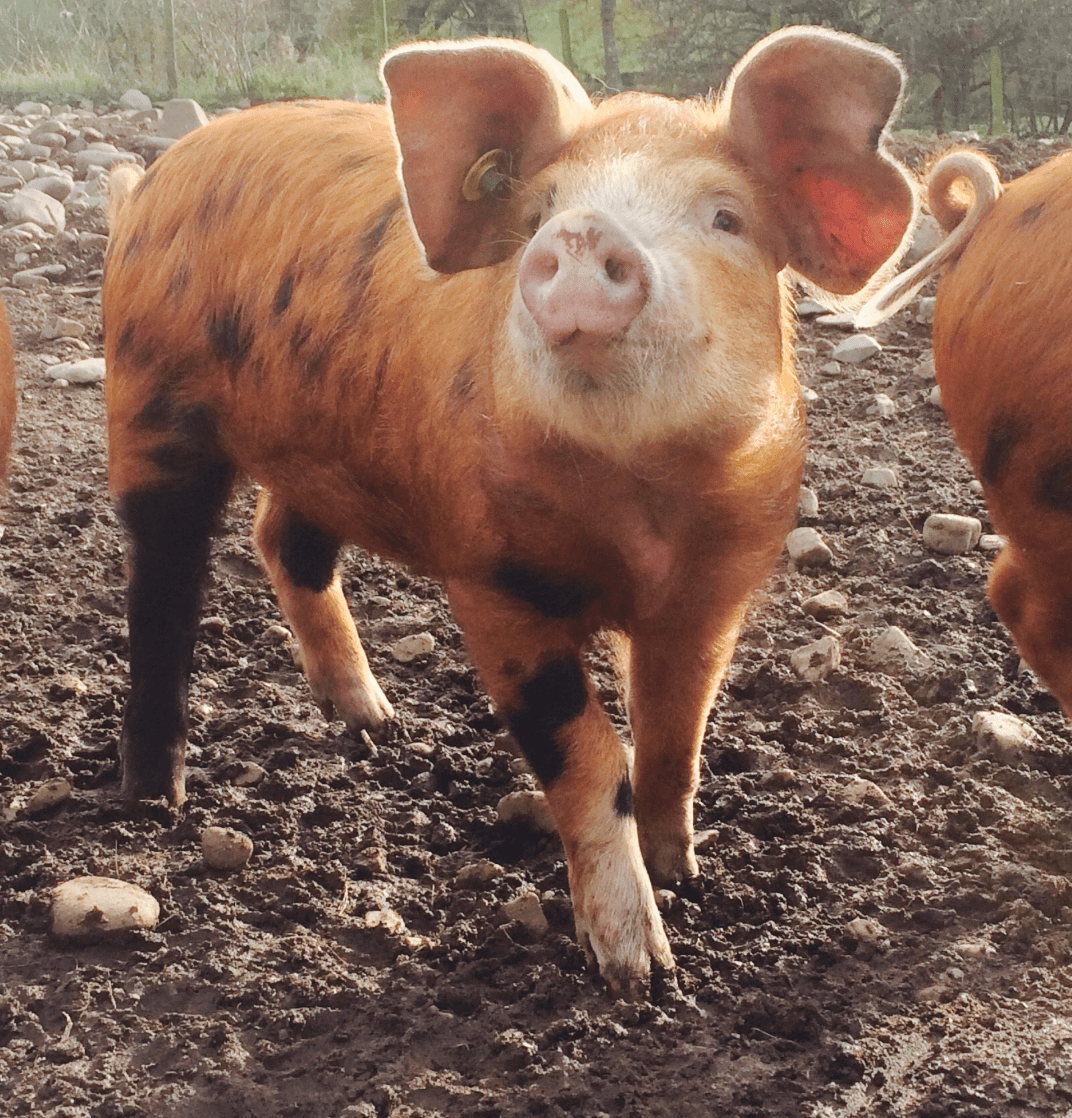
While perhaps not closely bound to the driving themes of this blog, my endeavours with pigs are worth recording now and again, if only for my own interest’s sake.
We enjoyed keeping a pair of saddleback weaners over the summer, and their journey into our freezer left a big hole in the farm. I grew to love the contribution that pigs made to the yard, and the place felt very quiet and empty without them. While hams and bacon still hang curing in the sheds, we went over to Galashiels yesterday to collect a few new pigs.
Since stepping into the world of riggit galloways, I’ve become more fixated on the idea of rare breed livestock. I took a pig-keeping course in 2010 and fell in love with many of the old British pig breeds we found. It was fascinating to discover animals which had been bred over generations to suit specific human requirements, and the heritage value of these beasts was enormous. It seems perversely wasteful to abandon dozens of old-fashioned breeds because they simply don’t fit a modern niche which favours nothing more than high productivity on a quick turn-over. Who knows what the future holds, and the rush towards new breeds at the cost of older stock is horribly short-sighted.
It’s hard to ignore oxford sandy and black (OSB) pigs – they are some of the most attractive and endearing native breeds, and I have wanted to learn more about them for years. OSBs have been close to extinction more than once in their history, and despite a small resurgence in recent years, they remain in a perilous position. Slow to grow and mature, they simply cannot compete with commercial pigs on a productivity basis, but they are known for producing superb bacon and flavoursome pork. As my taste-buds grow ever more snootily refined, this seems like a fair trade-off.
We came home with three female weaners in the trailer – cheeky little souls wearing expressions of placid curiosity. One of the weaners does not meet breed standards because she has a white spot on her back, but the other two are tip-top pedigree animals. The misfit may end up in the freezer because we plan to breed from these pigs and only the very best will suffice.
Breeding should give a fascinating window into the life of an OSB. There may a reasonable demand for their piglets in due course, but it’s hard to view a project like this with too much financial scrutiny. The pork will be superb, the project will be fun and perhaps we can cover some of our costs; It’s a hobby after all.


 Bog Myrtle & Peat
Leave a comment