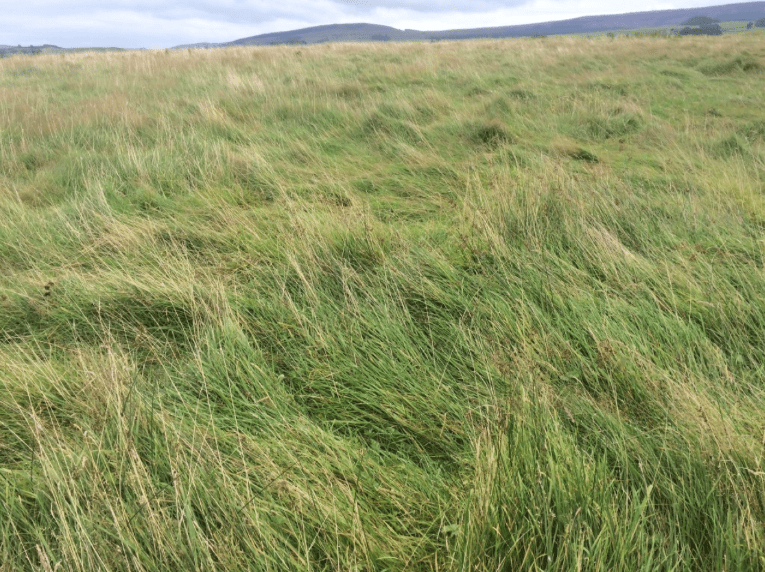
This year more than any other I’ve been forced to pay attention to the combined impact of grass and weather. Having always had a focus on hill country and wildlife, cutting silage and making hay have often seemed like remote concerns, even though these are the founding agricultural processes which govern so much of the countryside around me. Now that I am looking to feed cattle and cut grass on my own ground, issues relating to grassland management suddenly come into sharp focus, and there is a far more obvious logic to the activity of local farmers.
We have a very small field by the house which I’m assured could yield 100 bales of hay, but that fact is irrelevant in a summer like this where rain has stopped play for several consecutive weeks. When we first moved to this new place, I planted hawthorn trees into dry, crumbling soil which needed to be watered every day. This hot period was a blip, and the summer soon foundered into sogginess. Neighbours have been able to cut and bale some pretty soggy silage into black plastic bales, but lacking the equipment to work with these stinking monsters, I have been keeping my fingers crossed for warm, dry weather to make small hay bales.
As September beckons, it now looks like I won’t get my field cut for hay this year after all, and another day of smirry rain is now blurring up the windows of my office as I type. I might be lucky to bale it for silage, but this is a far cry from my original plan. It would be easier to swallow this disappointment if the grass was serving a conservation purpose, but the field no longer seems to have much wildlife value, and the little birds rarely make use of it since it began to collapse in on itself. The overall impression is one of waste, and while many people (myself included) often complain about silage, it’s a compelling early lesson as to why these “new” techniques have taken off so dramatically.
This cattle project often feels like a diversion from my initial fixation from game and wildlife, but it continues to help me develop a far more rounded perspective on the countryside. Plus, the more I learn about farming, the more I come to realise how detached many conservationists are from the mechanics of agriculture.

 Bog Myrtle & Peat
Leave a comment