Catching up with this blog after a few days away, I can’t resist a quick post about grouse grit on the hill. Regular readers will remember the considerable effort I put in to setting up grit boxes in November, and may also recall my slight frustration in February when it seemed like the birds were being slow to respond.
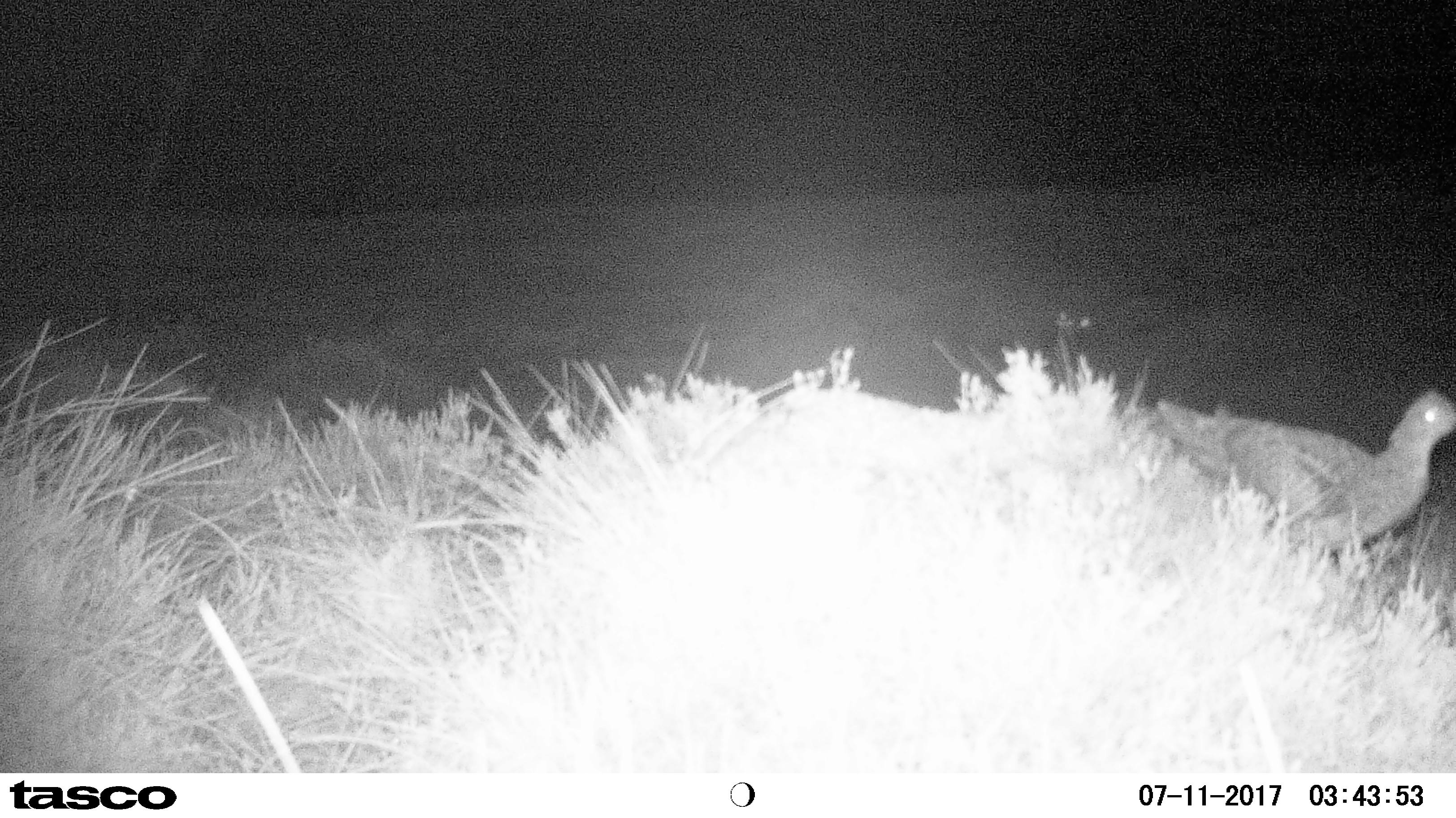
Setting up a trail camera on one of the most active grit piles over a fortnight ago, I returned last week to inspect the findings. Trail cameras are such useful gadgets that I’m astonished that we ever managed to live without them, and I was soon poring over pictures of roe deer, pipits and larks which had passed by the watchful lens during its stay on the hill. As far as the grouse were concerned, my eye was immediately drawn to two things:
- Grouse are visiting the grit piles at first light. The best picture I have (night-vision is not very good on my camera) shows a hen bird visiting at 3:43AM, and while it looks like the grouse is moving about in pitch darkness, a recent stalking trip confirms that this is currently a time of deep blue dawn – a combination of stars and sunset. It’s never really dark at all at this time of year in Galloway, and this could be best described as “pre-dawn”.
On reflection, it makes sense that grouse should be using grit piles at this time of day, since this is probably when they are most secure from hunting raptors. Woodcock use much the same strategy in the winter, becoming most active in the last minutes of dusk and the first of dawn. Perhaps none of this is surprising, and this level of circumspection makes good sense when the nearby forests are full of hungry yellow eyes.
- 2) Metal grit boxes are not very useful on this hill. I put out a dozen metal-sectioned boxes in November, and the rest of my grit was placed on folded turfs of peat which I dug out with a spade. Only a handful of the metal boxes have been used, but every single one of the turfs is now being visited by grouse. The difference lies in the fact that the turfs allow grouse to dustbathe – a factor I had previously underestimated.
The grit is certainly being eaten, but the primary attraction of my folded turfs is that they provide a small area of bare, dry soil. As a result, they have all been dug up by long-clawed, fluffy feet, and the surrounding heather bears the signs of moulted feathers. The logic of supplying grit in piles across the moor is partly to provide grouse with everything they need and to reduce the amount that birds have to travel. Frequent movement across large areas of the moor will ultimately invite predation, so birds which can stay put are theoretically more secure.
What I hadn’t realized that grit is only part of the story, and grouse probably place a comparable value on access to dustbathing. Our hill is extremely thick and inaccessible, so there is almost nothing in the way of tracks, haggs or bare soil to allow for dusting. If they want to dust bathe, they would probably have to fly the best part of a mile to the nearest forest track or broken ground; a bad idea when goshawks and peregrines are on patrol.
Chewing all this over, it’s no wonder that the grouse have fallen on my grit piles with such enthusiasm. In fact, I’m surprised that I had overlooked such an important issue – after all, providing dust for bathing is part and parcel of grey partridge conservation. I quite understand why grit boxes are important for more serious grouse operations, but it’s also interesting to note that some big moors have invested in metal grit boxes and then finally given up with them after several seasons of being totally ignored. Different strokes suit different folks but in my situation, I think I’ll stick to traditional turfs…

 Bog Myrtle & Peat
Leave a comment