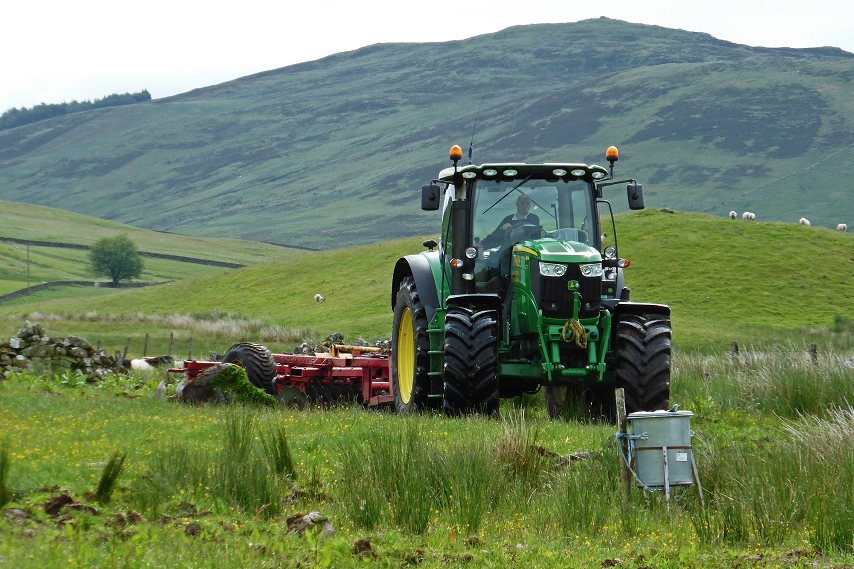
Being a relative newcomer to farming, it has been interesting to follow the uproar following last year’s Brexit vote and the impact that this could have on British agriculture. I am pretty jaded by the existing nature of the Common Agricultural Policy, particularly in Galloway where it simply seems to be a system of providing farmers with new Range Rovers. Now that subsidies are up in the air and the future looks uncertain, I can’t resist a twitch of excitement at new opportunities.
Having chewed over the subject amongst friends for the past few weeks, sirens went off in my head to hear Against the Grain on Radio 4 at lunchtime, which discussed the future of subsidies and the value of food security. It’s a really good little programme (only 15 minutes long) and stirs up some exciting food for thought.
It’s a fair generalisation to say that the intensification of agriculture has come at a cost to wildlife. Declines in wildlife may have been steeper than they are today, but we can now look back on almost two hundred years of steady loss. The immediate response to these declines is to be more intelligent with the way that we farm the land, and some of the most exciting modern research is exploring ways to knit wildlife back in to intensively farmed environments. But at the same time, it’s hard to ignore questions about why we are so determined to guarantee our own food security.
As Against the Grain explains, Britain has not been capable of feeding itself since 1780. Even at full stretch, we currently supply just over half our food requirements, with the rest being made up of imports from across the world. Follow the thread which this statistic represents, and consider the balance between agriculture and conservation – we have all the downsides of intensification and yet we still lack food security.
There is absolutely a place for agriculture in the British countryside. As much as my heart tends towards wilderness, my head understands that farming is the financial and cultural lynchpin of the countryside – there will always be a strong demand for British food, but the forthcoming demise of the CAP allows us to reassess our priorities. We will never be able to compete for quantity on a global stage, but perhaps we can stand out on quality; quality produce from a functioning countryside, rich in natural resources, thriving communities and biodiversity.
Having blundered into farming eighteen months ago for a wealth of disparate, diaphanous reasons, I suddenly begin to wonder if my galloway cows and I have accidentally landed in the right place at the right time. Perhaps the future could lie in a slightly less intensive age that is more focussed on quality output with local provenance. British produce could cater for a new market – not necessarily in a bourgeois “farm shop” mentality, but as part of a wider reassessment of what we eat and why. Maybe my little project has genuine significance.
As always, part of the pleasure of having a blog is to think aloud and invite comment.


 Bog Myrtle & Peat
Leave a comment