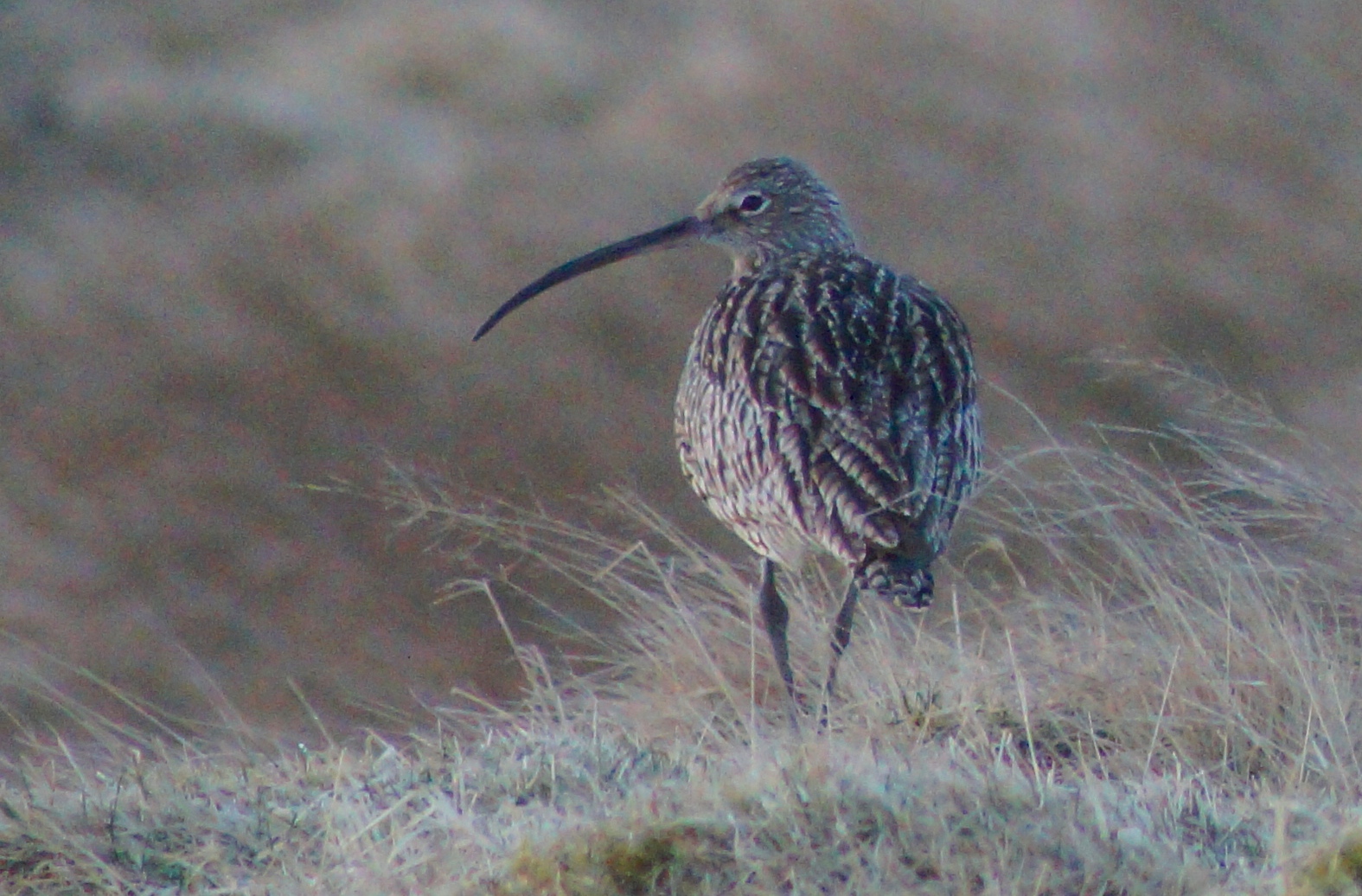
Following on from recent posts about the curlew, I received an email on Friday from the BTO regarding a new project into their decline. Within an hour or two, I had been copied in to a response written by Dick Bartlett of British Moorlands, whose work on grouse represents some of the most innovative and exciting new practical material in the country. There would be no point in reposting this for the sake of mischief alone, but it is worth including on this blog if only because it neatly captures something of the frustration we all feel as the scientists choose to fiddle as waders burn.
The original email to Dick is pasted below, and Dick’s response comes below it.
Dear Mr Bartlett
The long, decurved bill, reminiscent of a crescent moon, and its evocative bubbling call are distinctive characteristics that make the Curlew so easily identifiable. Yet it is in real danger of becoming a thing of the past as it has just become one of the newest additions to the British Red List of Birds of Conservation Concern, and deemed to be of the highest conservation priority.
The Breeding Bird Survey (BBS) shows a 46% decline across the UK in the last two decades, with this figure exceeding 50% in Wales and Scotland. Critically, the UK holds 28% of Europe’s breeding Curlew, meaning that declines here represent the loss of a substantial portion of Europe’s total breeding Curlew population.The UK’s population of wintering Curlew is also of global importance, representing nearly one-fifth of the world population. Resident breeding Curlew are joined in winter by birds from the Continent and Scandinavia. However, the Wetland Bird Survey (WeBS) estimates about a 20% decline in Curlew numbers over the last 15 years.
To unpick the causes of Curlew population decline we are planning a ground-breaking programme of research, analysing existing datasets to investigate patterns of extinction and colonisation and utilising revolutionary new technology to track wintering Curlew. The sooner we can start on this research, the sooner we can understand the conservation actions needed to help Curlew recover.
Our target for the first year is £100,000 to begin this vitally important research.
Please help us raise this money by making a donation in response to this appeal. The need for this research is very real and very urgent as Curlew should be considered ‘the most pressing bird conservation priority in the UK’ (British Birds, November 2015).
Find out more about the appeal and some of the questions we want to investigate or make a donation to help reverse the fortunes of this beautiful bird.
Many thanks for your support
Ieuan Evans
Associate Director Communications – Engagement
and Dick’s response…
Ieuan,This appeal risks further erosion of the curlew stock as it will take time and money to do. Why not appeal for funds to address the crucial issue of predation? We already have enough scientific and circumstantial evidence from the GWCT’s upland predation study at Otterburn plus many sites where curlews are doing well thanks to predator control in areas covered by gamekeepers.It is most significant that agri-environment schemes have not been beneficial without predator control. Recent meetings arranged by the Scottish Moorland Forum have been critical of the lack of necessary action by conservationists to halt the decline of wader species.Supporting effective predator control may be painful and controversial for some but the results will be the reward. I will not make any donation for time-wasting unnecessary research but will happily donate 20 fox snares and 2 crow traps if you will kindly recommend a suitable recipient with whom I can monitor the results.Regards,Dick BartlettBritish Moorlands


 Bog Myrtle & Peat
Leave a comment