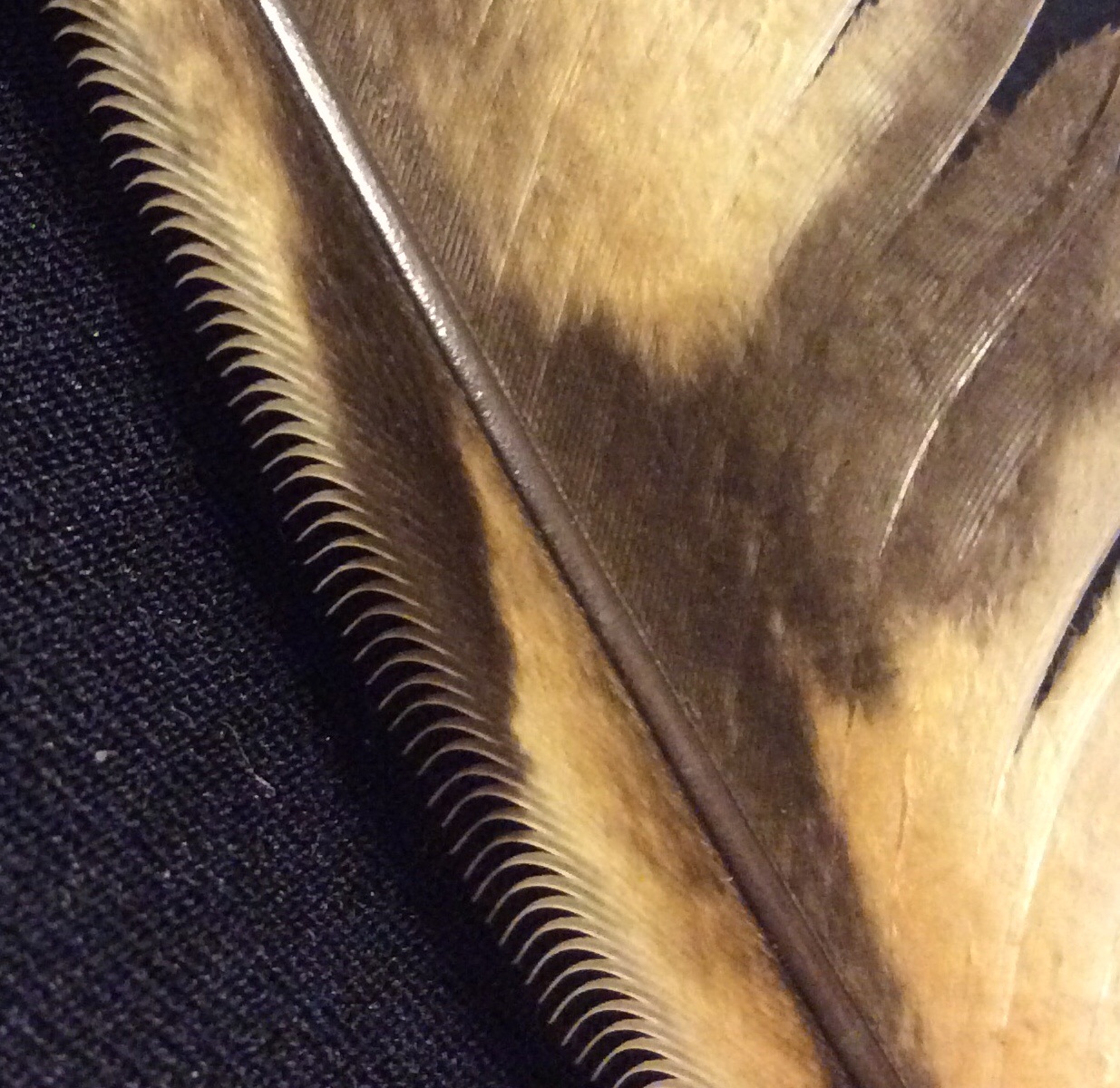
As a postscript to the discovery of long eared owl feathers yesterday, it’s worth including this picture of the specially adapted serrations on the leading edge of the first primary. This comb-like configuration is reckoned to be part of the owl’s many adaptations to enable silent flight, as well as the flossy, velveteen coating to many of the wing feathers.
The book (Mike Toms’ New Naturalist) says that this pattern is most easily seen on barn owl feathers, but while I’ve seen them on barn owls, they’ve never been so obvious to me as they are on this unfortunate long eared owl feather.

 Bog Myrtle & Peat
Leave a comment