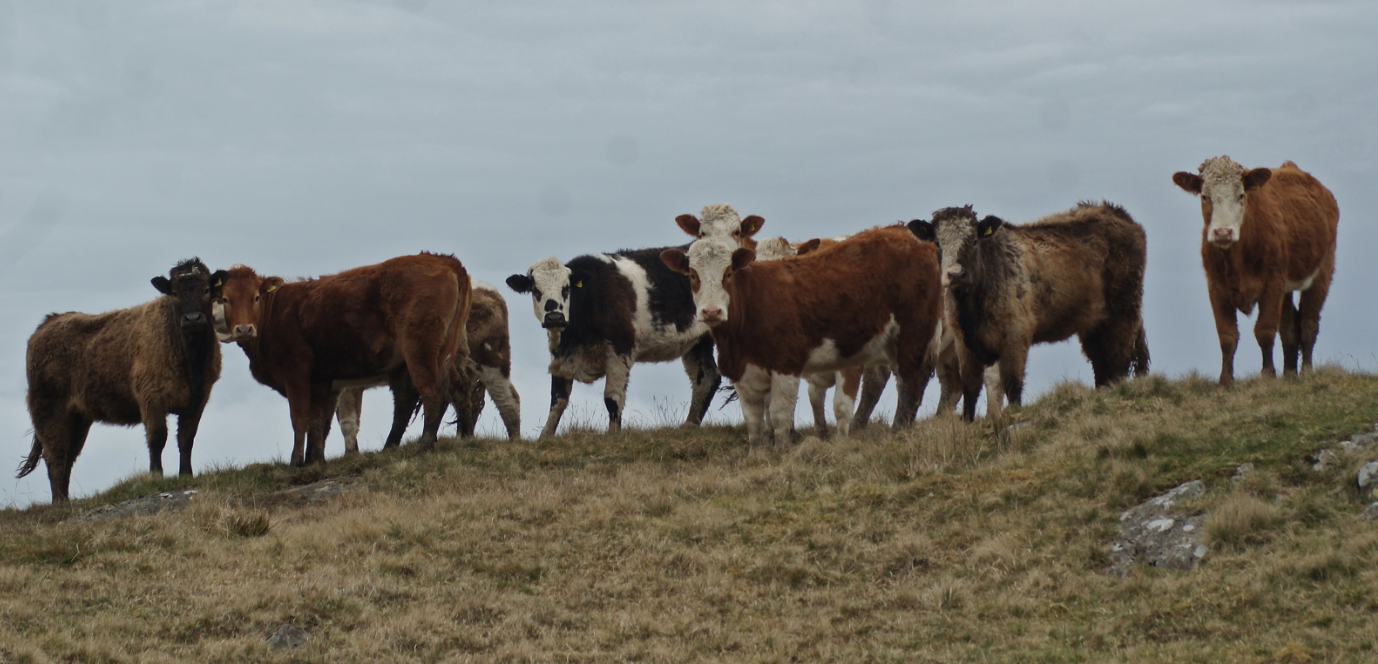
The cows came back ten days ago, but I hardly noticed them in the good weather. Through some barometric intelligence, they spend their days on the very highest ground during periods of clear, warm sunshine, and they are as effective as a German weather house when it comes to getting an accurate forecast. Up on the high tops, I see them sometimes through the binoculars as blocks of colour and shade, but since the cold fog came on, they have been down on the lowest part of the hill, and this has put them right under my nose.
They clatter through the rushes at the slightest provocation, drunk on freedom and wide open spaces, and they have a maddening curiosity for everything they find. I trudge up to find my larsens sprung by wet, sticky noses, and my carefully drained peat haggs mashed into black, soggy pocks.
But on the plus side, they bring so many benefits to the hill and to the wildlife that it would be hard to hold a grudge. I’d really like cows on the farm all year round, but the old breeds that could survive the snow and the sleet on slim pickings just aren’t profitable to run and would require such an investment of feed and handling as to make the prospect impossible. Thirty years ago, the farm was home to an award winning herd of Galloways, and the blackgame prospered too under this age-old form of management. Now we have to make do with what we’ve got.

 Bog Myrtle & Peat
Leave a comment