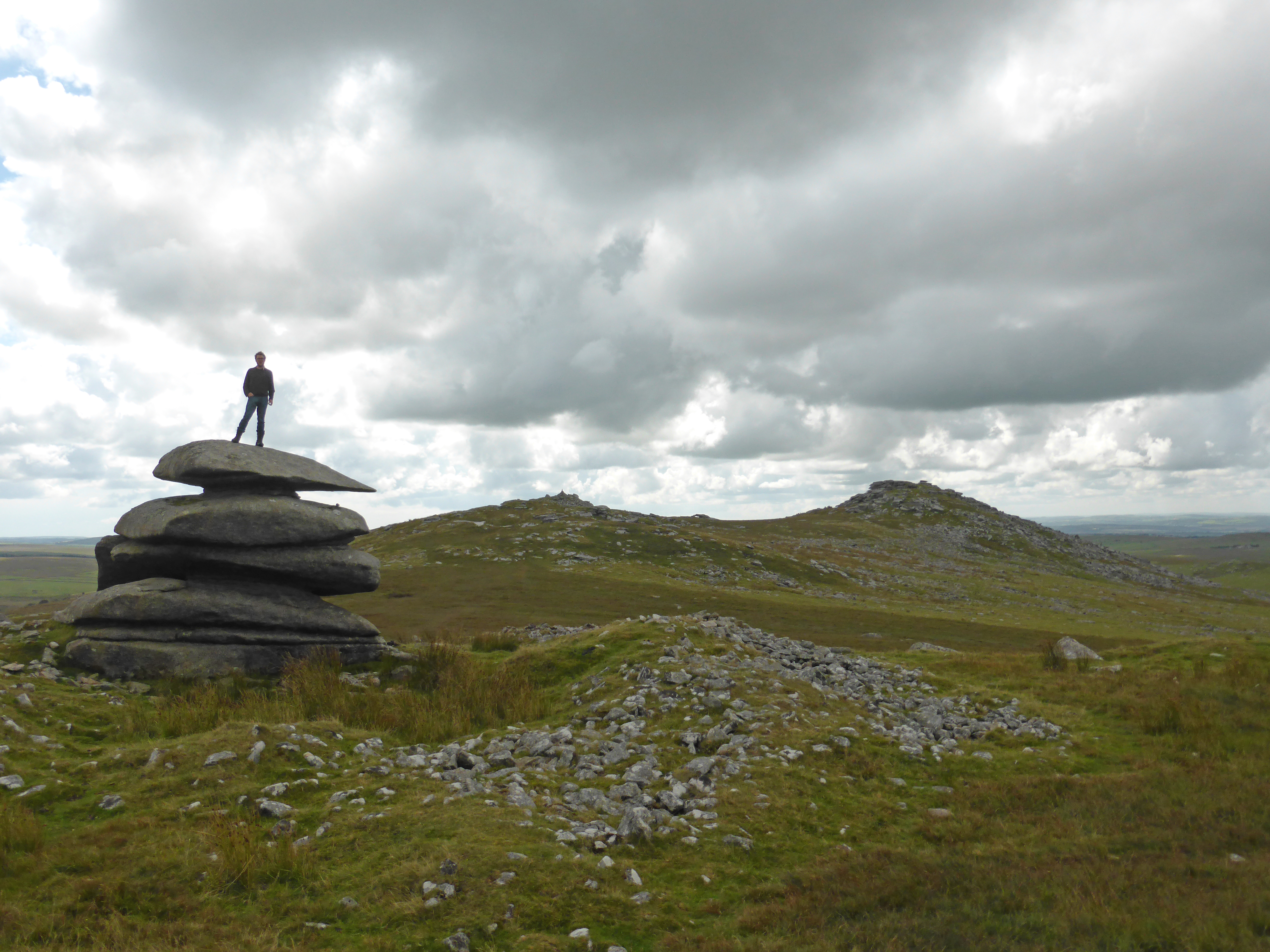
Having been delighted by Exmoor, I must admit that Bodmin Moor was altogether less impressive in its current state. Staying in Cornwall for the weekend, my girlfriend and I decided to head out onto the moors near Davidstow in an attempt to climb the fabled Rough Tor (in which “rough” is pronounced “row” as per an argument). My first impression of the hill was that it was neither black nor white, but green from road to summit. The system of common grazing which prevails on moorland in the south west has a huge amount to answer for, since the ascent of Rough Tor was like walking across green baize, with little vegetation standing more than two inches tall. Horses, cows and sheep told the real story of the land, which was as smooth as a billiard table, and relied for variety on the equally unpleasant components of bracken and molinia grass. Nearer the summit, tiny sparks of heather could be seen as part of a fingertip search, but judging by the way the molinia had been clipped off, as soon as the weather turns, all those valuable shoots will be lost again.
The summit of the Tor was fantastic, and although I am no geologist, the great stacks of precarious granite boulders were such a fascinating curiosity in themselves that it was worth the simple trip. With the greatest respect to the Cornish, who regard this scarcely perceptible blip in the local contours as a mountain comparable to Kilimanjaro, the ascent had taken twenty minutes and failed to raise a pulse. From the very top, I saw a raven flying over some nearby forestry, but with the exception of a lone wheatear on the way back down the hill, the land was otherwise extremely bare. Sitting on a tall pillar of granite on the south western face of the hill, I could see across the entire Cornish peninsula, from the English Channel to the Bristol Channel, where Lundy squatted like a turtle shell.
Sprigs of heather and blaeberry in some of the more inaccessible corners where the boulders had slipped revealed what potential this moor has for recovery, but although the “interpretation panel” and literature explains how popular the site is for snipe, curlew and golden plover, it is hard to imagine that anything would want to breed in an area where there is so little cover. Lucky then that the nearby prominence (and renowned highest point in Cornwall) is called “Brown Willy” – a fact that injects a jolly twist of schoolboy humour to even the gloomiest afternoon.
There is no question that Bodmin is a fantastic place, but it raises the question of what we actually want from our moorland. If you can convince yourself that those bare, vacant acres represent wilderness, then it is probably a very satisfactory place to spend time and recreate. If the area around rough tor is expected to be nothing more than a very large, unfenced field, then it certainly serves that purpose at little cost or investment to the commoners. Not everybody wants a grouse moor, and the advantages of heather moorland suit some localities more than others. But looking at the cavernous absences of Bodmin Moor, it seems a pity that this great place (which held black grouse until the First World War) has been chewed, munched and digested into sorry vacancy. The hornet’s nest of common grazing rights have become a byword for inflexibility, so it seems like this potentially fantastic place is locked in its predicament. It is obvious that many people get great pleasure from Bodmin and there is no doubt that it has merit, but when you consider what it could be, it makes for a grim picture.

 Bog Myrtle & Peat
Leave a comment