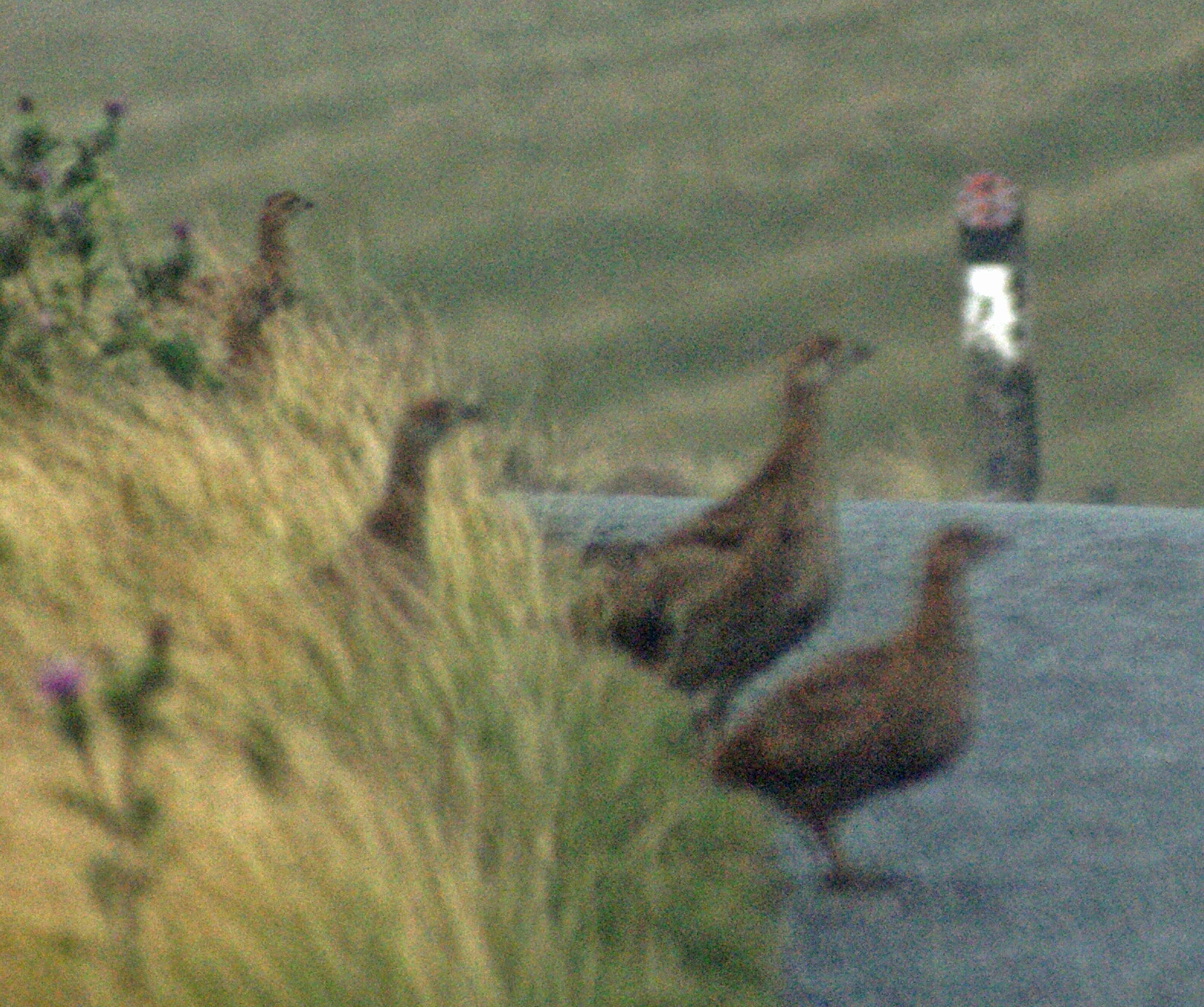
On my trip down to Coverdale last week, I couldn’t resist driving through Teesdale, the heartland of England’s black grouse population. Usually used to seeing thirty or forty black grouse in a short half hour circuit of the dale, I was slightly downhearted to only see fields of lapwings as I first pulled off the road near Langdon Beck. Much of the lower ground had recently been cut for silage, and tractors were out on the inbye, bringing in great swaggering balls of black wrapped grass. I pulled into the verge once or twice to look at greyhens, only to notice at the last minute that they were actually hen pheasants. Almost all of these birds had wild broods, a sight so rare in Galloway that I had to sit back and think about what I was seeing.
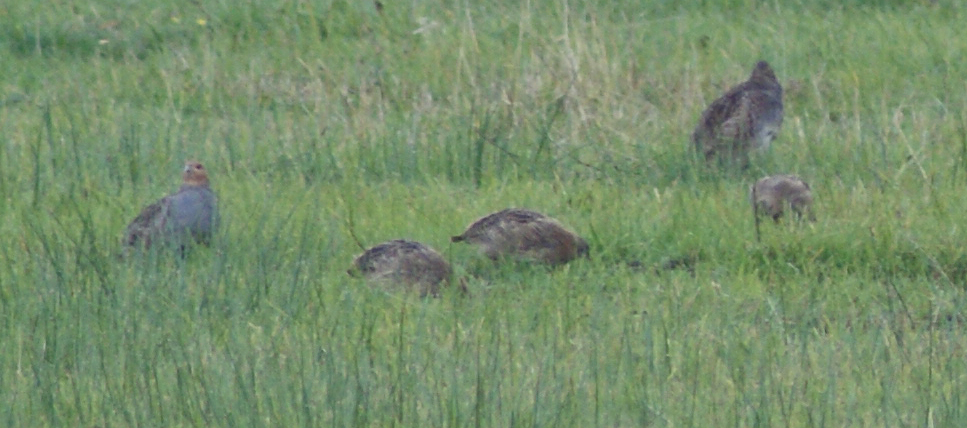
On the track up to Cow Green Reservoir, I paused to watch a covey of wild grey hill partridges as they perused the short grass. I counted nine well grown poults with the cock and hen, and mentally transplanted the little gang to the fields on the Chayne. The only difference I could see between the inbye at Teesdale and the Chayne was the fact that the fields were well worked and cared for, rather than allowed to regress into wetness and rushes. There are obviously major differences between the hill ground in Teesdale and my corner of the Galloway hills, but this marginal upland habitat is my particular area of interest. Getting to the bottom of why it is so productive in County Durham is a constant, fascinating riddle to me.
Needing to get a move on, I drove down to Langdon Beck having seen no black grouse whatsoever. On a short drive over the hill to Weardale, the most appalling downpour suddenly struck, almost forcing me to stop by the roadside. With windscreen wipers on full blast, I looked up to see a greyhen standing on the verge infront of me. The rain had driven her out of the thick rushes and she was clearly intending to move into some of the shorter grass on the other side of the road. Just behind her, poults looked keenly down towards me at a distance of twenty yards. One by one they got up and flew over the road, leaving me thrilled to count ten little bodies alongside their mother. The biggest brood of black grouse I have ever seen numbered only six, so this hugely successful greyhen deserves a medal for having turned a large clutch into a large brood of fit, healthy poults.
Still too young to properly sex, I did spot that one or two of the poults were growing speckled black and white beards as a precursor to their eventual costume, and one in particular had the beginnings of white undertail coverts. I watched them in the rain, smiling from ear to ear as they walked up into the rougher ground, keeping their heads down and working quietly through the tussocks.
On the cut silage field opposite the Langdon Beck Hotel, a greyhen and three poults fluttered in as the rain faded out, and I sat and watched them for some time before the clock caught my eye and I had to rush on southward.

 Bog Myrtle & Peat
Leave a comment