The inevitable chuntering about harrier persecution has reared its head in advance of the 12th August, and while it normally seems pointless to try and engage in this stale, cynical stodge of an argument, it is worth noting some comments which have surfaced about the nature of living with rare species. The RSPB and SNH recently began to promote a scheme whereby all harrier sightings could be reported to a centralised record. In theory, this would assist a national attempt to conserve hen harriers, but aside from the obvious complications of amassing unverifiable (and presumably frequently misidentified) records, the real motives are perhaps more focussed towards restraining persecution.
It is no doubt important to end the persecution of rare and protected species, but the way that this campaign is currently being led raises some interesting new notes.
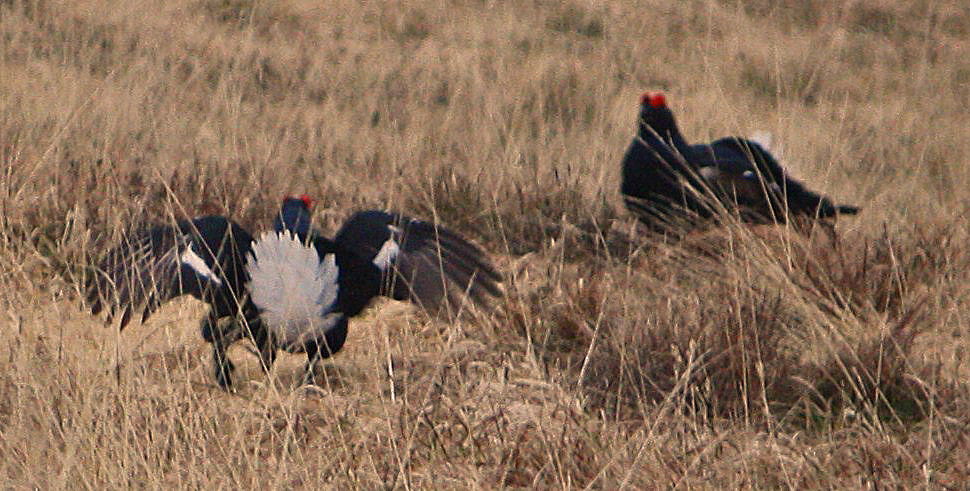
When an ecological survey was carried out on the Chayne three years ago to assess the site’s viability as a wind farm, I was not allowed access to specific records relating to the location of hen harrier, short eared owl and goshawk nests. I knew where all these were and it made no difference to me, but the issue was that I could not be trusted with this level of confidential information, even though it related to my own land; the implication was that the birds living on my ground required protection from me. I felt like I had been visited by the bird police. During conversation with two surveyors, I tried to mention a merlin breeding site on the farm and noticed that they seemed surprised that I even knew what a merlin was. After all, I am “just a landowner” and obviously can’t tell the difference between a bird and a wizard. I made quite a fuss about seeing the results of the ecological survey, and was finally placated with a single sheet of A4 paper with a few mumbling sentences about black grouse and some vagueness about harriers.
In this environment, I am hugely unwilling to share specific information relating to rare and endangered species on my land and elsewhere. If I am not trusted with information I already have, why should I trust them with information that they certainly don’t? It’s a silly “tit for tat” reaction, but the crucial word is “trust”. If I were running a grouse moor, I certainly wouldn’t tell the RSPB about breeding harriers. I’ve heard too many horror stories about surveyors disturbing sitting grouse (and harriers) during the breeding season that I’d leave the whole situation well alone. It could be construed as nefarious, but it’s not impossible to understand why even the most dedicated harrier lover would not share sensitive nesting information.
When you have a charity that is so breath-takingly arrogant as to describe itself as “nature’s voice”, you come to see a culture that presumes to claim the mouth-piece on behalf of all birds. In recent years, even hedgehogs and butterflies have fallen under this massive remit, and the general public is now pressed to abandon their own initiative and engage with the natural world under the terms and supervision of RSPB staff. The slogan “Have a date with nature” is bandied around as if donating money to a multi-million pound business is the only portal into the countryside. Worse still is when that assumed custodianship of the natural world becomes twee and patronising, as if :
“the only way you poor darling members of the public can help is by stacking bark in the garden so that the Woody the woodlouse has somewhere to cower. And if you’re really good, we’ll take you on a (supervised) trip to look at our ospreys and you can pick any teddy you want from the shop afterwards – you’d like that, wouldn’t you?”
A week after I was presented with the watered down ecological survey results, I received an assinine telephone call from an RSPB staff member who, with a staggering degree of condescension, told me that the female black grouse is called a greyhen and that breeding rituals are called “leks”. That telephone call was presumably entered into a timesheet as “establishing relationships with local landowners” and in terms of time/money, probably cost someone’s subscription.
I am fortunate enough to see nationally scarce birds quite frequently in the Galloway hills, and I am under no obligation to share my findings with the RSPB. However, I take pleasure in recording the things I see and hear on this blog – judging by the feedback I get, readers also take pleasure in it. I cannot possibly imagine a single reason why I should submit my harrier sightings to a centralised database, and in the same way, my lek sites are never picked up during the D&G survey (although this is because surveyors following RSPB guidelines never actually look in probable places). It comes down to a simple question I ask myself whenever I see something new: “Would it help that bird if I told someone about it?” The answer is always “no”. One of the main reasons behind the decline of capercaillie has been “disturbance”, and yet each year there is a clamour to mob the last lek sites with long lenses and the lingering odour of Comfort fabric conditioner. The RSPB would consider this statement shocking and misanthropic, but situations in which the general public actually helps wildlife are few and very far between. The least we can do for rare or endangered species is to stay well away from them, and in keeping what I see to myself, I feel like I’m contributing to that sentiment.
By hammering farmers, landowners and gamekeepers, the RSPB may well be gratifying its membership, but perpetual mud-slinging collapses discussion and only entrenches opinions. I should love the RSPB and spend my weekends doing fun runs dressed up as a black grouse to raise money for them, but I can’t stomach the domineering, commercial and fundamentally insubstantial stance they have chosen to take on conservation issues. Personally, I hate the current harrier situation as it stands because no amount of discussion ever seems to breed progress, and for someone who likes a whole range of moorland birds (including harriers), it’s just an exercise is foamy mouthed rhetoric. I try not to deal with it in writing because it is more obvious than ever that there has been a major breakdown in communication and trust between landowners and bird watchers. Sadly, this failure is now being pitched as conflict between “nature’s voice” and the commercial management of the countryside in all its forms.


 Bog Myrtle & Peat
Leave a comment