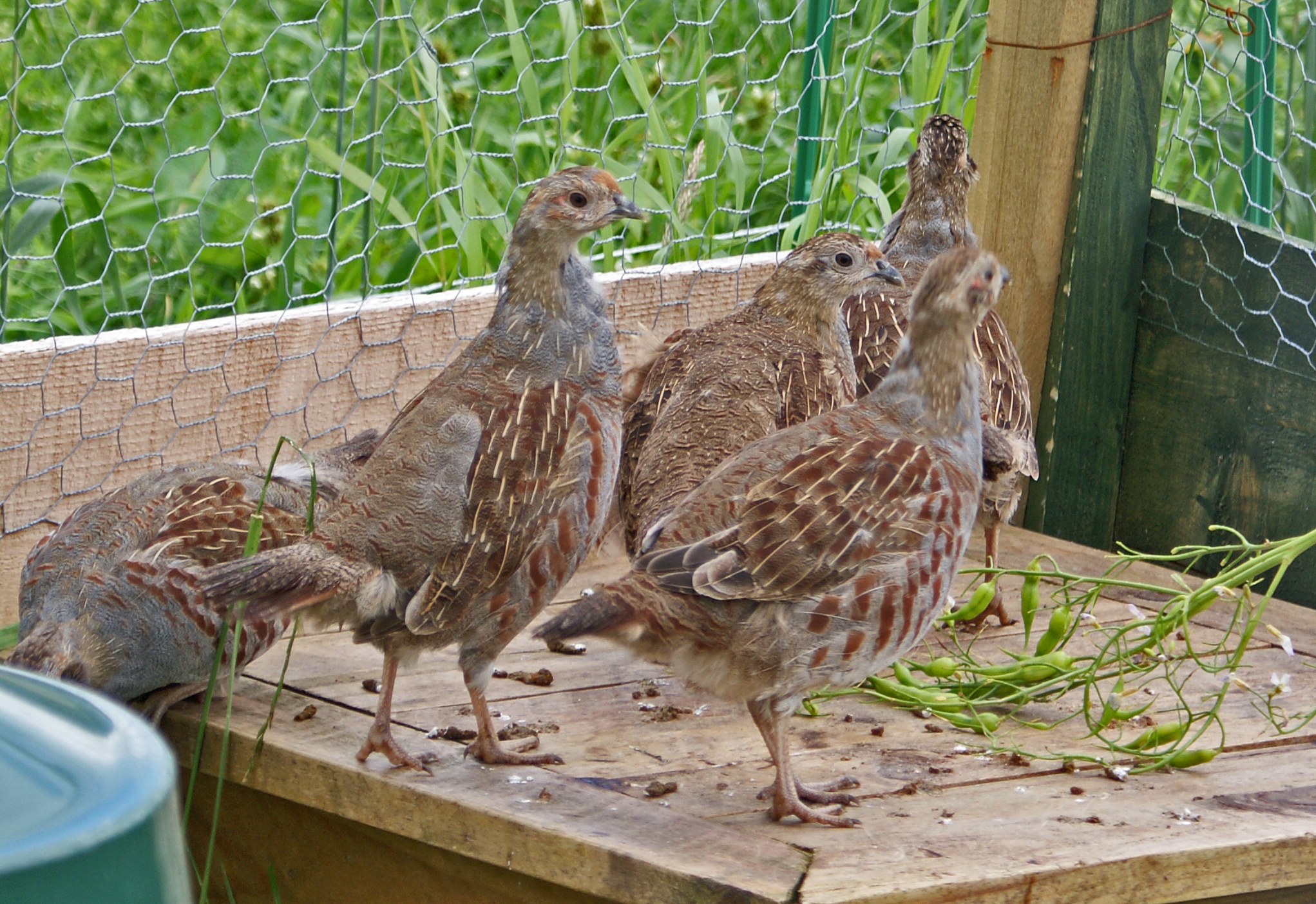
The partridges have now been up on the hill for ten days, and they seem to be doing remarkably well in spite of the weather. They look smarter with every passing day, and they are starting to get orange faces to go with their red stripy sides. One of them has somehow managed to escape from the pen, but it has faithfully stayed put for five days. On the first day, I spooked it in a strong wind and it flew way off over the hill a good five or six hundred yards and totally out of sight. I thought that the wind would have made it impossible for it to find its way back, but sure enough, there it was the next morning. I’m starting to fill some of the hoppers around the game cover where the partridge pen is, and I hope that the faithful “homing” ability of the single bird will be matched by the others as they start to trickle out into the wide world.
Grey partridges are notorious wanderers and I would be very surprised if any of this group will ever stay around long enough to breed. This first winter was always going to be a test run – like every other area of this project, being told that they will just wander away is not enough. If grey partridges are wanderers, I want to see it happen for myself. I’m not deliberately making mistakes for the sake of it, I just prefer not to take anything for granted. In my experience of working with black grouse, it’s also makes sense to understand the problem at first hand before you try and fix it.


 Bog Myrtle & Peat
Leave a comment