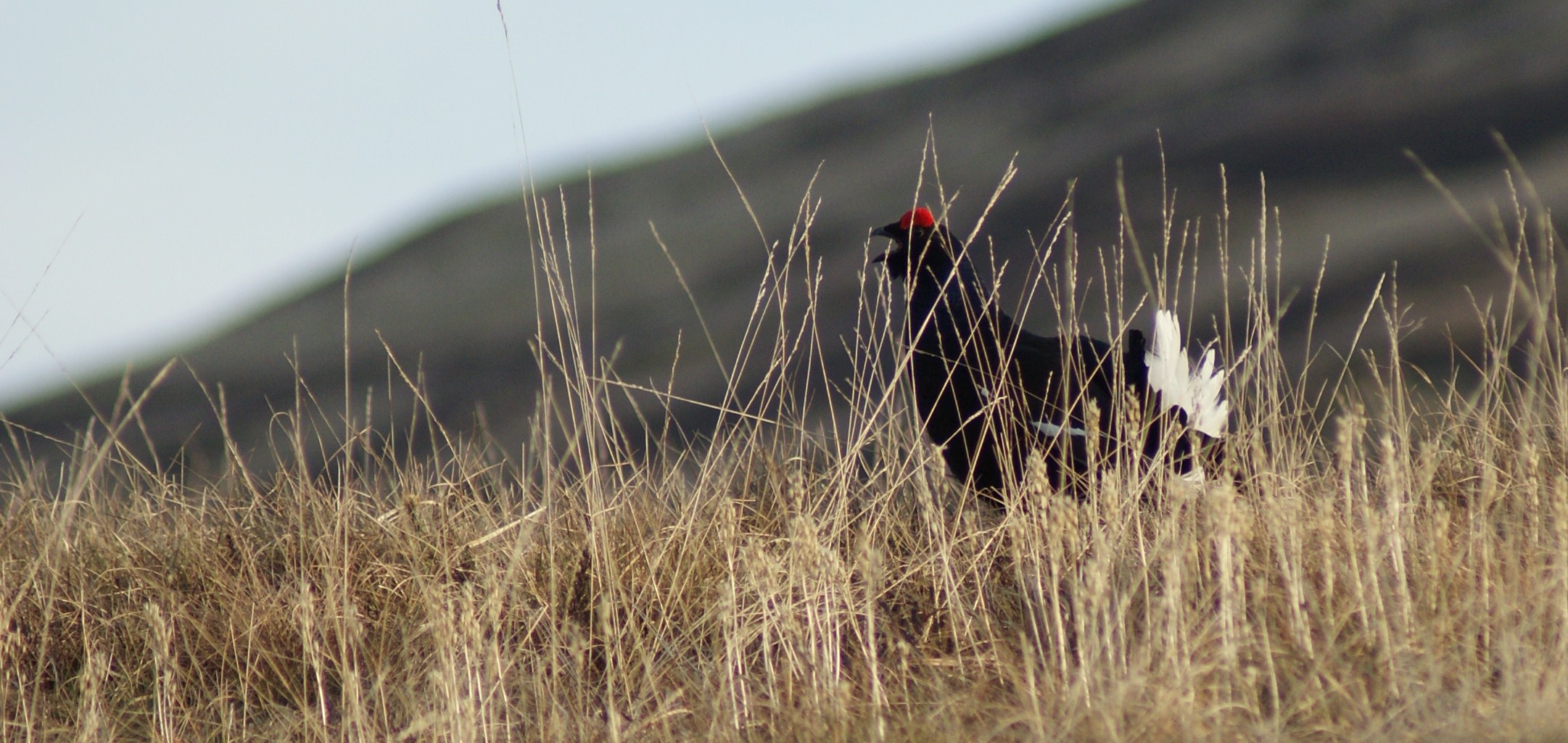
I happened to notice yesterday that the RSPB are again advertising for paid lek surveyors in Dumfries and Galloway. Candidates are required, in the terms of the job offer, to
“undertake surveys for black grouse, with the expectation of searching approximately fifteen 5km squares for black grouse lekking locations and record relevant information e.g. lek location, number of birds and habitat. You will need experience in survey work, map skills and the willingness to work flexibly (pre-dawn starts required) in remote locations. Post provides good experience in conservation field work, contributing information that is vital to inform habitat management work for the species“.
Now it may not come as a surprise to long term readers of this blog, but I’m not 100% happy with the way the RSPB conduct their black grouse conservation attempts. They certainly have a great deal of money to invest in “awareness” campaigns like the prominent endorsement of the black grouse whisky, but it is unclear as to precisely how public awareness will help the birds. Sure, money is donated to reserves where black grouse conservation work takes place, but the RSPB is obviously unable to sustain the species on its own. Only with the cooperation of private land ownership will black grouse secure themselves in a range sufficiently large enough to prevent genetic stagnation and collapse. Sadly, many of the black grouse’s key habitats are part of estates managed for sporting purposes; areas in which the RSPB are persona non grata.
The whole raptor/grouse moor debate is not very interesting to me, but it has driven a wedge between the RSPB and many private landowners. In many areas, the line of communication has broken down altogether, so there is no way for the RSPB to pass on important conservation information that it is presumably gathering in its experimental reserves. Instead, battle lines are drawn up, with the RSPB supposedly championing the rights of everyone to have access to wildlife and private landowners lying like dragons on their mounds of sequestered gold.
Unable (and possibly unwilling? we’ll see) to do any real good for black grouse, the RSPB don’t want to seem like they don’t care. The Dumfries and Galloway black grouse lek survey takes place every year, but it is very unclear as to its specific purpose. If the paid surveyors find a lek that they didn’t know about before, what do they do about it? Do they approach the landowner and advise him on habitat management at the risk of getting a thick ear, or do they meekly mark the site on a map and visit again next year, when the lek is smaller? I think I can guess that one. If by some stroke of magic a lek has expanded, then the only possible explanation is that raptors are being persecuted, so the site is earmarked for surveillance.
Rather than bury the hatchet and work with private landowners, the RSPB are now passively watching black grouse numbers disintegrate in Galloway, disguising their total inability to remedy the situation by carrying out surveys which supposedly represent “direct action” but which in actual fact are nothing more than them “keeping an eye on things”. How much easier their job would be if they could telephone every farmer in their 5Km squares and ask them to keep an eye out for black grouse. That would be an example of a charity working with the people to get the job done. As it is, surveyors don’t even ask permission of landowners before carrying out surveys – not a legal requirement, but certainly one dictated by good manners. It’s just one of many ways in which the RSPB show themselves to be so clothed in patronising suburban authoritarinism that they don’t trust country people to provide them with reliable data. They believe that we are all backward facing buzzard killing yokels, and that the nation’s wildlife is longing to be freed from the evils of agriculture, field sports and private ownership.
For the last two years, I applied to help with the RSPB’s lek surveys. I live near three leks and I know of several birds that I can guarantee they don’t. I have never even had a letter of acknowledgement for my applications. I found out that last year, lek counts in Galloway were incomplete because they couldn’t find sufficient surveyors, yet I know that my application sat on their desk. It might sound like sour grapes, but I’d have done the work for free, and I’d have done it better than any polyester hat wearing teenager looking to get “survey experience” as part of a progression into a career in conservation. It’s possible that I’ve upset someone at RSPB HQ, and given the questions I’ve been asking them over the past three years, I wouldn’t be surprised if I have.
The RSPB do great work for blue tits, robins and sparrowhawks, but when it comes to dealing with problems on a landscape scale, they are somewhat out of their depth. As a conservation charity, they have their feet (historically and metaphorically) in the town. If they want to do some real good for black grouse, they’re going to have to try a little harder, and maybe go so far as to accept that the countryside isn’t a theme park but is actually a place which provides employment for quite a few people.


 Bog Myrtle & Peat
Leave a comment