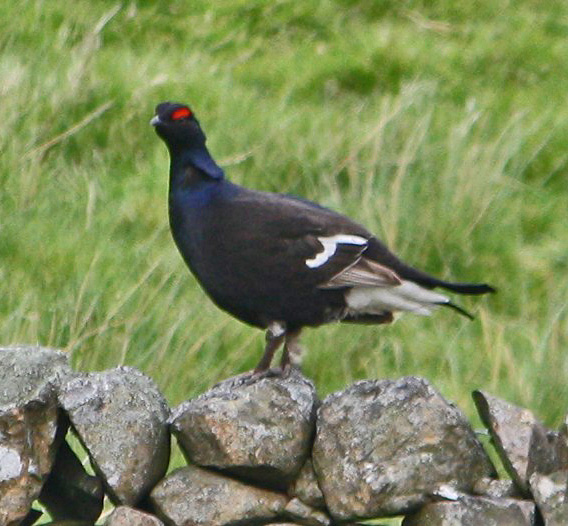
After the excitement of the Glorious Twelfth, it’s easy to forget that another open season takes place just over a week later. Not many black grouse will be shot in Britain this year for the simple reason that there are not enough to support shooting on any scale, but there was a time not so long ago when the 20th of August meant a great deal to sportsmen in the uplands.
Various arguments have wrangled back and forth over the past two centuries of sporting shooting as to the propriety of shooting black grouse on the 20th August. Given that poults mature at the same rate as pheasants, many people believed that to shoot young and underdeveloped birds in late August was unsporting. Walking up broods of black grouse with a pointer in August became viewed as a boy’s sport, while the thrills and excitement of shooting grown blackcock in October became “the real way” to enjoy the birds.
At the same time, there were many who were itching to shoot blackcock when the season opened because it provided a welcome opportunity to destroy broods and keep down the numbers of these agricultural “pests”. Allowances were made to put back until September the open season for black grouse in the south and southwest of England, but many thousands of black grouse poults must have been killed by people who were deliberately trying to keep the local population of birds under control.
Things are very different today, and many sporting guns can go a lifetime without ever seeing a black grouse, let alone shooting one. But the opening of the black grouse season should be remembered because we mustn’t forget that this is a game bird. Black grouse are a sporting species, and despite their current misfortunes, we should value the tenuous legal thread which keeps them on the quarry list. Nobody would suggest that we ought to head into the hills and shoot the last few birds, but remembering their potential to deliver top class sport may provide the secret to their long term survival.
While conservation charities like the RSPB are making some half hearted and self congratulatory efforts to conserve black grouse, their efforts are totally meaningless by comparison to large scale work by private landowners. British gamekeepers manage an area of countryside that is thirteen times larger than all RSPB reserves put together, and shooting is a major driving force for land use. If shooting forgets black grouse and ignores their plight, the birds are going to be left high and dry. If we get behind this bird and make the time and committment to manage upland countryside on a landscape scale, we will secure its future and guarantee ourselves some cracking sport.
Having seen black grouse fly higher than pheasants, faster than grouse and as unpredictably as woodpigeon, we would be doing ourselves a tremendous disservice if we didn’t save this bird not just for the sake of the nation’s biodiversity, but also for the fun we could have pursuing them.
Here’s to the boys in blue!

 Bog Myrtle & Peat
Leave a comment