It’s been four days since my pheasant eggs went into the incubator, but already things have not been going according to plan. A power disturbance during the first three hours of the incubation process seems to have temporarily upped the voltage, subjecting the eggs to 40 degree Celsius conditions for around two hours. Although I hear that eggs are at their most robust during the first few days of the incubation process, we all worried about what effect (if any) the additional heat might have caused to the success of the project.
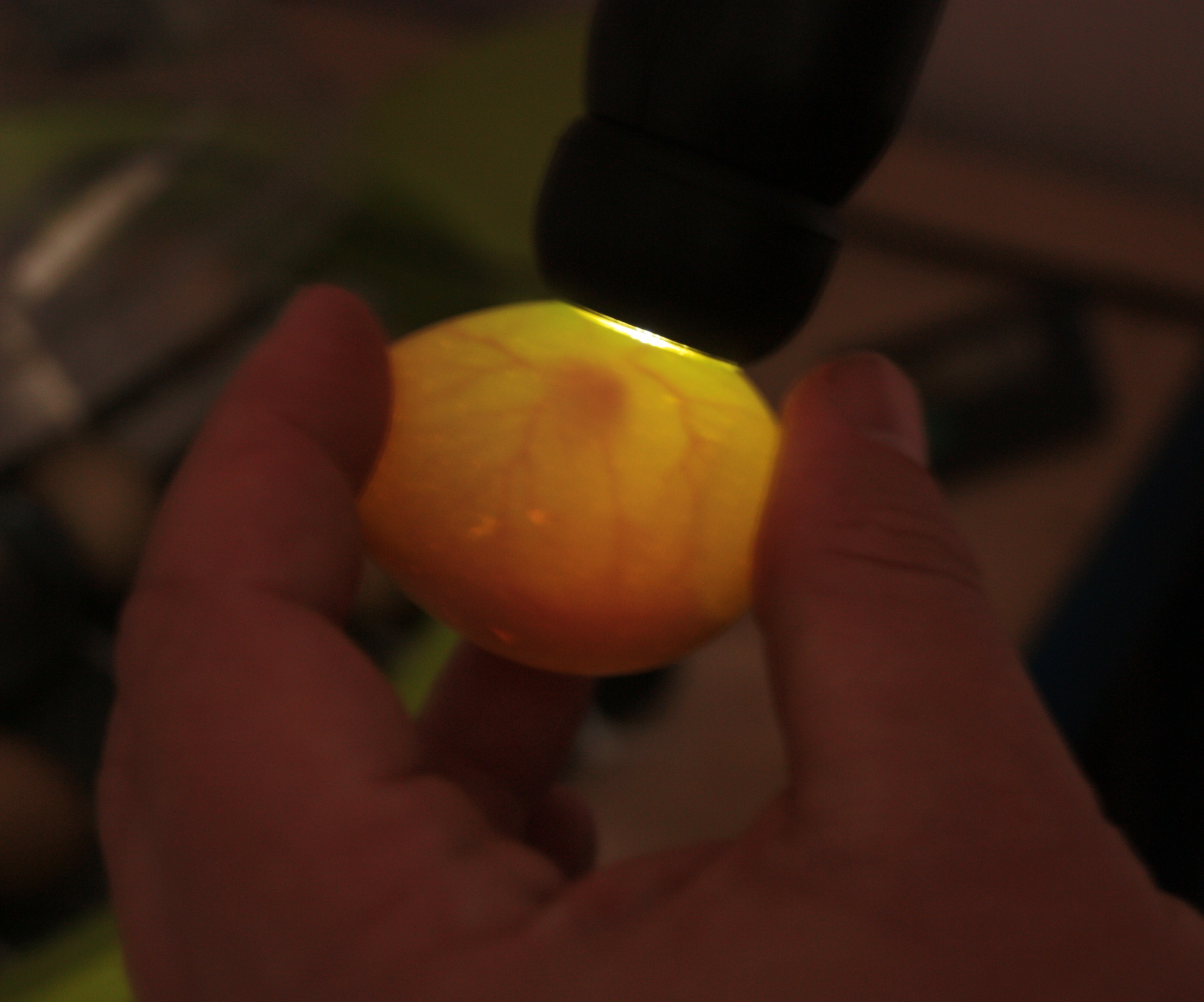
After three or four days, it is possible to scan eggs with a high powered light to tell which are developing. The process is called candling, and I used a low-heat LED torch to shine through the shells and reveal my eggs’ mysterious interiors.
The variety of my pheasant eggs is quite surprising, not only in their size but also in their colour. Some are sky blue, while others are a drab khaki brown, and each looked different from the last under the scrutiny of the candling torch. Approximately a third of all eggs I candled had obvious and elaborate systems of blood vessels which would indicate that progress is advancing in leaps and bounds. It was absolutely fascinating, and hard not to feel totally in awe of a seemingly magical natural process which takes places under any old corbie crow or sparrow every year.
Another third of the eggs showed bloodspots and unstable thread like strings which apparently presage failure and bacterial infection. The final third showed no signs of progress whatsoever, and although this may because the egg shells were too thick to tell for certain, it looks like, despite the power disaster early on, I could be taking care of as many as a dozen chicks in a fortnight – not many for some, but very exciting for me.

 Bog Myrtle & Peat
Leave a comment